




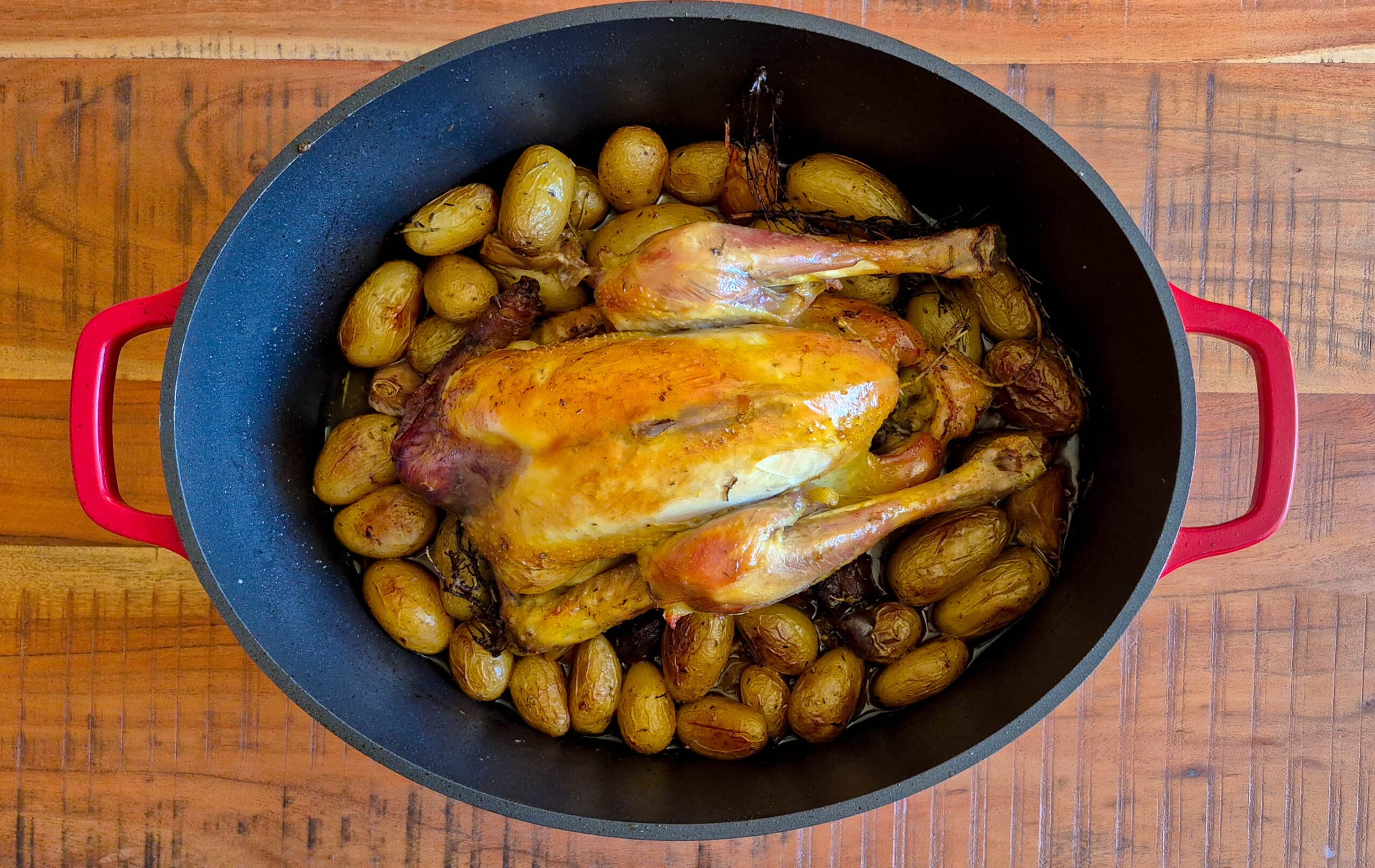
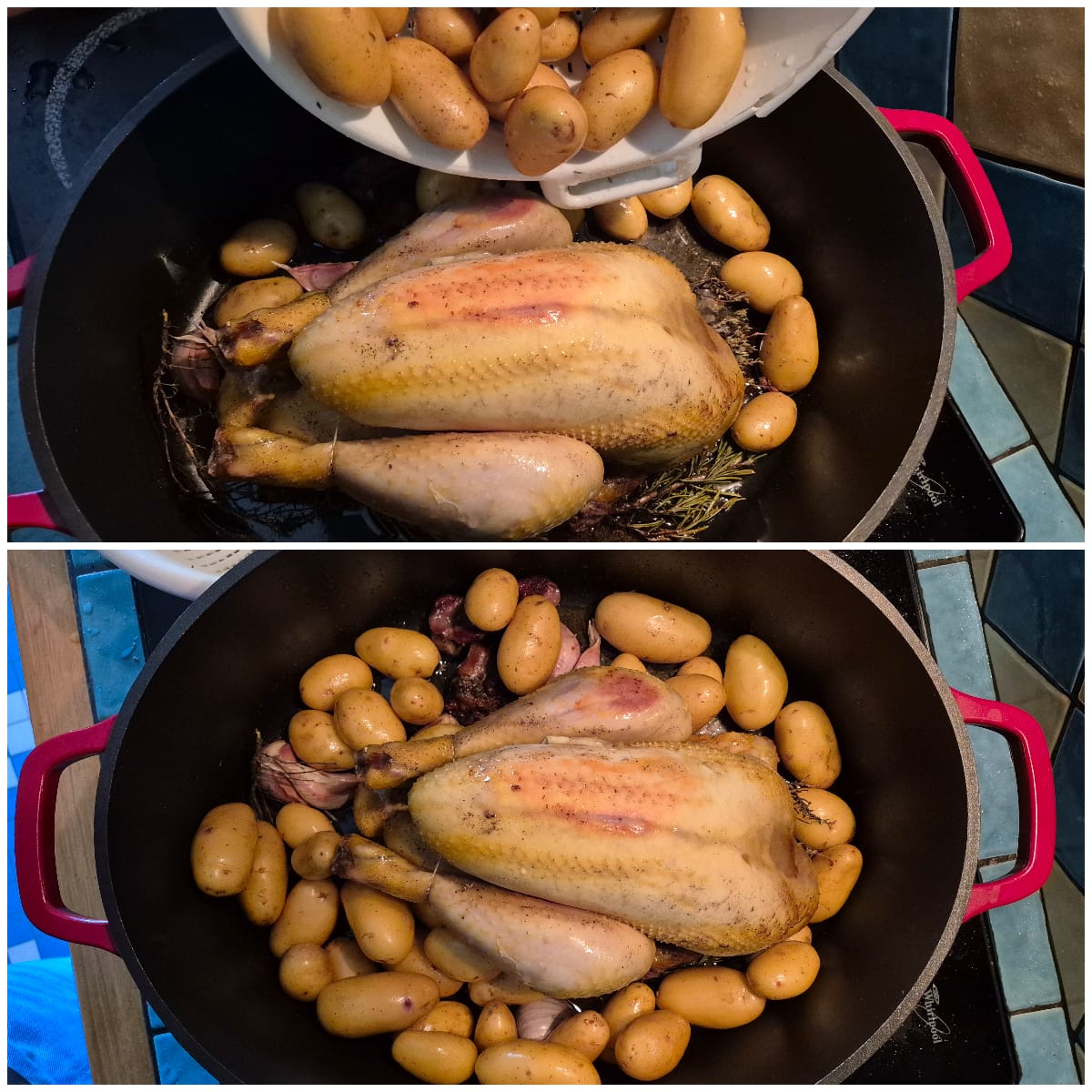
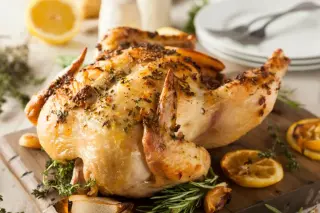
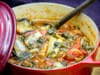
This weekend I had the family over and made this recipe for oven-roasted chicken in a casserole dish, served with baby potatoes and garlic cloves. Well, I’m proud of myself because there wasn’t a single bite left 😋
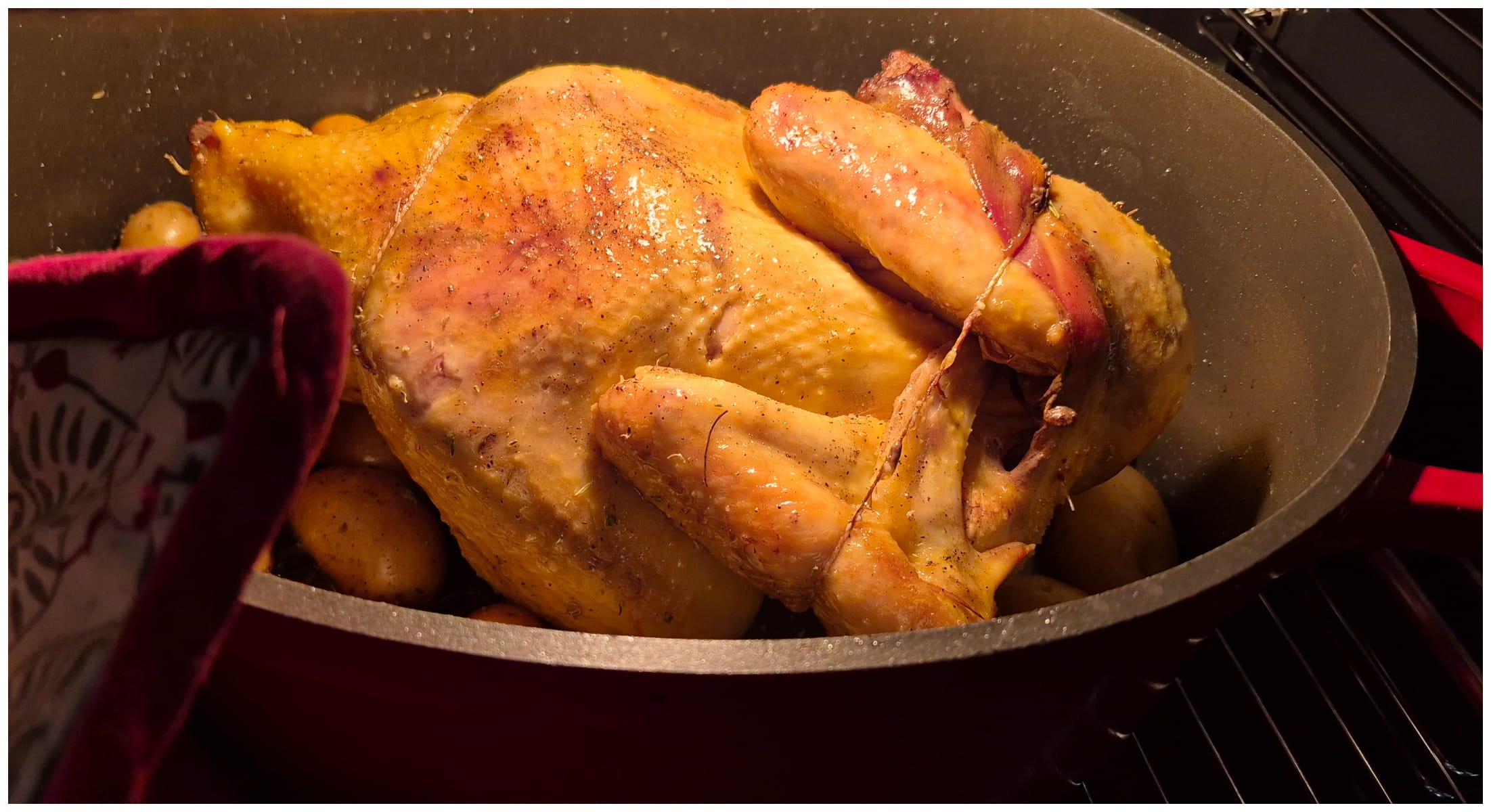
With this recipe, you’ll get a perfectly cooked chicken with crispy, golden skin. And the baby potatoes will come out all wrinkled and roasted on the outside, and creamy on the inside.
What fat should I use for this roast chicken?
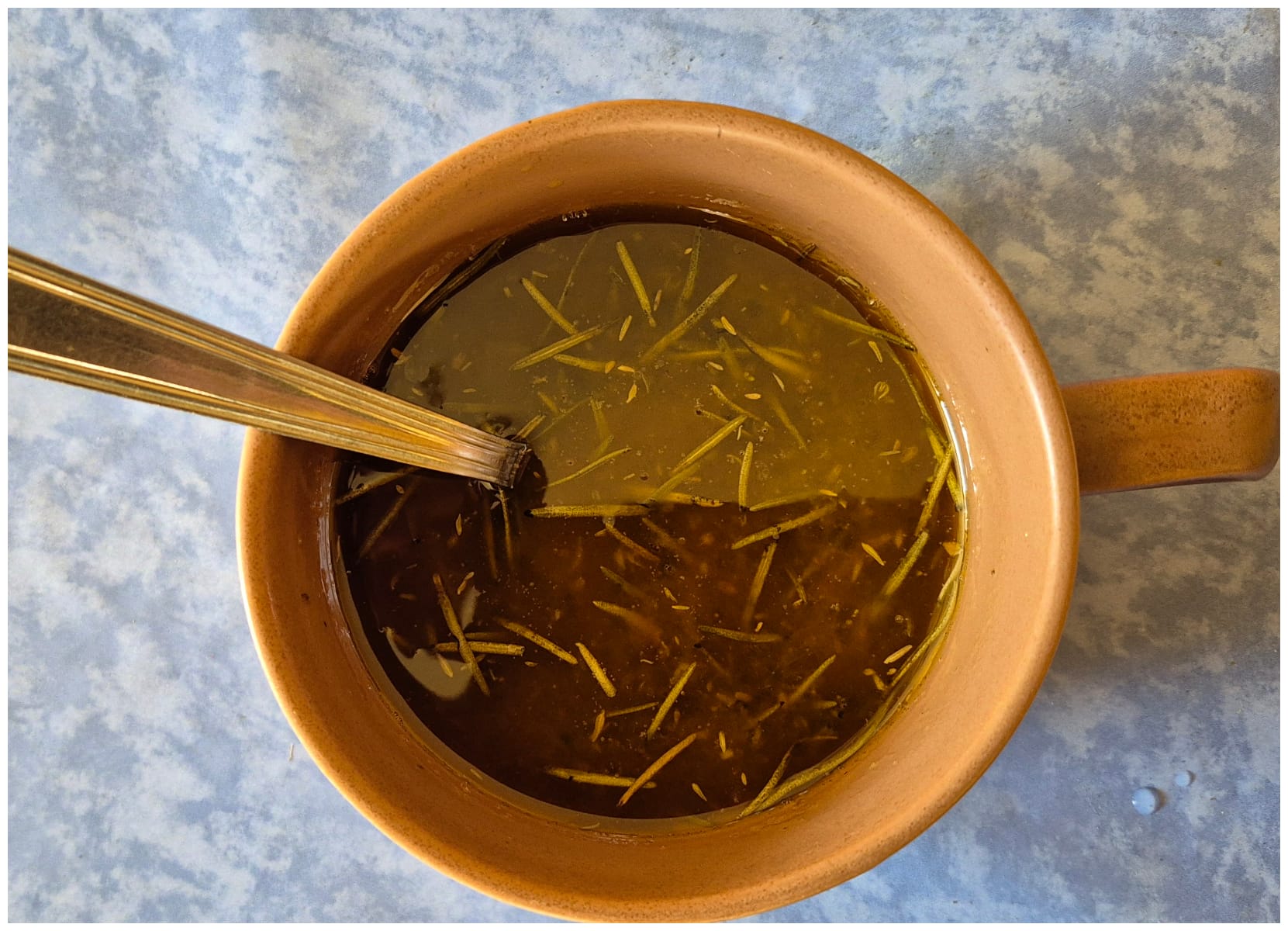
First off, I use duck fat instead of butter (not healthy for cooking) or oil (lacks flavor). Plus, it’s standard here in the Dordogne to cook with duck fat 😉
Plus, it’s a fat that holds its temperature very well and is rich in so-called “monounsaturated” fatty acids. These are known to be good for cardiovascular health.
So, in conclusion, I recommend duck fat or, if that’s not available, oil—but avoid butter!
How to choose a chicken for roasting?
Personally, I prioritize the length of the rearing period and access to the outdoors. These are the two criteria that guarantee flavorful meat and good texture when cooked. Don’t rely solely on the word “Farm-raised” without an official logo: the term “farm-raised” simply refers to the density of the flock.
Depending on the quality of poultry you choose, the rearing period can vary greatly. It’s important to know that only a certification label (Red, Organic, AOC/AOP) guarantees a controlled diet and slow growth.
- Standard chicken (35 to 40 days): This is a “fast-growing” chicken. Its meat is watery, its bones are fragile (they often break when cut), and it shrinks significantly during cooking. It has never seen the light of day and was raised in a confined space.
- Label Rouge and Organic chicken (minimum 81 days): By living twice as long, the chicken develops muscle. Its meat is firmer, less fatty, and has a distinct, earthy flavor. This is the ideal stage of maturity for a juicy roast.
- AOP chicken (minimum 112 days): AOP stands for "Appellation d'Origine Protégée" (Protected Designation of Origin). This is the top-of-the-line category, with a diet enriched with dairy products and a finishing period in a "spruce" pen. This is an enclosure where the chicken remains undisturbed during the final days of rearing. This period of rest allows the meat to develop marbling, resulting in exceptional flavor and texture.
How do you determine the weight and cooking time for the chicken?
In terms of weight, allow about 300 to 375g per person, or 1.2 to 1.5kg for 4 people, or 1.8 to 2.2kg for 6 people.
As for cooking time, allow 20 minutes per 500g, plus an additional 20 minutes.
For example, with my 2.2kg chicken, I had to cook it for 1 hour and 50 minutes, which fits this rule perfectly.
How do you choose baby potatoes?
The baby potato is not a variety in itself, but a commercial designation for a potato smaller than 35 mm in diameter. The tubers are harvested before they are fully mature. As a result, they have a tender flesh and a skin so thin that it requires no peeling.
When selecting them, pay attention to the following details: the flesh should be firm, the skin smooth, taut, and free of green spots (a sign of exposure to light), and there should be no sprouts. If the potatoes still have a little dirt on them, that’s even better, as it provides effective protection against natural light.
You can find storage potatoes year-round. But the ideal time is in the spring, between April and July. This is the season for "new potatoes" (such as the famous Noirmoutier or Île de Ré varieties), whose skin is so delicate that it comes off with a simple rub of the finger.
Outside of this season, opt for firm-fleshed varieties like Ratte or Charlotte. They’re available longer in smaller sizes.
Now it’s your turn!
There you go—now you know everything you need to make a delicious roast chicken with baby potatoes.








Leave a comment on this post