




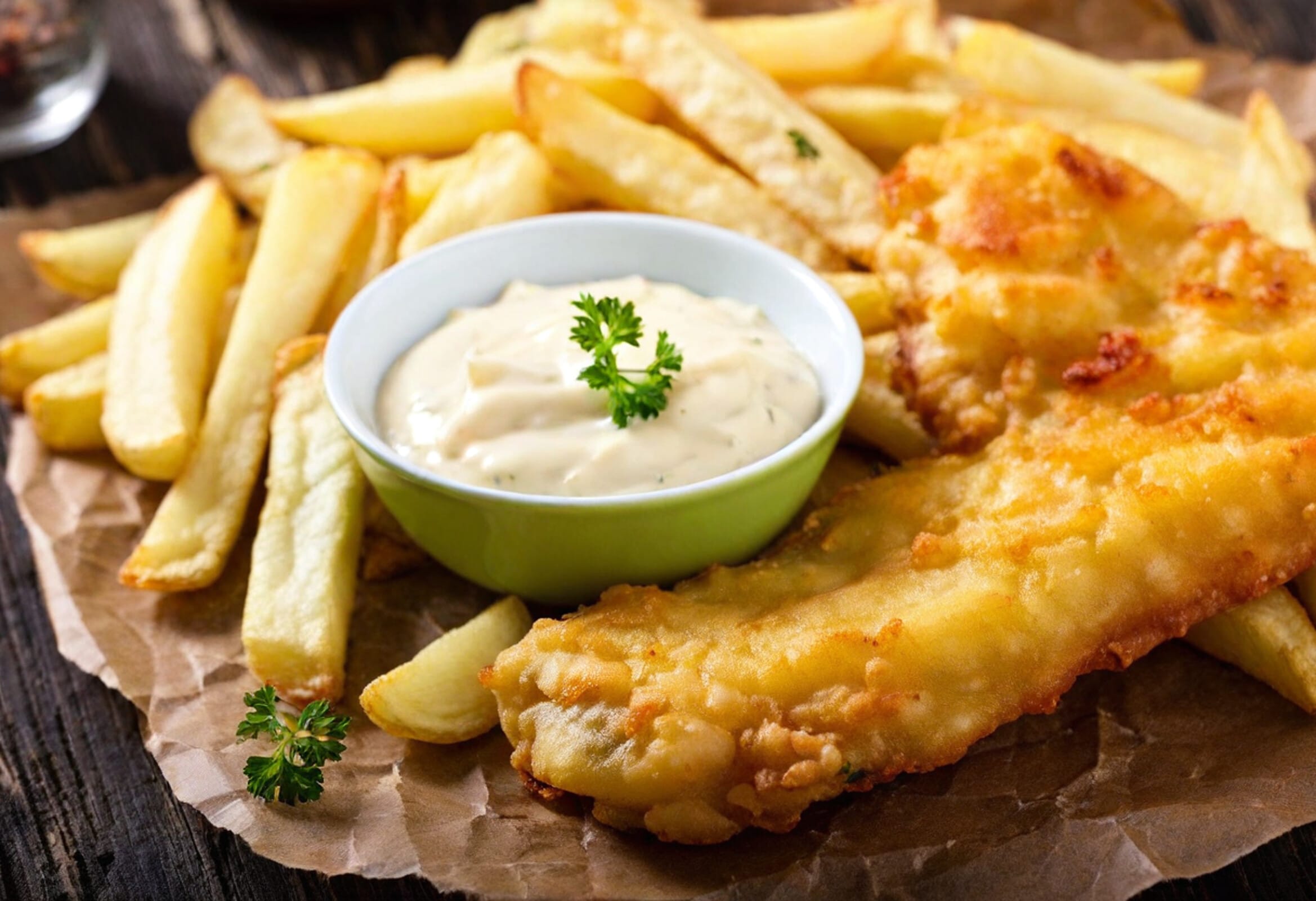
Here’s a classic recipe from traditional English cuisine: authentic “fish and chips”! As you’ll see, it’s actually a very easy dish to make, as long as you have the right equipment for deep-frying (well, two of them 😀).
The origins of fish and chips
If you’re not yet familiar with fish and chips, it’s a dish of British origin consisting of fried white fish (usually cod or haddock) coated in a crispy batter and served with thick-cut fries. Originating in 19th-century England, it emerged from the fusion of the Jewish tradition of fried fish and the English custom of eating fried potatoes. Popular among the working class, it quickly became a staple of street stalls and “chippies,” small stands specializing in this dish. Fish & chips embodies the simple, hearty, and flavorful cuisine of the United Kingdom.
Newsprint: myth or reality?
Traditionally, fish and chips were indeed served in newspaper, a common practice until the 1980s, mainly for economic and practical reasons. Today, for food safety reasons, this is no longer allowed, but many shops keep the tradition alive by using food-safe paper printed to look like newspaper, recreating the nostalgic atmosphere without the health risks. So, a myth… based on a reality from the past! In any case, you won’t find any newspaper among the ingredients in this recipe—I promise 😉
Tips for successful frying
The only real challenge with fish and chips is the frying, at least in this traditional recipe, which relies on deep-frying in oil. There are other fish and chips recipes that are made in the oven, which makes the cooking process easier, though the result might be a bit less indulgent… it’s up to you!
The challenge is to sear the fish and fries just right, so they aren’t too greasy or burnt. I’ll share some helpful tips on this further down in the recipe.
Also, the fries shouldn’t taste like fish. To achieve this, there are two possible approaches: either use two separate batches of oil for the fish and the fries (this is the most practical), or use a single batch of oil (the most economical), but cook the fries first, and then the fish. In fact, once the fish has been immersed in the oil, the oil will retain a fishy aftertaste.
Useful equipment and accessories for frying
For frying, I recommend the following options:
- The most modern: an electric deep fryer or "air fryer" with a built-in thermostat,
- The most traditional: a stovetop fryer that you can place on your gas or induction cooktop. Compact, equipped with a frying basket and sometimes a built-in thermometer,
- The most versatile: the good old cast-iron casserole, which you can also use for all your slow-cooked dishes.
I can also recommend two very handy accessories:
- a cooking thermometer, if your fryer doesn’t come with one, to fry at the ideal temperature,
- a strainer for cooking oil, which allows you to recycle and reuse your oil for multiple cooking sessions






Leave a comment on this post