




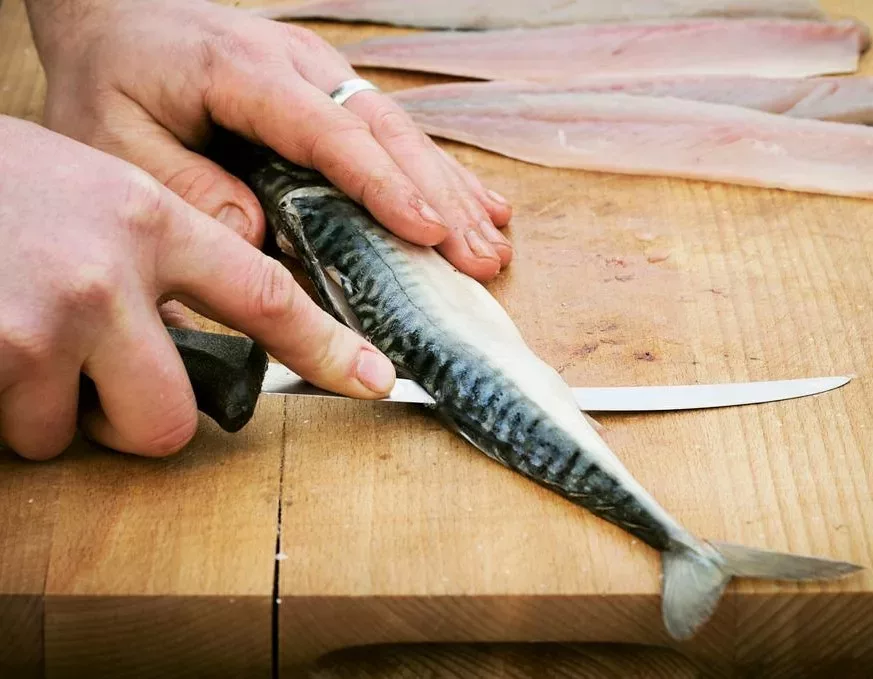
Filleting fish may seem intimidating to many home cooks, but this culinary skill is a real asset in the kitchen.
By learning how to fillet fish, you’ll not only save money by buying whole fish, but you’ll also explore a whole new dimension of cooking by working with fresh, high-quality ingredients.
In fact, you’ll be able to choose fish based on their freshness—something you can’t do with pre-cut store-bought fillets. Your fish fillets will be all the more flavorful, firm, and healthy!
In this article, we’ll guide you through the essential steps for successfully filleting fish and share a few tips to perfect your technique.
What is filleting?
Filleting involves removing the fleshy parts (fillets) of the fish and separating them from the bones and skin (optional). It’s a process that requires precise cutting to achieve even, appetizing pieces. The technique varies slightly depending on the type of fish you’re preparing, but the basic principles remain the same.
Tools You’ll Need
Before you begin, make sure you have the right tools on hand:
1. A good kitchen knife: Choose a sharp knife suited to the size of the ingredient you’re filleting. A flexible knife is generally best for fish, such as the sole filleting knife.
2. Cutting board: Use a non-slip cutting board that is large enough to work comfortably.
3. Tip: Boning tweezers: These tweezers, similar to hair tweezers, will help you remove small unwanted bones from the fish.
Steps for filleting fish
Step 1: Get ready
Place your fish on the cutting board, belly side down. Make sure the fish is clean and has been gutted.
Step 2: Make an incision
Make a deep incision along the back of the fish, starting from the tail and moving toward the head. Be careful not to cut through the skin on the belly.
Step 3: Separate the fillets
Insert the knife into the central slit near the fish’s head and gently slide it along the backbone. Follow the ribs, guiding the knife toward the tail of the fish using a gentle, controlled motion.
Step 4: Remove the bones and/or skin
Once you have separated the two fillets, remove any remaining small bones.
If you don’t want to keep the skin, gently remove it from the fillets by sliding the knife between the flesh and the skin.
Tip: If you’re having trouble removing the skin, try placing your fingers under the skin to lift it slightly while you gently slice with the knife.
Practical Tips
– Practice makes perfect! Don’t hesitate to practice several times on less expensive cuts before moving on to more delicate ingredients.
– Keep your knife sharp to make filleting easier and achieve clean cuts.
– Be patient and precise in your movements to avoid wasting meat or fish.
By mastering the art of filleting fish, you’ll open up a whole range of recipes and preparations, while saving money and enjoying the extra freshness of your ingredients.
So don’t hesitate to give it a try—you’ll see, it’s simple and risk-free!












Leave a Reply