





Slow cooking plays a central role in both traditional and modern cuisine. Indeed, it allows simple ingredients to shine by bringing out deep, harmonious flavors. However, to achieve a tender, flavorful, and perfectly cooked result, the choice of cookware is crucial.
This is precisely where the Dutch oven comes in—a true staple for long, gentle cooking.
However, given the wide variety of models, materials, and sizes available, it’s not always easy to know where to start. That’s why this article provides a step-by-step guide to help you choose the casserole dish that best suits your needs, cooking habits, and budget.
🔥 Why the Dutch oven is essential for slow-cooked dishes
First and foremost, it’s essential to understand why the Dutch oven is so effective for slow-cooked dishes. Unlike a regular saucepan, it’s designed to retain and distribute heat evenly.
This allows for slow, even cooking, which helps:
- tenderizing even the toughest meats,
- preserving the moisture in the food,
- and, most importantly, concentrating the flavors.
Additionally, thanks to its tight-fitting lid, steam remains trapped inside. As a result, dishes don’t dry out and become more tender and flavorful over time.
🧱 Different materials for Dutch ovens: which one to choose?
The material is undoubtedly the most important factor. Indeed, it directly influences heat distribution, cooking time, and ease of maintenance.
Enameled cast iron casserole
The enameled cast iron casserole is often considered the gold standard.
On the one hand, they offer excellent thermal inertia, allowing for slow and even cooking. On the other hand, their enamel coating prevents any reaction with acidic foods, such as wine or tomatoes.
However, they are heavy and can be expensive. Nevertheless, they are a long-lasting investment, often passed down from generation to generation.
Ideal for: beef bourguignon, stews, pot-au-feu, and ragouts.
Unenamelled cast iron casserole
More rustic, raw cast iron appeals to lovers of traditional cooking.
It can withstand very high temperatures, making it perfect for searing meat before simmering. On the other hand, it requires rigorous maintenance (seasoning, immediate drying), which may deter some users.
Stainless steel casserole
Stainless steel is valued for its light weight and ease of maintenance. Additionally, it doesn’t rust and is generally dishwasher-safe.
However, its heat retention is inferior to that of cast iron. Consequently, it is better suited for short simmering or dishes requiring more frequent monitoring.
Aluminum casserole
Aluminum heats up quickly, which is an advantage for quick cooking. On the other hand, it performs less well for long cooking times and can warp over time.
As such, it is better suited for occasional use than for true traditional slow-cooked dishes.
Ceramic casserole
Finally, the ceramic casserole dish appeals for its elegant appearance and gentle cooking.
However, they are more fragile and do not handle thermal shocks well. Consequently, they are ideal for delicate dishes or serving directly at the table, but less suitable for intensive cooking.
📏 What size and shape of casserole dish should you choose?
🔢 Choosing the right capacity
The size should be appropriate for the number of guests. Indeed, a casserole dish that is too small will boil over, while one that is too large may compromise the concentration of flavors.
- 2 to 3 liters: for 1 to 2 people
- 4 to 5 liters: ideal for 3 to 4 people
- 6 liters and up: perfect for large gatherings
Therefore, for versatile use, a 4– to 5-liter casserole dish is the best choice.
⭕ Round or oval shape?
The shape also matters.
A round casserole dish is versatile and suitable for most recipes. On the other hand, an oval casserole dish is particularly well-suited for long cuts of meat, such as a roast or a whole fish.
🔌 Compatibility with heat sources
Before purchasing, it is essential to check compatibility with your equipment:
- Gas: all models are suitable
- Electric stovetops: opt for a thick bottom
- Induction: magnetic base required
- Oven: check the maximum temperature it can withstand
This way, a versatile casserole dish will allow you to sear on the stovetop and finish in the oven without changing cookware.
🎯 Essential criteria for successful slow-cooked dishes
To make the right choice, several factors must be considered:
- Heat distribution: key to even cooking
- Lid seal: essential for retaining moisture
- Weight: a balance between stability and ease of handling
- Maintenance: should fit your cooking routine
- Aesthetics: important if you serve directly at the table
So, the best choice is the one that fits your actual habits, not just technical criteria.
👨🍳 Chef’s tips for successful slow-cooked dishes
Even with an excellent Dutch oven, certain rules make all the difference.
First, it’s recommended to sear the meat to bring out the flavors. Next, deglazing helps capture the juices, which are true flavor concentrates.
Additionally, cooking should remain slow and gentle. It’s better to extend the cooking time than to increase the temperature. Finally, seasoning is best adjusted at the end of cooking to achieve perfect balance.
🧼 Properly maintaining your Dutch oven to ensure its longevity
Proper care significantly extends the life of your casserole dish.
- Enameled cast iron: gentle cleaning, no thermal shock
- Uncoated cast iron: dry immediately and lightly oil
- Stainless steel: easy maintenance, often dishwasher-safe
- Ceramic: handle with care
Thus, a well-maintained cast iron pot can last for decades.
🍽️ Iconic dishes to make in a cast iron pot
The casserole dish is ideal for a wide variety of recipes, including:
- braised beef with carrots,
- beef bourguignon,
- Provençal stew,
- chicken tagine,
- vegetable stew,
- beer-braised pork
Each of these recipes perfectly illustrates the benefits of slow, controlled cooking. These are, of course, just a few examples of the endless possibilities offered by a Dutch oven, and you can find all the recipes to make with a cast-iron Dutch oven on the site.
🏆 Which brands of Dutch ovens should you choose?
Certain brands stand out for their quality and craftsmanship:
- Le Creuset and Staub for high-end enameled cast iron,
- Lodge for raw cast iron,
- Lagostina or Tefal for stainless steel,
- Emile Henry for ceramic.
Your choice will therefore depend on your budget, but also on your expectations regarding durability.
Our Selection
Below you will find a comparative selection of the models we have chosen based on the selection criteria presented in this article.
 chez
chez Ce modèle est un grand classique des foyers français, et la qualité est au rendez-vous.
Fabrication française✅On aime
Garantie à vie
Nombreuses tailles et couleurs❌On aime moins
Prix élevé, mais en rapport avec les matériaux et la qualité de fabrication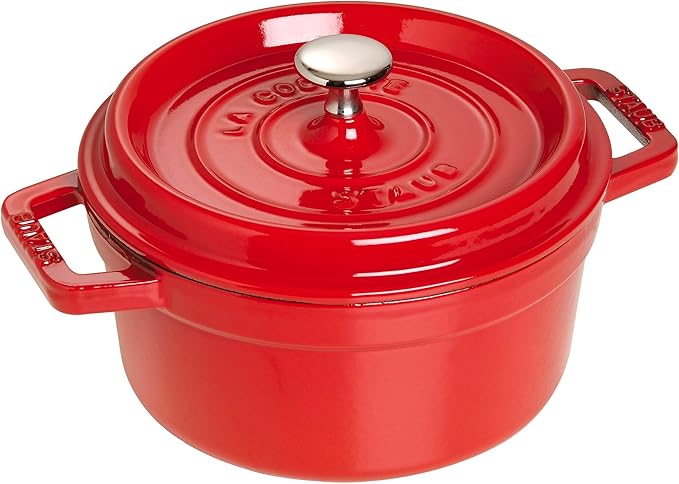 chezTrès bonne qualité pour cette marque alsacienne appréciée des français.
Fabrication française.✅On aime
Nombreux modèles, tailles, et couleurs.❌On aime moins
Garantie 2 ans.
❓ FAQ – Frequently Asked Questions
What is the best Dutch oven for everyday use? Enameled cast iron remains
the most versatile and reliable option.
Can a casserole dish be used in the oven?
Yes, provided you do not exceed the maximum temperature specified by the manufacturer.
Why do dishes taste better when reheated the next day?
Because the flavors have had time to develop and meld together.
✅ Get started!
Ultimately, choosing the right casserole dish is key to successful slow-cooked meals. With the right material, the right size, and proper use, you’ll achieve flavorful, tender, and hearty dishes.
Thus, investing in a quality casserole dish means choosing authentic, sustainable, and deeply indulgent cooking.





Follow us on social media