




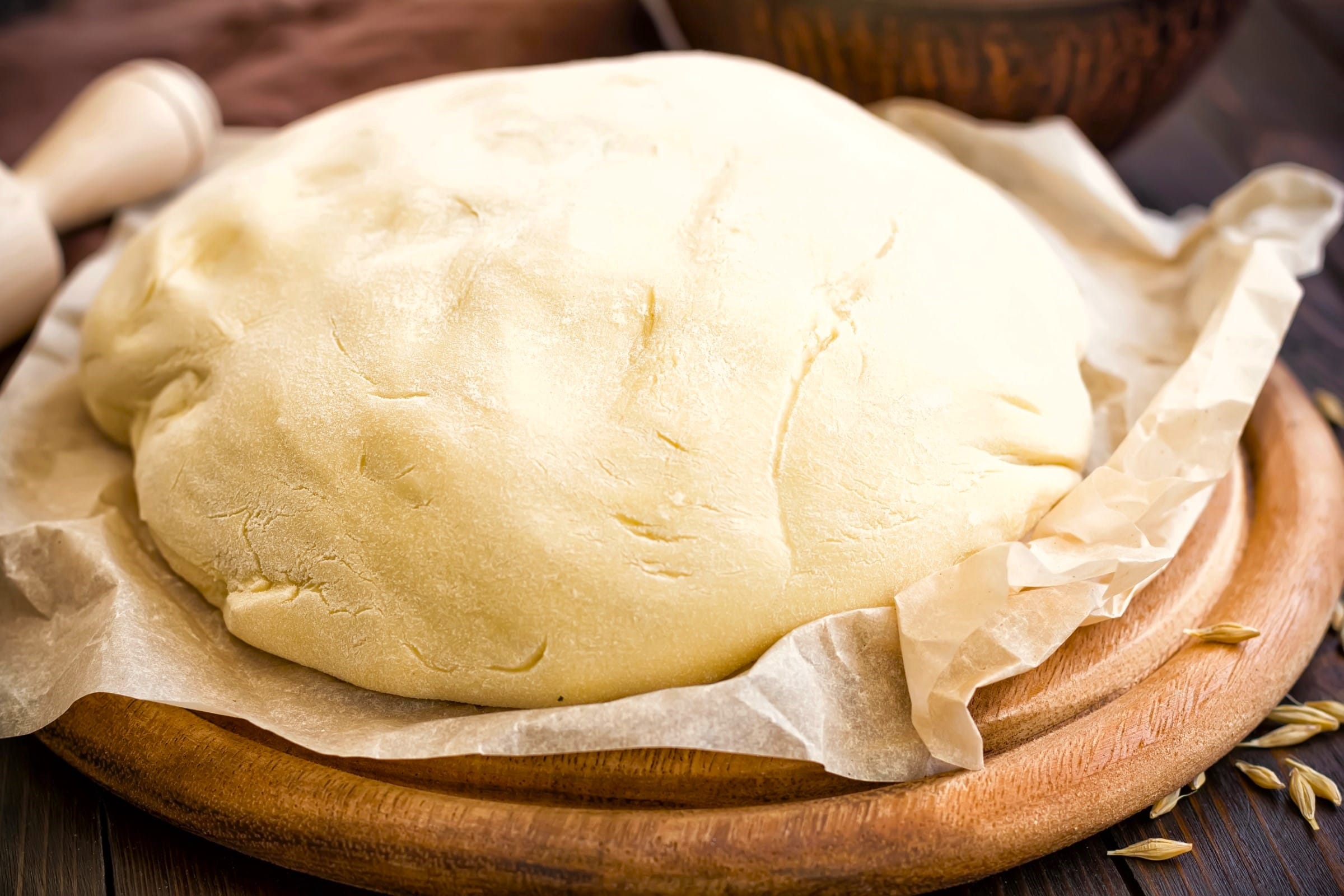
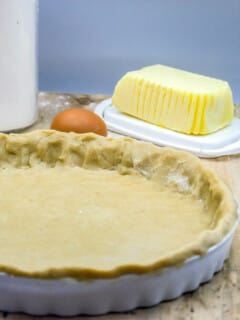
Here’s my go-to recipe for homemade shortcrust pastry—it’s easy to make. This is my tried-and-true recipe that I’ve been using for years, and it’s helped me create countless delicious, authentic tarts and quiches.
As you’ll see, this recipe is very simple to prepare, and the result is much better than store-bought dough!
Choosing the Ingredients
One advantage of making your own dough is that you can choose the quality of your ingredients. For a price equivalent to or even lower than that of store-bought dough, you’ll get a dough whose ingredients you know exactly, and which is free of preservatives or other chemical additives.
This homemade shortcrust pastry also gives you the flexibility to mix things up and adapt to different dietary needs.
In particular, you can use different types of flour to make it. Each one will give your creations a unique and authentic character.
Here are a few examples of flours you can use:
- white flour (T45/T55) for pastries, where the taste of the flour takes a back seat to that of the butter,
- semi-whole wheat or brown flour (T80), which gives the shortcrust pastry a more pronounced grain flavor,
- whole wheat flour (T110) is my go-to for savory tarts. It gives my tarts a rustic character and an irresistible roasted grain flavor,
- low-gluten einkorn flour,
- rice, corn, buckwheat, chestnut, and chickpea flours, which are completely gluten-free and ideal for people with gluten intolerance. However, they are much more crumbly and less easy to work with. You’ll also need to do a few test runs to try them and see if you like their taste. Personally, I like to mix them together for a more balanced flavor. For example, rice and buckwheat flours complement each other well.
Two preparation methods
In this recipe for homemade shortcrust pastry, I’m offering two preparation methods. It’s up to you to choose the one that suits you best, depending on the time and equipment you have available:
- The traditional method requires getting your hands dirty—literally 😃—but you’ll only need a mixing bowl or a large bowl in this case,
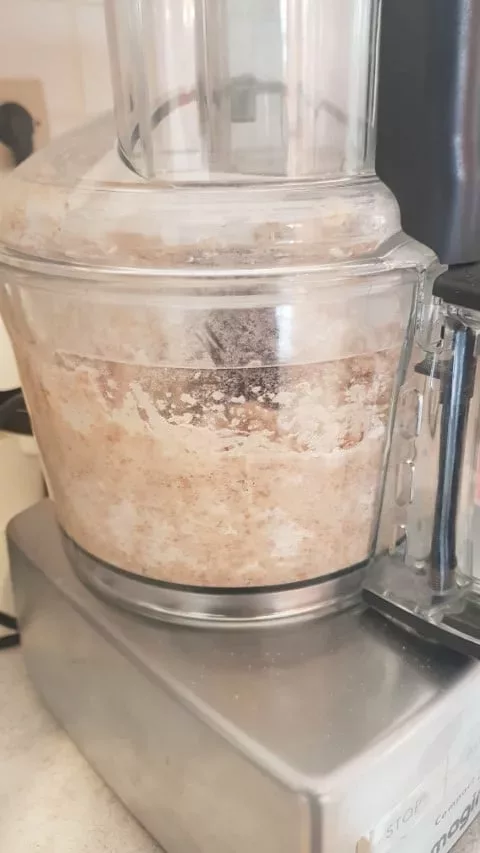
- The quick method requires a food processor with a “kneading” function or a stand mixer.
Give it a try!
I hope you’ll adopt this homemade shortcrust pastry recipe too—it’s so simple to make. You’ll see, once you’ve tried it, you’ll say goodbye to store-bought dough and its plastic packaging.
Enjoy, and thank you in advance for your comments 🙏


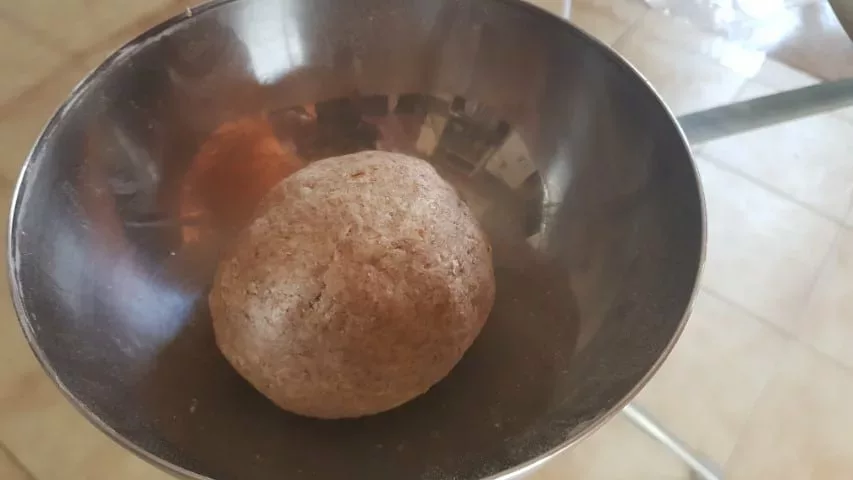
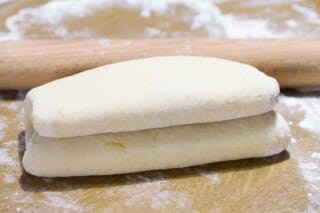






Should the dough be left to rest in the fridge or at room temperature?
(Step 5 or 7 needs to be revised, as both options are mentioned)
Hi Micka, you're right—those two steps were a bit contradictory, but it's been corrected now. Basically, if you're making the dough right away, you don't need to refrigerate it, but if you're making it the day before, refrigeration is recommended. Thanks for your feedback!
EXCELLENT
Very easy—top-notch
Excellent and easy to make.
Top
Thanks, Zohra!