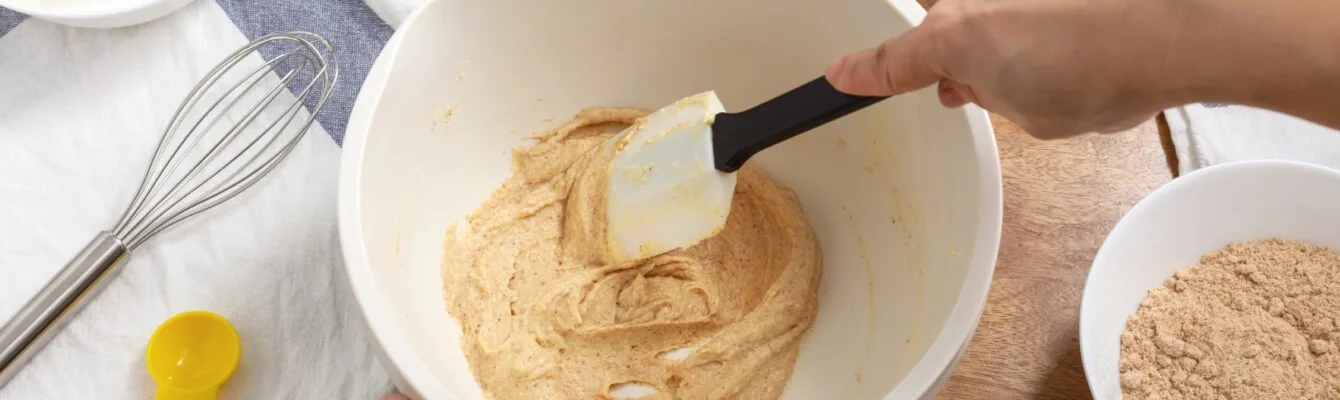





Among all the utensils that populate a kitchen, some seem almost invisible… until the day you go without. The maryse is one of those essentials too discreet to be noticed, but too useful to be forgotten.
Fine, flexible and precise, it accompanies beginners and pastry enthusiasts alike, slipping into every preparation with incomparable functional elegance.
We often see it, we sometimes use it without really thinking about it – but it’s often the one that saves an airy mousse or allows fragile dough to be recovered without breaking its texture.
It’s a bit like the pastry chef’s Swiss army knife, but in a milder version.
🥄 What is a Maryse?
A maryse is a flexible spatula, consisting of a flexible head (often made of silicone) and a rigid handle. It is distinguished above all by its ability to fit perfectly into the shape of utensils – bowls, saucepans, culs-de-poule – without ever leaving a trace of paste stuck to the sides.
It is neither really a whisk, nor a spoon, nor a classic rigid spatula: it is the intermediate tool that knows how to scrape, smooth, mix gently.
Its flexibility allows it to preserve fragile textures where other utensils would crush or spoil the work.
🍳 Materials and Shapes
Today there are different versions of the maryse, each adapted to particular needs and uses.
The modern maryse is very largely made of silicone, as this material resists heat and glides beautifully over surfaces. A silicone maryse will withstand a bain-marie, can smooth a hot ganache, scrape a still-warm cream and can be cleaned in one pass.
Older models were sometimes made of rubber, very supple and pleasant to use, but more fragile over time. They can crack, become impregnated with odors or harden – which is why they are now less common.
Finally, we also come across marys made of rigid plastic or nylon, but these are more like spatulas: they scrape less effectively and don’t hug surfaces with the same finesse.
The silicone is the obvious choice, and for good reason: hygiene, resistance, flexibility, durability. Some models are even entirely monobloc (head + handle in one piece), which avoids deposits and facilitates maintenance, especially in pastry-making where hygiene is crucial.
🍳 Les Usages de la Maryse en Cuisine
The maryse doesn’t have a single function: it combines several. It’s a utensil that accompanies a preparation from start to finish, without ever seeming intrusive. First, it is used to scrape, then to mix, but it becomes just as valuable for smoothing, transferring or even cooking certain preparations.
In contrast to the whisk, which incorporates air, or the rigid spatula, which pushes and bursts textures, the maryse caresses ingredients. It passes under the foam, lifts what has settled to the bottom, accompanies the dough rather than rushing it. It’s this almost tactile aspect that makes it such a pleasant tool to use.
🍰 Recettes et Préparations Typiques
The maryse can be found in an impressive number of recipes, but it becomes particularly irreplaceable when it comes to delicate or precious textures. In all these preparations, it ensures a gentler gesture than a whisk, cleaner than a spoon and more precise than a rigid spatula.
Here are a few concrete examples where she excels:
| Preparation | Detailed use of the maryse |
|---|---|
| Génoise, cookie, mousse | Allows you to incorporate egg whites or whipped cream without breaking their volume. The circular movement and gentle turning preserve the air and guarantee light results. |
| Ganache & melted chocolate | Thanks to its heat resistance, it melts and mixes chocolate gently, while scraping the sides of the container perfectly. No waste, no loss. |
| Custard or crème anglaise | In a bain-marie, it stirs without whipping, prevents the cream from sticking to the bottom and ensures an even, silky texture. |
| Cake or pancake dough | A flexible maryse leaves nothing at the bottom of the bowl. It guides the batter and catches every drop, making the gesture crisp, fluid and clean. |
| Glaçage & entremets | In finishing, it smoothes and evens the surface with unrivalled control, rather like a brush stretching paint without leaving a trace. |
Marshmallow doesn’t just mix: it spares, it protects, it sublimates.
🛒 Our selection
Here you will find a selection of marys that we have chosen according to their origin and quality, as well as user feedback.
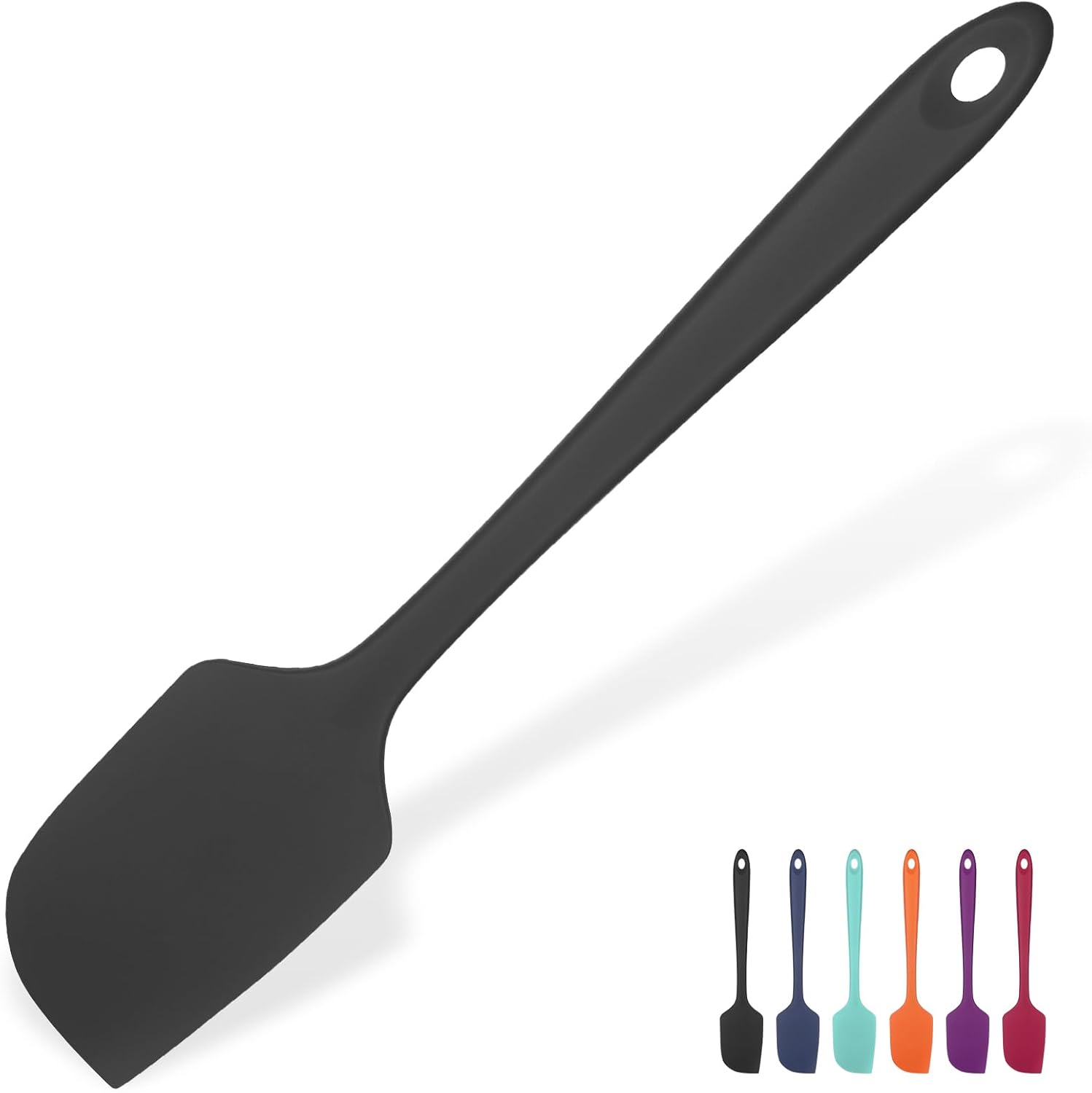 chez
chez Longueur 29cm
Disponible en 6 couleurs
Plusieurs formes et tailles dans la gamme (spatule, cuillère, extra-large)✅On aime
Silicone résistant jusqu'à 315°C
Sans BPA chezSilicone haute température +260°C
Longueur 25 cm✅On aime
Marque française chezLongueur 27,5cm
Sans BPA
Silicone résistant à la chaleur✅On aime
Trou pour suspension
Certification LFGB Allemande
Noyau métallique intérieur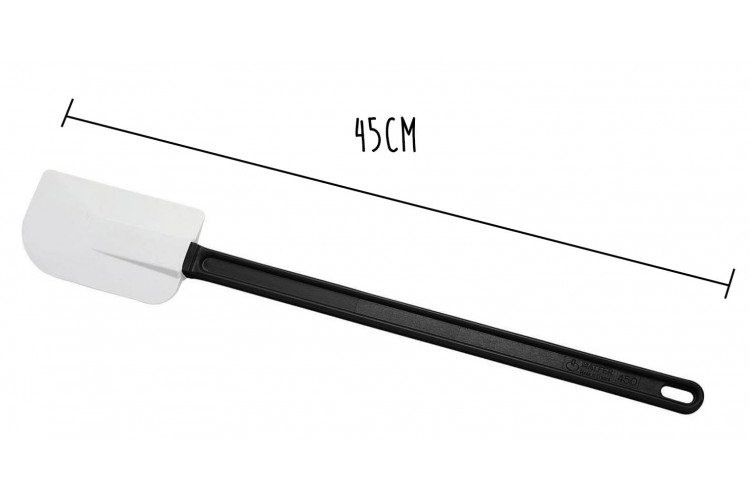 chez
chez Spatule grande longueur 45cm
Idéale professionnels✅On aime
Fabriquée en France
Résistante aux températures importantes jusqu'à +260°C
Manche coloris noir en Exoglass® résistant à +200°C
🥄 Lancez-vous!
Polyvalent, light and precise, the maryse is one of those tools we underestimate until the day we cook without it. Whether scraping a bowl, incorporating an airy mousse or smoothing a shiny ganache, it makes itself indispensable in an impressive number of situations. Take it in hand once, and you realize that it simplifies everything.
It’s not just a utensil: it’s an extension of the hand, a supple and controlled gesture, a silent but indispensable ally in the kitchen.
Well-chosen, well-maintained, always at hand, it guarantees cleaner finishes, less waste, and true precision in textures.
A small spatula… for great services in the kitchen! 🍰✨
Pour aller plus loin, venez découvrir toutes les recettes qui utilisent la maryse !



Follow us on social media