



Baking paper, also known as parchment paper, is a kitchen essential. Versatile and convenient, it offers many benefits when preparing meals.
How is parchment paper made?
Baking paper is made from cellulose pulp, most often derived from wood. The cellulose is first transformed into paper through a traditional papermaking process: the fibers are suspended in water, then deposited onto a screen to form a continuous sheet, which is then pressed and dried. At this stage, the result is a relatively ordinary paper, still porous and sensitive to moisture and grease.
The distinctive feature of parchment paper comes from the so-called sulfurization step. The paper is briefly immersed in a bath of diluted sulfuric acid. This treatment alters the surface structure of the cellulose fibers: they swell and partially gel, making the paper much denser, smoother, and more durable.
After this bath, the paper is immediately neutralized, thoroughly rinsed with water to remove all traces of acid, and then dried. This process gives the paper its essential properties: impermeability, heat resistance, and a natural non-stick effect.
Depending on its intended use, parchment paper may then undergo additional treatments, such as a light coating of food-grade silicone to enhance non-stick properties and improve resistance to very high temperatures.
Finally, it is cut, rolled, or sheeted, ready for use in cooking and baking, all while adhering to strict food safety standards.
What are the properties of parchment paper?
Treated in this way, parchment paper offers numerous properties that are particularly useful in the kitchen:
Heat Resistance
The heat resistance of parchment paper comes from the aluminum sulfate treatment. This process makes the paper capable of withstanding high temperatures without warping or burning. Thus, it can be used safely in cooking environments, such as in an oven, without compromising its structural integrity.
Water Resistance
The aluminum sulfate treatment also creates a water-repellent barrier, preventing water from penetrating the paper. This makes it ideal for culinary uses where preserving the texture of food is essential, even in the presence of liquids.
Safe for Health
In general, parchment paper is considered safe for normal food use. However, certain precautions should be taken when using it at very high temperatures. At extremely high temperatures, it can release potentially toxic compounds, such as sulfur dioxide. It is therefore recommended not to use parchment paper at temperatures above 250°C, which is well within the range for most oven-baked dishes.
Uses of parchment paper in cooking
Fat-free cooking
Baking paper is ideal for cooking food without adding fat. It ensures even cooking and prevents food from sticking to the baking sheet.
Wrapping food
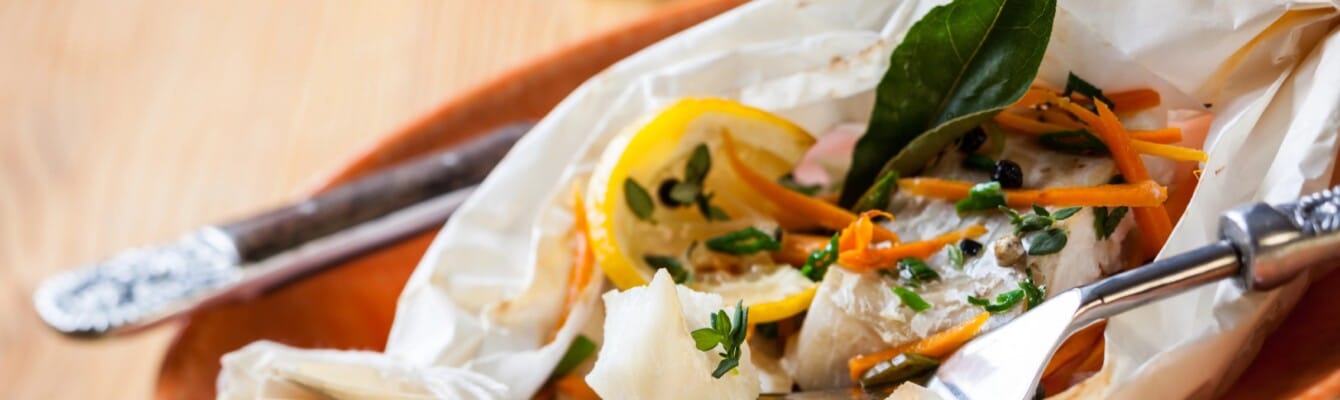
Baking parchment is the perfect tool for making papillotes. It locks in the food’s flavors while keeping it tender and juicy. Vegetables, fish, or poultry can thus be cooked in their own juices.
Pie crust
Baking paper can be used to make it easier to remove pies from the pan and prevent the dough from sticking to the pan. Simply place it in the bottom of the pan before rolling out the dough, then gently remove the paper once the pie is baked.
Protection against splatters and stains
Baking paper can be used as a cover to prevent splatters when cooking in the oven or in a pan. It also protects the work surface from stains caused by sauces, grease, or juices.
Making sweets and pastries
Baking paper is a valuable ally when preparing sweets such as cookies or meringues. It prevents the batter from sticking to the baking sheet and makes it easier to remove the cookies after baking.
Benefits of parchment paper
Baking paper offers many advantages over alternative solutions, such as greasing, aluminum foil, or plastic wrap.
Health and Environment
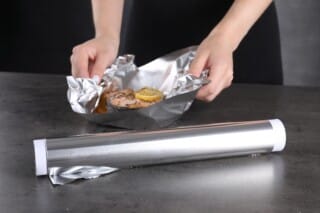
Baking paper is a healthy and environmentally friendly alternative to aluminum foil. Aluminum foil poses a risk of aluminum leaching, particularly with acidic foods and at high temperatures. Furthermore, aluminum foil requires a significant amount of energy to produce, making it an unsustainable material—especially as a disposable item destined for the trash!
As a packaging material, parchment paper is also a better choice compared to plastic wrap. Parchment paper is biodegradable, whereas plastic wrap contributes to the proliferation of plastics and their derivatives in the environment.
Non-stick
Baking paper prevents food from sticking, thus avoiding the hassle of cleaning baking sheets or pans.
Preserves flavors
Baking paper allows food to retain its natural flavor without it being altered by direct contact with the baking sheet or pan.
Ease of use
Baking paper can be cut to the desired size and fits all baking pans and trays. It is also easy to handle and fold to make foil packets.
Our selection
Here you’ll find a selection of products we’ve chosen based on their origin, eco-friendliness, and user satisfaction.
 chez
chez Existe en deux largeurs : 29cm et 37cm
✅On aime
Fabriqué en France
Certifié FSC chezLargeur 38cm
✅On aime
Surface anti-glisse : la feuille ne s'enroule pas sur elle-même
Certifié FSC
Give it a try!
In conclusion, parchment paper is an indispensable tool in the kitchen. Its versatility and numerous benefits make it a valuable ally when preparing meals.
Whether for fat-free cooking, wrapping food, or making it easier to remove dishes from pans, parchment paper is a must-have for saving time and eating healthy!
Pour aller plus loin, venez découvrir toutes les recettes qui utilisent le papier sulfurisé !

Follow us on social media