





The cannelé is an emblematic Bordeaux specialty, recognizable by its caramelized crust and tender heart. To achieve this characteristic contrast, the mold plays a decisive role. Even with an excellent recipe, a poorly chosen or misused mold can compromise the result. Let’s take a look at how to choose, use and maintain your fluted molds.
👨🍳 Why the mould is essential to succeed with cannelés
The mold directly influences heat diffusion, crust formation and baking consistency. A poor-quality mold can result in insufficient caramelization, overly moist dough or an ill-defined shape. The choice of mould is therefore not incidental, but central to the success of cannelés.
🍮 How to choose the right canneles mold
Tin-plated copper molds: the exacting tradition
Tin-plated copper molds are considered the traditional benchmark. Copper offers excellent heat conduction, ideal for obtaining a well-caramelized, even crust. As copper is reactive, it is covered with a tin coating for food contact. It’s essential to know that the recommended maximum temperature is around 230°C, this threshold corresponding to the melting temperature of tin. Exceeding this temperature can damage the coating, impair mold performance and raise food safety issues.
These molds require rigorous maintenance and regular culottes, but they offer a rendering very close to artisanal cannelés.
Metal molds with non-stick coating: a good compromise
Metal molds with non-stick coating are an interesting alternative for regular use. They can be made of steel or aluminium at the lower price points. Metal, if thick enough, ensures good temperature rise and resistance. These molds are usually coated with a non-stick coating, which facilitates demolding.
When choosing, it’s important to check the maximum temperature supported by the coating, which depends on the type of non-stick treatment used by the manufacturer.
This limit is generally between 200°C and 260°C. Repeatedly exceeding this limit can degrade the coating, reduce its service life and, depending on its composition, entail a risk of releasing undesirable substances. It is therefore essential to adhere strictly to the manufacturer’s recommendations.
Silicone molds: practical but handle with care
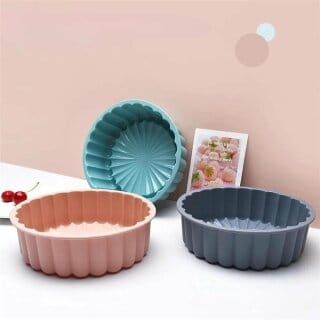
Silicone molds seduce with their flexibility and ease of demolding. They are practical for occasional use or for beginners. On the other hand, they rarely deliver the same degree of caramelization as metal molds.
You also need to pay close attention to the maximum temperature indicated, as not all silicones are of the same quality. Some poor-quality silicone molds may contain glues or additives with limited heat resistance. In the event of overheating, there is a risk of deformation or migration of undesirable compounds.
Always choose a food-certified silicone and respect the temperatures advertised.
📏 Which mold size to choose?
There are three main sizes of fluted mold, each catering to a specific use.
The table below summarizes the characteristics and uses of each.
| Mold diameter | Common designation | Main use | Tentative baking time* |
|---|---|---|---|
| 3,5 cm | Mini fluted | Perfect for bites, buffets, cocktails and gourmet coffees. Quick to bake and easy to enjoy. | 45 to 55 minutes |
| 4.5 cm | Medium fluted | Intermediate format for individual desserts or gourmet platters. Good balance between crust and softness. | 55 to 65 minutes |
| 5.5 cm | Cannelé traditionnel | Classical Bordeaux format, ideal for authentic tasting with a well-caramelized crust. | 65 to 75 minutes
* Times given as a guide, for traditional two-phase baking (high temperature initially, then more moderate). They may vary according to the type of mould (copper, coated steel, silicone), the thermal inertia of the oven and the recipe used.
🔥 How to Use Your Cannelé Molds Properly
The greasing of the molds is an essential step.
For metal molds, a mixture of clarified butter and beeswax provides a smooth, caramelization-friendly surface. Steel molds with non-stick coating require light greasing, especially during initial use.
Silicone molds generally require little fat, but a light initial greasing is still recommended.
The filling must reach around 90% of the height of the mold to avoid overflowing during baking.
The cooking takes place in two stages, with a high temperature initially to sear the crust, then a more moderate temperature to cook the interior. Here again, compliance with maximum mold temperatures is essential.
🧽 How to maintain your fluted molds
After each use, let the molds cool before cleaning with warm water and a soft sponge.
The dishwasher is not recommended for tinned copper and metal molds with non-stick coating, as it accelerates their wear.
The regular tapping of copper molds improves demolding and extends their service life.
For storage, make sure the molds are perfectly dry before stacking. Keep them dry.
✅ Go for it!
Choosing, using and maintaining your fluted molds properly is essential to the success of this demanding pastry.
By taking into account material, size, maximum temperature supported and good maintenance practices, you put all the chances on your side to obtain cannelés that are crispy on the outside and melt-in-the-mouth on the inside, batch after batch😋
Envie de passer à la pratique ? Découvrez toutes les recettes où l'on utilise le moule à cannelés !











Leave a Reply