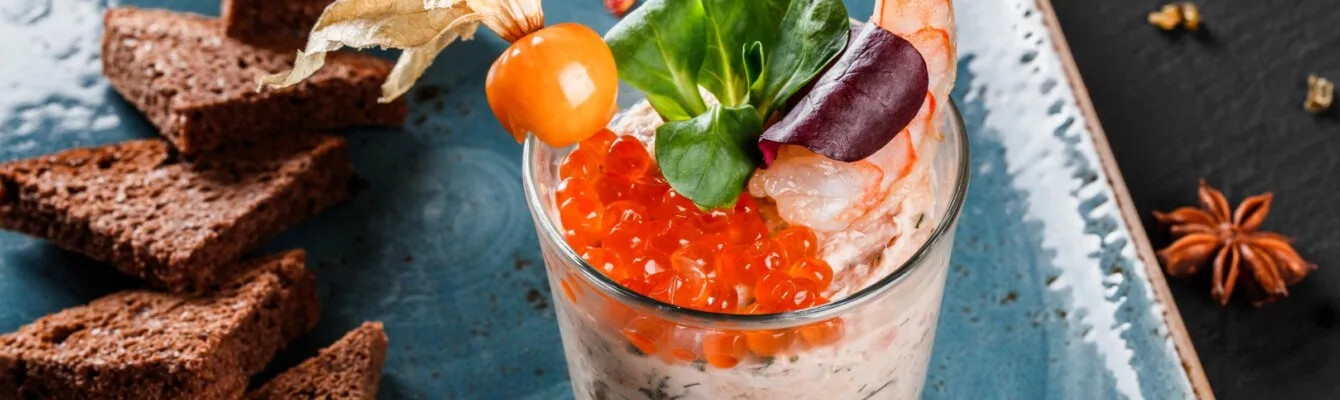





Verrines have become a staple of modern cuisine. They appeal to both professional chefs and home cooks alike thanks to their individual portions, elegant presentation, and wide creative freedom. Whether served as appetizers, main courses, or desserts, verrines are perfect for any occasion, from a formal dinner to a casual buffet. They allow you to play with textures, colors, and flavors while keeping portion sizes under control.
In this article, let’s explore in detail what verrines are, why they’re so popular, how to assemble them properly, and which recipes to choose depending on the occasion.
🍷 What is a verrine in cooking?
A verrine is a culinary dish served in a small transparent container, most often made of glass. This container highlights the different layers of the recipe and allows you to immediately see the ingredients, which fully enhances the tasting experience.
The term “verrine” refers both to the container—whether a glass, mini jar, or cup—and to the dish itself. Unlike traditional appetizers plated on a plate, verrines require a vertical arrangement. This constraint becomes a true creative asset, as the eye discovers the dish even before the first bite.
⭐ Why verrines have become a must-have
A practical and elegant format
The verrine allows for individual, clean, and quick service. It simplifies meal planning, especially for cocktail parties or receptions, as each guest receives an identical, pre-plated portion. This format eliminates the need for last-minute cutting and ensures a polished presentation without extra effort.
Instantly showcases recipes
Thanks to the transparency of the glass, the verrine offers a strong visual impact. Color contrasts, layered arrangements, and varied textures catch the eye even before tasting. This visual aspect plays an essential role when you want to impress your guests with simple yet beautifully presented recipes.
Total creative freedom
The verrine knows almost no limits. It allows you to combine hot or cold dishes, savory or sweet preparations, as well as smooth, crunchy, or melt-in-your-mouth textures. This freedom encourages culinary innovation and the pairing of sometimes unexpected ingredients, while remaining accessible to all levels of cooking.
🍴 Different types of verrines
Savory verrines
Savory verrines are perfect for both appetizers and starters. They can be light or more indulgent, depending on the ingredients chosen. Examples include classic combinations like avocado, shrimp, and cream cheese; roasted vegetables with goat cheese; fish rillettes; or soups served cold or hot. These verrines offer an excellent alternative to traditional appetizers, while adding a modern twist.
Sweet verrines
Sweet verrines appeal for their contemporary style and ease of presentation. They are a great alternative to certain plated desserts while allowing for better portion control. Common options include tiramisu in verrines, fruit panna cotta, chocolate and crumble combinations, or mousses served with coulis. This format allows for reduced sugar content while still delivering a truly indulgent experience.
Appetizer verrines
Appetizer verrines are designed for quick sampling. Portions are intentionally kept small, but the flavors must be bold and well-balanced. They are the perfect accompaniment to a dinner party, buffet, or cocktail hour, offering an elegant alternative to classic appetizers.
🧩 How to assemble a verrine
Layering
A successful verrine relies on a balance between the different layers. Each layer should offer a distinct sensation, such as a creamy base, a crunchy element, and an aromatic touch. To maintain a clear and appealing presentation, it’s best to limit the number of layers to three or four at most.
Play with textures
The variety of textures is what makes verrines so rich. A preparation that is solely smooth often lacks depth on the palate. Pairing a cream with a crumble, a purée with crunchy vegetables, or a mousse with crumbled cookies creates a pleasant contrast that significantly enhances the tasting experience.
Pay close attention to seasoning
In a verrine, portions are small, which makes seasoning even more important. It must be precise and balanced, as a bland dish stands out immediately. Salt, pepper, fresh herbs, spices, and citrus zest play a key role in enhancing flavors without overpowering them.
🥛Choosing the container
The glass: an essential element
The verrine glass directly influences how the recipe is perceived. It must be transparent to highlight the layers. Its size must match the portion being served, otherwise it will give the impression of a half-empty glass. Stability remains essential, though this doesn’t preclude choosing original shapes—straight, curved, or slightly angled. Straight shapes make assembly easier, while flared shapes often add a touch of elegance.
What size should you choose?
For an appetizer, a volume of 5 to 8 cl is more than enough. For a starter, a 10– to 15-cl verrine offers a good balance, while a dessert can be served in a 12– to 20-cl container. Adjusting the size helps avoid excess and maintains the harmony of the menu.
🧰 Handy accessories for perfect verrines
To create neat and uniform verrines, certain kitchen accessories prove particularly useful. They save time, improve the precision of plating, and yield a more polished visual result, especially when the preparations include multiple layers. Among them, a pastry bag, an angled spatula, or a long spoon make working in narrow containers easier, but the most practical accessory is undoubtedly the verrine funnel.
The verrine funnel: an indispensable ally
The verrine funnel allows you to pour liquid or creamy mixtures directly into the glass without dirtying the sides. It is particularly useful for veloutés, creams, coulis, or mousses, when the precision of the assembly plays a key role in the presentation. Thanks to its specially designed opening, it ensures clean, even, and perfectly defined layers.
In addition to enhancing the aesthetic appeal, the verrine funnel offers real ease of use. It reduces waste, minimizes spills, and allows for cleaner work, even when preparing a large number of verrines. For optimal use, it is recommended to choose a model that is easy to clean, compatible with both hot and cold preparations, and whose diameter fits most verrine glasses.
❄️🔥 Hot or cold verrines: which to choose?
Cold verrines
Cold verrines are by far the most common. They are easy to prepare in advance and store easily in the refrigerator. They are perfect for summer meals, buffets, and appetizers, where organization plays a key role.
Hot verrines
Hot verrines require more precision. The temperature must remain stable until serving time, which demands careful coordination. They are often used for soups, veloutés, or dishes made with vegetables or shellfish. In these cases, immediate serving is essential.
🥗 Verrines and Nutritional Balance
Contrary to popular belief, verrines can fit perfectly into a balanced diet. The individual serving size helps control portions and avoid overeating. By prioritizing vegetables as a base, limiting fats, using lean proteins, and reducing sugar in sweet verrines, it becomes possible to offer recipes that are both indulgent and sensible.
🎉 Verrines for Special Occasions
Verrines for the holidays
At Christmas, New Year’s, or a birthday, verrines add a touch of elegance to the table. Ingredients like smoked salmon, foie gras, scallops, or high-quality chocolate work particularly well here. The presentation becomes almost gourmet, while remaining accessible.
Verrines for a buffet
Verrines are ideal for buffets. They eliminate the need for carving, make it easier for guests to move around, and allow you to offer several different recipes without making the meal too heavy. This format also encourages a variety of flavors.
⚠️ Mistakes to avoid with verrines
Certain mistakes are common, such as piling on too many layers, which makes the dish hard to read, using textures that are too similar, or under-seasoning. An ill-suited container can also detract from the presentation. A verrine should remain simple, visually clear, and cohesive.
Homemade verrines: organization and preparation
Plan Ahead
Most verrines are prepared a few hours in advance, or even the day before, which significantly reduces stress on the day of service. However, it’s best to add crunchy elements, fresh herbs, and certain toppings at the last minute to preserve their texture and freshness.
Storage
Verrines generally keep for 24 to 48 hours in the refrigerator, provided they are well covered. Those made with raw fish or crème fraîche require special care and should be consumed sooner.
🌍 Verrines and Culinary Creativity
Verrines offer an exceptional playground for creativity.
They encourage bold combinations, global influences, and seasonal cooking. They also allow you to reinterpret classic recipes in a modern and elegant way.
✅ Why use verrines in the kitchen?
Verrines combine aesthetics, practicality, and indulgence. They perfectly meet current expectations, with controlled portions, elegant presentation, and a wide variety of flavors. Easy to adapt, they are equally at home in everyday meals and on special occasions. Mastering the art of verrines means enriching your kitchen with a versatile and decidedly contemporary tool.
Pour aller plus loin, venez découvrir toutes les recettes inspirées du thème "Verrines" !







Follow us on social media