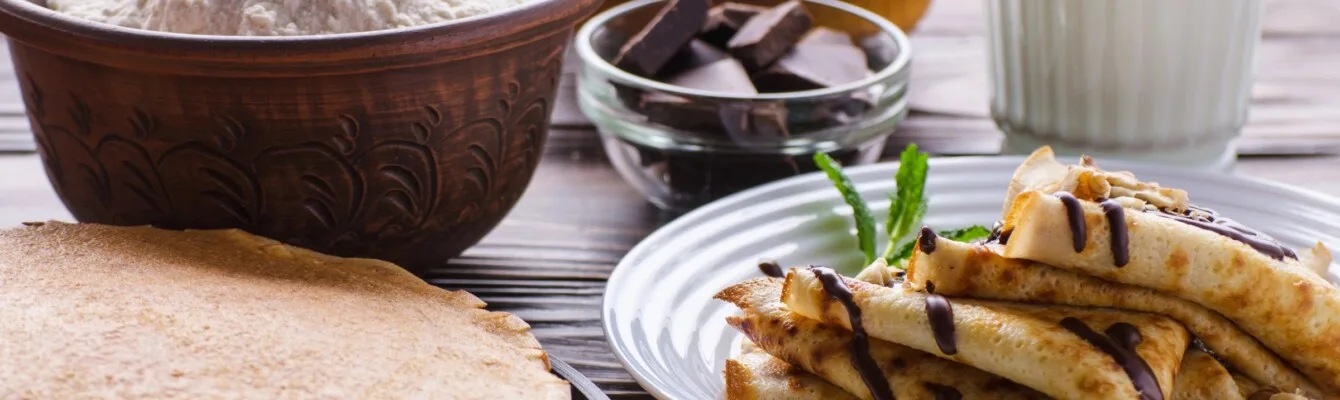





Crepes and galettes occupy an important place in traditional cooking. They remain simple to prepare and allow for a wide variety of recipes, both sweet and savory.
However, the choice of flour strongly influences the texture, the taste and the nutritional quality of pancake batter. Understanding the differences between flours will help you succeed in your preparations and adapt your recipes according to your desires or dietary needs.
Today, many of you are choosing more natural and more nutritious alternatives, such as organic buckwheat flour for your galettes. Here, we’ll explain which are the best choices for cooking pancakes and galettes that are both healthy, supple and tasty!
Wheat flour, the reference for sweet pancakes
The wheat flour remains the most widely used for preparing traditional crêpes. It offers a soft and light texture that makes cooking easier. Its gluten gives elasticity to the dough and limits the risk of tearing when turning.
The most common wheat flours are white flours, often graded T45 or T55. They produce fine, fluffy pancakes. The resulting batter, with its light, subtle taste, can be flavored with lemon zest or orange blossom water. They are also easy to combine with sweet fillings such as jam, chocolate or sugar.
It should be noted, however, that white flours undergo significant refining. This process removes much of the fiber and micronutrients present in the grain. Pancakes made with these flours therefore have a higher glycemic index than with wholemeal or semi-complete flours.
For people with gluten intolerance, several alternative flours to wheat flour provide good results while reducing or eliminating gluten.
Buckwheat flour, ideal for Breton galettes
Buckwheat flour is inseparable from traditional Breton galettes. Unlike wheat, buckwheat contains no gluten. This particularity gives a slightly different texture, often more rustic, but much appreciated in savory preparations.
Buckwheat brings a characteristic, slightly nutty flavor that goes particularly well with cheese, eggs or vegetables.
Nutritionally speaking, this flour, most often found in complete form, contains vegetable proteins, fibers and several minerals. It also remains more satiating than refined wheat flours.
Galette dough requires a certain resting time to improve its baking properties. Proper hydration and cooking on a hot griddle will result in a suppleand crispy galette.
Pesticides, molds and mycotoxins
Conventionally grown cereals can contain pesticide residues, particularly on the outer husk of the grain. However, the more complete or less refined a flour is, the more it retains this envelope called bran, which can increase the potential presence of contaminants if cultivation is not controlled. Flours from organic farming generally reduce this risk, as they prohibit the use of synthetic pesticides.
Cereals also remain susceptible to mold development during cultivation or storage. These molds can produce mycotoxins, natural substances that are sometimes resistant to cooking and undesirable for health when consumed in large quantities. Refining partially reduces the presence of these toxins since it removes the outer layers of the grain, but at the same time reduces the flour’s nutritional richness.
To limit these risks, it’s still advisable to choose a quality organic flour, and to store it away from light, dry, cool (why not in the fridge if you have space) and protected from air. Under these conditions, you’ll be able to keep your flour for many months without it losing its taste and health qualities.
Lance yourself!
The choice of flour directly influences the quality of crêpes and galettes. Wheat flours offer flexibility and lightness, while buckwheat adds character and nutritional richness.
Alternative flours, meanwhile, open the door to a more varied cuisine adapted to everyone’s diets.
A well-preserved quality flour, as well as respecting the dough’s resting time, will guarantee irresistible😋
galettes and crêpes








Leave a Reply