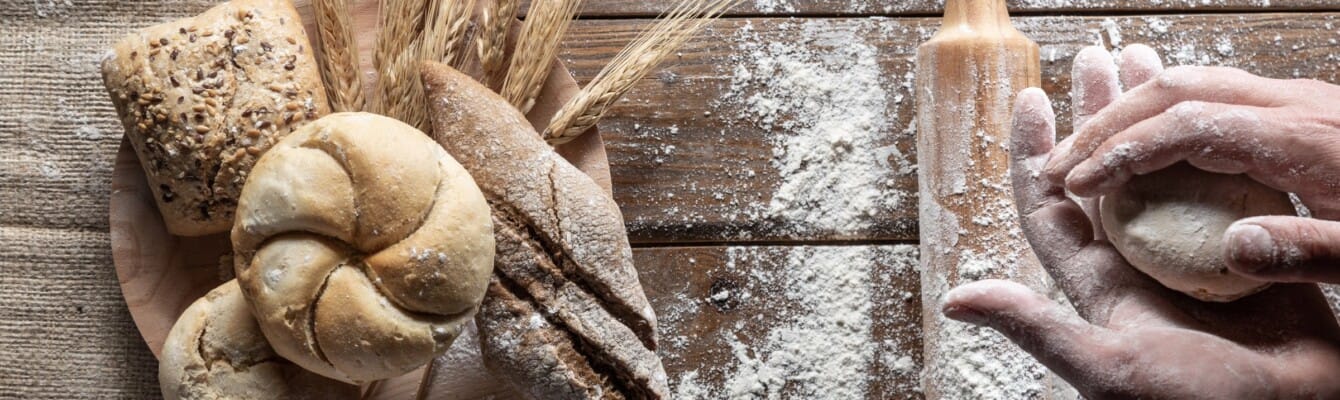





Flour is one of the most widely used ingredients in cooking and baking. Yet choosing the right flour can be complicated by the sheer number of varieties available. Wheat, wholemeal, T45, T80, T150, rye, spelt, rice or gluten-free flour… each type has its own particularities and uses.
In this article, we explain how to choose the right flour for your recipes and get the most out of your culinary preparations.
Understanding the types of wheat flour
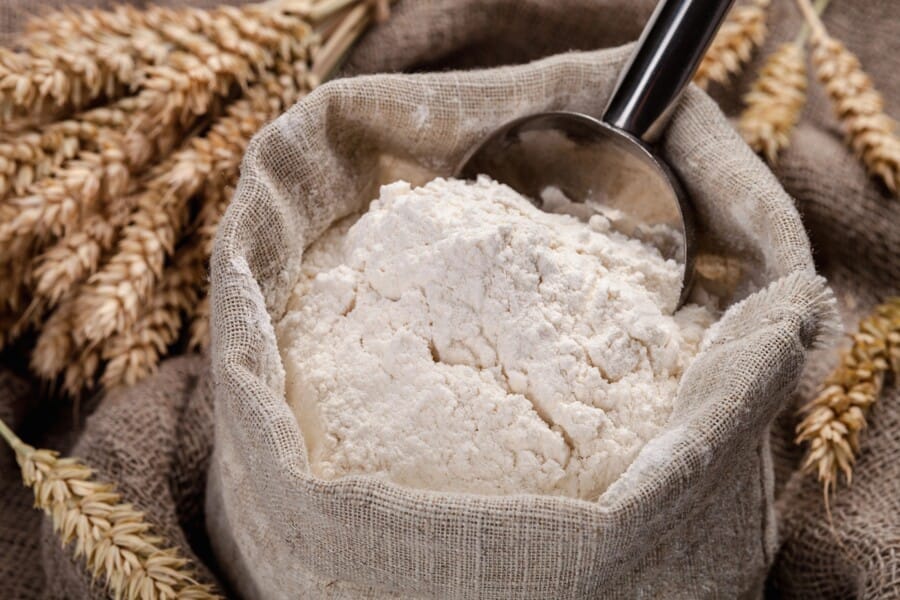
Wheat flour is the most common and versatile flour used in cooking. It is distinguished mainly by its type (T), which corresponds to its “ash content”. In fact, it’s on the basis of this ash content that we come to determine the flour’s level of refining.
The table below will give you an at-a-glance overview of all types of flour and their usual uses in cooking.
| Farine T45 | very thin, ideal for light baked goods such as cakes, crêpes and biscuits. |
| Farine T55 | the white flour classic for bread, pasta and sauces. |
| Farine T65 | slightly less refined, perfect for white bread or brioche. |
| Farine T80 | semi-complete, for more rustic breads and less light pastries. |
| Farine T110 | complete, with more fiber, ideal for wholemeal breads or rustic-inspired salted tarts. |
| Farine T150 | intégrale, for a strong taste and maximum fiber and nutrients. |
In summary, the higher the “T” index, the more son and nutrients the flour contains. It is therefore more nourishing, but can make the dough denser.
Farines-speciales-et-alternatives
In addition to wheat, there are many other flours adapted to certain uses or special diets:
| Rye flour | Ideal for rustic breadand traditional rye bread. It contains less gluten than wheat. |
| Spelt flour | Soft and slightly sweet, suitable for breads, cakesand home-made pasta. |
| Corn flour | Perfect for corn bread, polentas and some pastries. |
| Rice flour | Often used in gluten-free recipes, it yields textures that are light, crumbly and taste biscuity. |
| Buckwheat flour | Indispensable for galettes bretonnes, it brings a strong, rustic flavor. |
| Gluten-free or low-gluten flours | Chickpea, quinoa, teff, millet, amaranth, coconut, chestnut… These flours are ideal for gluten-free diets or to diversify nutritional intakes. They often need to be mixed with each other or with a little xanthan gum or psyllium to obtain a texture close to wheat. |
choose-flour-by-recipe
The choice of flour essentially depends on what you wish to prepare:
- Light pastry: opt for T45 or T55 for moist cakes and melt-in-your-mouth cookies.
- White bread: T55 or T65 depending on desired texture.
- Wholegrain or rustic: T80, T110 or T150 for more taste and fiber.
- Homemade pasta: T55 or T65 flour, or a mix with durum semolina for firmer pasta.
- Gluten-free recipes: use specific flours such as rice, chickpea, quinoa, amaranth or chestnut. Often, a mixture is necessary to compensate for the absence of gluten and obtain a good texture.
Tricks for using flour well
- Taming flour: to avoid lumps and aerate your doughs and pastries.
- Adapt the amount of liquid: wholemeal or special flours absorb more water.
- Mix several flours: to improve the texture and taste of breads or pastries.
- Add natural binders for gluten-free flours: xanthan gum, psyllium or ground chia seeds.
- Store flour properly: in an airtight container, away from light and moisture, to preserve its freshness.
Farine and nutrition
The choice of flour also influences the nutritional value of your preparations:
- complete flours provide more fiber, vitamins and minerals than white flours.
- Alternative flours, such as buckwheat, quinoa or chickpea, can supplement protein and nutrient intake.
- Beware of highly refined flours, which are less nutritious but lighter for certain pastries.
Conclusion
Choosing the right flour in the kitchen is essential to achieving perfect results, whether in pastry-making or baking. Knowing the types of flour, their properties and how to use them will help you succeed in all your recipes. For special diets, don’t hesitate to explore alternative flours or mix them to enrich the taste and texture of your preparations.
In short: adapt the flour to the recipe, take into account its gluten and fiber content, and dare to test different combinations to find the perfect texture and taste, whether it’s a fluffy pastry, a rustic bread or a gluten-free recipe!
Pour aller plus loin, venez découvrir de délicieuses recettes concoctées par les gourmets du site, et qui utilisent la farine !






Follow us on social media