




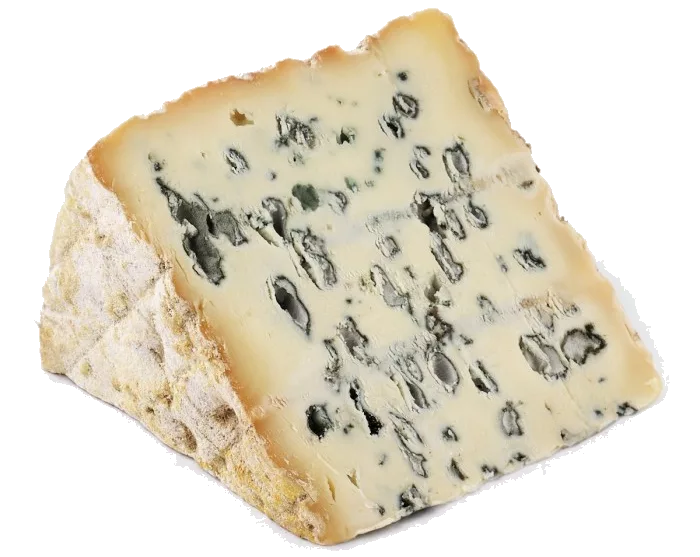
Bleu d'Auvergne is a blue-veined cheese originating from the Auvergne-Rhône-Alpes region of France. It gets its name from the characteristic blue-green coloration of its paste, which is produced by specific molds during the ripening process.
Origins of Bleu d'Auvergne
Bleu d'Auvergne was created in the mid-19th century by an Auvergne cheesemaker who sought to replicate Roquefort. It quickly gained popularity and became one of the region’s most beloved cheeses.
Nutritional Value and Benefits
Bleu d'Auvergne is rich in calcium, protein, and vitamins A and B12. It also provides lactic acid bacteria that are beneficial for gut flora. However, it is also quite high in calories, so it is recommended to consume it in moderation.
Season and Availability
Bleu d'Auvergne is available year-round in most cheese shops and supermarkets. It is not seasonal, so it can be enjoyed at any time.
Culinary Uses
Bleu d'Auvergne is a cheese with a distinct and pronounced flavor, making it an ideal ingredient for enhancing the taste of various dishes. It can be used in savory tarts, salads, quiches, sauces, and even fondue. It also pairs very well with fruits and nuts, and can be served with honey for a sweet-and-salty contrast.
Its creamy texture also makes it perfect for spreading on bread or using as the main ingredient in homemade spreads.
Bleu d'Auvergne is a versatile cheese that adds a touch of character to any dish and delights cheese lovers.
Pour aller plus loin, venez découvrir de délicieuses recettes concoctées par les gourmets du site, et qui utilisent le bleu d'auvergne !











Follow us on social media