




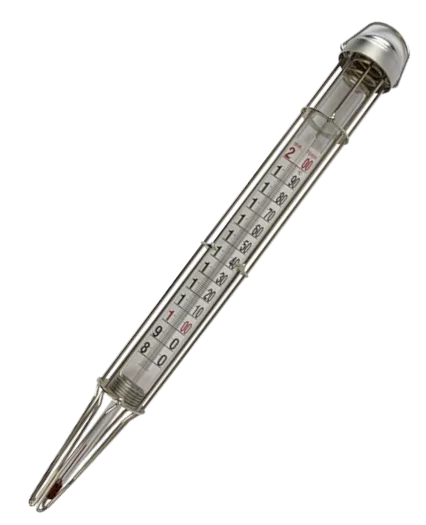
Wondering what a sugar thermometer is used for in the kitchen? This article will demystify this essential tool for making jams and other syrups.
Introduction to the Sugar Thermometer
The candy thermometer is a valuable tool in the kitchen, allowing both amateur and professional cooks to accurately monitor the temperature of sugar when preparing various sweets. Whether you’re making jams, candies, or even caramel, this tool is essential for ensuring the success of your sweet creations.
Also known as a candy thermometer, this tool is used to accurately measure the temperature of sugar syrups. It is particularly useful when making jams, helping to determine the correct cooking temperature and achieve consistent results from one batch to the next.
History of the Sugar Thermometer
The use of the sugar thermometer dates back to 17th-century France. At that time, confectioners began experimenting with mixtures of sugar and water, and controlling the temperature was crucial to achieving the desired consistency. Over time, sugar thermometers have evolved, transitioning from glass models to modern stainless-steel versions equipped with electronic sensors.
Typical Jam Preparation
Jam is the preparation for which the sugar thermometer is used most frequently. Below are the steps for making jam, which will show you when the sugar thermometer is used.
- Prepare the Ingredients: Gather the fruit, sugar, and any gelling agents.
- Mix and Heat: In a saucepan, heat the mixture until it comes to a boil.
- Insert the Thermometer: When the mixture boils, place the sugar thermometer in the mixture, avoiding contact with the bottom of the saucepan.
- Monitor the Temperature: Maintain the temperature between 104°C and 107°C, which is suitable for most jams.
- Test the Consistency: Place a small amount on a cold plate and check for a gel-like texture.
- Remove from Heat: Once the temperature is reached, remove the pot from the heat to prevent the mixture from becoming too thick.
- Jarring: Pour the hot jam into sterilized jars and seal them properly.
Different Types of Sugar Thermometers
1. Glass Thermometers: Traditional glass models are sturdy and easy to read. However, they can be fragile and prone to breaking if handled roughly.
2. Digital Thermometers: Digital sugar thermometers are becoming increasingly popular due to their accuracy and ease of use. Some models can even be programmed to sound an alert when the desired temperature is reached.
3. Infrared Thermometers: These thermometers allow you to measure temperature without direct contact with the sugar. They are fast and convenient, but may be less accurate in certain applications.
Factors to Consider When Purchasing
1. Temperature Range: Make sure the thermometer has a temperature range suitable for the various recipes you plan to make. Generally, models are capable of measuring a temperature range from 80 to 200 °C.
2. Accuracy: Accuracy is crucial for achieving the desired results. Choose a thermometer with precise readings to avoid any mishaps in your preparations.
3. Construction Material: Glass models require careful handling but are protected by a metal or plastic cage.
4. Additional Features: Some electronic sugar thermometers offer additional features such as alarms, temperature memory, or programmable settings.
5. Ease of Use: Choose a model with a user-friendly interface and ergonomic features to simplify use in the kitchen.
Our Selection
 chez
chez Plage de température +80°C à +200°C
Fabrication française chezGamme de température +80°C à +200°C
Fabrication française
Garanti 3 ans
Get started!
In conclusion, the sugar thermometer is an indispensable tool for baking and confectionery enthusiasts. By understanding its history, exploring the different models available, and considering the essential purchasing criteria, you’ll be able to choose the sugar thermometer that best meets your culinary needs. With this valuable tool, you’ll be able to master the delicate art of sugar temperature and create sweet treats worthy of a chef.
Pour aller plus loin, venez découvrir toutes les recettes qui utilisent le thermomètre à sucre !




Leave a Reply