




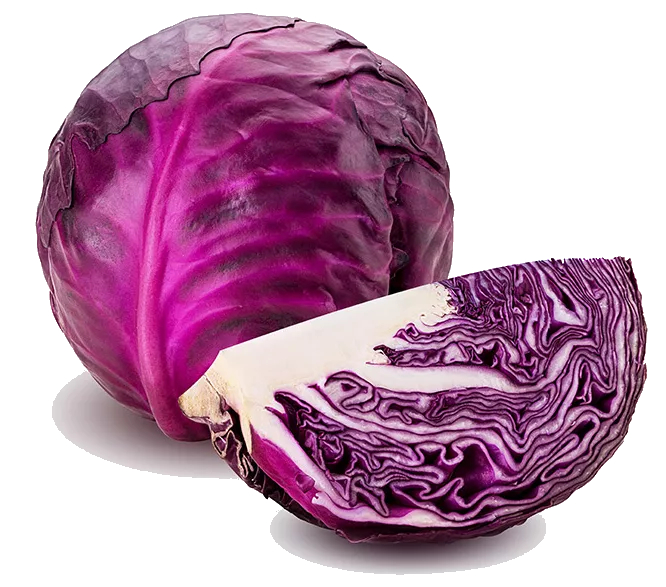
Red cabbage is a very versatile and delicious vegetable that can be used in many recipes. With its distinctive purple color and crisp texture, red cabbage adds a touch of freshness and flavor to any dish.
Origins
Red cabbage is native to Europe, but it is grown all over the world today. It has been appreciated for centuries for its taste and nutritional qualities.
Nutritional Value
Red cabbage is a highly nutritious vegetable, low in calories and rich in vitamins A and C, fiber, and antioxidants. It is also an excellent source of minerals such as potassium, calcium, and magnesium.
Season
Red cabbage is a winter vegetable. It is generally available at markets from fall through spring. During this period, it reaches full maturity and its flavor is at its peak.
Culinary Uses
Red cabbage can be eaten raw, shredded or thinly sliced, in salads and coleslaw. It can also be steamed, braised, sautéed, or added to soups and stews. Its purple color visually brightens dishes, while adding a slightly sweet flavor and a crisp texture.
Red cabbage can also be fermented to make sauerkraut, a traditional dish that is highly popular in many countries. Red cabbage sauerkraut is particularly delicious, with a tangy flavor and a firm texture.
Finally, red cabbage can be used to make a nutrient-rich juice, which can be enjoyed on its own or added to smoothies for an extra dose of vitamins and fiber.
In conclusion, red cabbage is a valuable ingredient in the kitchen, offering a variety of flavors and textures. Don’t hesitate to incorporate it into your recipes to enjoy its health benefits and add a beautiful splash of color to your dishes.
Pour aller plus loin, venez découvrir de délicieuses recettes concoctées par les gourmets du site, et qui mettent le chou rouge à l’honneur !




Follow us on social media