


Joyeux Gourmet

Cooking, Recipes and Good Vibes

April Spring
Recettes et plus...
Site Logo
  • Mon Joyeux Gourmet
    Pas encore
    membre ?
    Connexion
    Inscription
  • Recipes
    • Publish my recipe
    • The Cook's Calendar
    • From appetizers to dessert
    • For any occasion
    • Seasonal cuisine
    • Regional Cuisine of France
    • World Cuisines
    • Diets and Nutrition
    • Difficulty level
  • Cookbooks
    • Publish my book critic
    • All books
  • Articles
    • Publish my Post
    • News, Tips, and Tutorials
    • Seasonal ingredients
    • Practical Guides
      • Cooking Temperatures
      • Kitchen Tools and Appliances
      • Cooking Glossary
      • Ingredient Guide
  • Practical Guides
    • Cooking Times
    • Cooking Temperatures
    • Kitchen Tools and Appliances
    • Cooking Glossary
    • Ingredient Guide
  • Welcome
  • Coupons and promotions
  • Login
    • Pas encore membre ? Mot de passe oublié ?
April Spring
  • Skip to primary navigation
  • Skip to main content
  • Skip to primary sidebar
  • Skip to footer
Home » Les graines de moutarde en cuisine : origines, diététique et préparation

Mustard Seeds in Cooking: Origins, Nutritional Value, and Preparation

Updated on 17 October 2023 by
Picture of joyeuxgourmetjoyeuxgourmet
Do you like this post ? Share it !
  • Share on Facebook
  • Share...
  • Pin It
  • Share by email

I like
Print
Mustard Seeds in Cooking: Origins, Nutritional Value, and Preparation

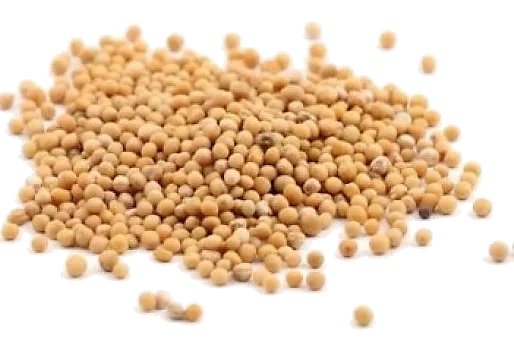
Mustard seeds have held a special place in the kitchen for centuries. Their unique flavor and versatility make them an essential ingredient in countless recipes around the world. Whether you use them to add a kick to your dishes or for their nutritional benefits, mustard seeds are a true star in the kitchen.

Table des matières

Toggle
  • Origins of Mustard Seeds
  • Nutritional Value and Benefits of Mustard Seeds
  • Mustard Seed Season
  • Culinary Uses

Origins of Mustard Seeds

Mustard seeds originate from the Mediterranean basin and the Middle East. They have been used since ancient times, both for their taste and their medicinal properties. The Romans, for example, used mustard leaves to prepare salads, while the Greeks cultivated the seeds to extract a fragrant oil.

Nutritional Value and Benefits of Mustard Seeds

Mustard seeds are packed with nutrients that are beneficial to health. They are rich in fiber, essential fatty acids, and antioxidants. Additionally, they are an excellent source of vitamins and minerals such as magnesium, phosphorus, and zinc. Their high fiber content promotes healthy digestion and may help lower cholesterol. Mustard seeds are also known for their antibacterial and anti-inflammatory properties.

Mustard Seed Season

Mustard seeds can be used year-round, as they are available as dried seeds and pre-made condiments in supermarkets. However, if you prefer to harvest your own seeds, note that they are often sown in the spring and harvested in late summer or early fall, depending on the region.

Culinary Uses

Mustard seeds add a spicy and slightly bitter flavor to many dishes. They are commonly used to make sauces, vinaigrettes, marinades, and pickles. You can also add them to soups, curries, or meat and fish dishes to enhance the flavors. Once toasted, mustard seeds release even more intense aromas.

You can also grind the mustard seeds into a powder to sprinkle over your dishes for a more subtle flavor. Mustard powder is also a key ingredient in making traditional mustard.

In conclusion, mustard seeds are an essential ingredient in the kitchen, offering a unique flavor and numerous health benefits. So don’t hesitate to experiment and discover the versatility of these little seeds in your cooking.

Pour aller plus loin, venez découvrir de délicieuses recettes concoctées par les gourmets du site, et qui utilisent les graines de moutarde !
Primary Sidebar

Nutritional Information

For 100g of mustard seeds:

  • Calories : 508.0 kcal
  • Proteins : 24.9 g
  • Lipids : 36.2 g
  • Saturated : 2.4 g
  • Carb : 28.1 g
  • Sugar : 5.9 g
  • Salt : 0.0 g

A few seasonal items…

It’s peak harvest or production season for these ingredients… so take this opportunity to discover all the recipes that showcase them!

  • Image de spinach sprouts
    spinach sprouts
  • Image de new potato
    new potato
  • Image de pear
    pear
  • Image de white asparagus
    white asparagus
  • Image de cabbage
    cabbage
  • Image de lettuce
    lettuce

All seasonal ingredients

You might also be interested in these articles...

  • Mirin in Cooking: Origins, Nutritional Value, and Preparation

    Mirin in Cooking: Origins, Nutritional Value, and Preparation

  • Gorgonzola in the Kitchen: Origins, Nutritional Value, and Preparation

    Gorgonzola in the Kitchen: Origins, Nutritional Value, and Preparation

  • Chia Seeds in Cooking: Origins, Nutritional Value, and Preparation

    Chia Seeds in Cooking: Origins, Nutritional Value, and Preparation

More ideas

Footer

Useful Links

  • Contact us
  • Legal Notice
  • Privacy Policy
  • Partners

Install the JGourmet app

QR code d'installation de l'appli Joyeux Gourmet sur Android Google Play

Follow us on social media

  • Suivez Joyeux Gourmet sur Facebook
  • Suivez Joyeux Gourmet sur Pinterest
  • Suivez Joyeux Gourmet sur Instagram
  • Suivez Joyeux Gourmet sur YouTube

All rights reserved©  2015–2026 · Joyeux Gourmet · Log in

Before submitting your article for publication, please make sure it complies with the règles de modération des publications.
Articles that do not meet the requirements will not be published.

Votre carnet de recettes vous attend

Votre carnet de recettes vous attend !

❤️
Sauvegardez vos coups de cœur
🛒
Liste de courses automatique
🔔
Nouvelles recettes en exclusivité
G
N
L
+
gigi, nonocuisine et plus de 0 autres ont déjà rejoint Joyeux Gourmet !
Créer mon compte gratuit Inscription en 1 minute
Déjà membre ?
Se connecter
Je veux en savoir plus sur Joyeux Gourmet