




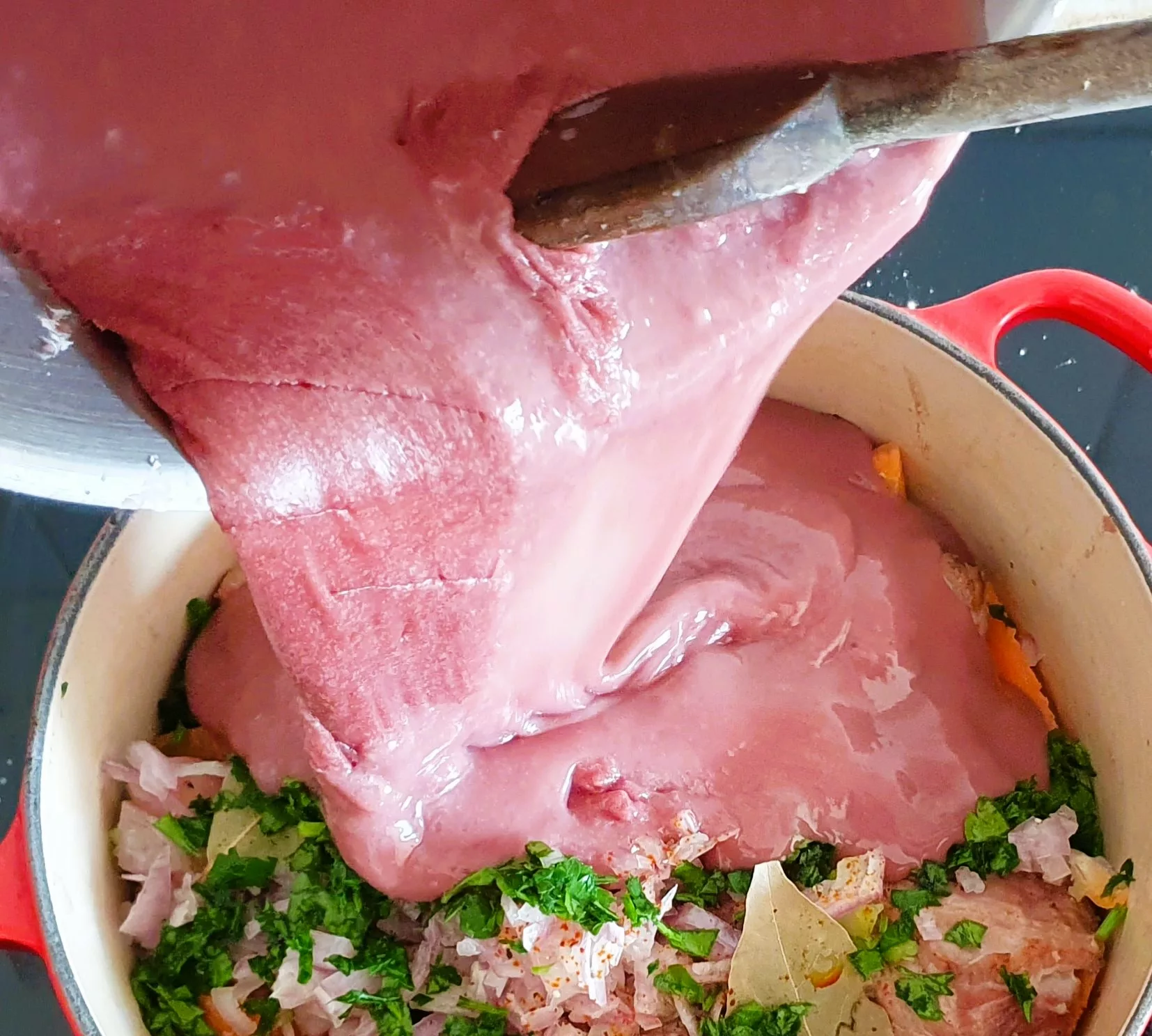
In the world of cooking, roux is a subtle yet crucial ingredient that acts as a thickening agent and contributes to the texture and flavor of many dishes. This article takes a closer look at roux, exploring its various nuances and its place in the intricacies of gastronomy.
What Is Roux?
Roux is a simple combination of flour and fat, cooked together to create a base used as a thickener in various sauces, soups, and other culinary concoctions. This age-old method has stood the test of time, becoming an essential element in many culinary traditions across the globe.
Types of Roux
Depending on the ingredients used and the degree of cooking, different types of roux are produced, as described below.
White Roux
Ingredients: Wheat flour and unsalted butter.
Method: The flour is added to melted butter and cooked over low heat until it turns a pale color. This roux is often used in delicate sauces, soups, and veloutés.
Blond Roux
Ingredients: Wheat flour and unsalted butter.
Method: The flour is cooked slightly longer, until it turns golden. The blond roux is versatile, suitable for richer sauces and dishes such as gumbo.
Brown Roux
Ingredients: Wheat flour and fat (usually vegetable oil).
Method: Cooked until dark brown, this roux adds significant depth of flavor. It is often used in brown sauces, stews, and traditional dishes such as beef bourguignon.
Black Roux
Ingredients: Wheat flour and fat (usually vegetable oil).
Method: Cooked until it reaches an almost black color, this roux is frequently used in Cajun cuisine to add intense flavor to dishes like shrimp étouffée.
Tips for Making a Successful Roux
Heat Control: A roux requires constant attention and moderate heat to prevent burning.
Proportions: Maintaining the correct ratio of flour to fat is essential for achieving the desired consistency.
Preparation in Advance: A well-prepared roux can be stored in the refrigerator for later use.
In conclusion, although a roux may seem like a simple combination of flour and fat, its role in cooking transcends its apparent simplicity.
The different types of roux offer a wide range of possibilities, allowing chefs to play with flavors and textures to create dishes that are as subtle as they are powerful.
In the world of contemporary gastronomy, the roux is associated with traditional cuisine from before the era of Paul Bocuse and Gault & Millau. But despite its heritage, it remains relevant today, and is especially a must-have for your stews!











Leave a Reply