




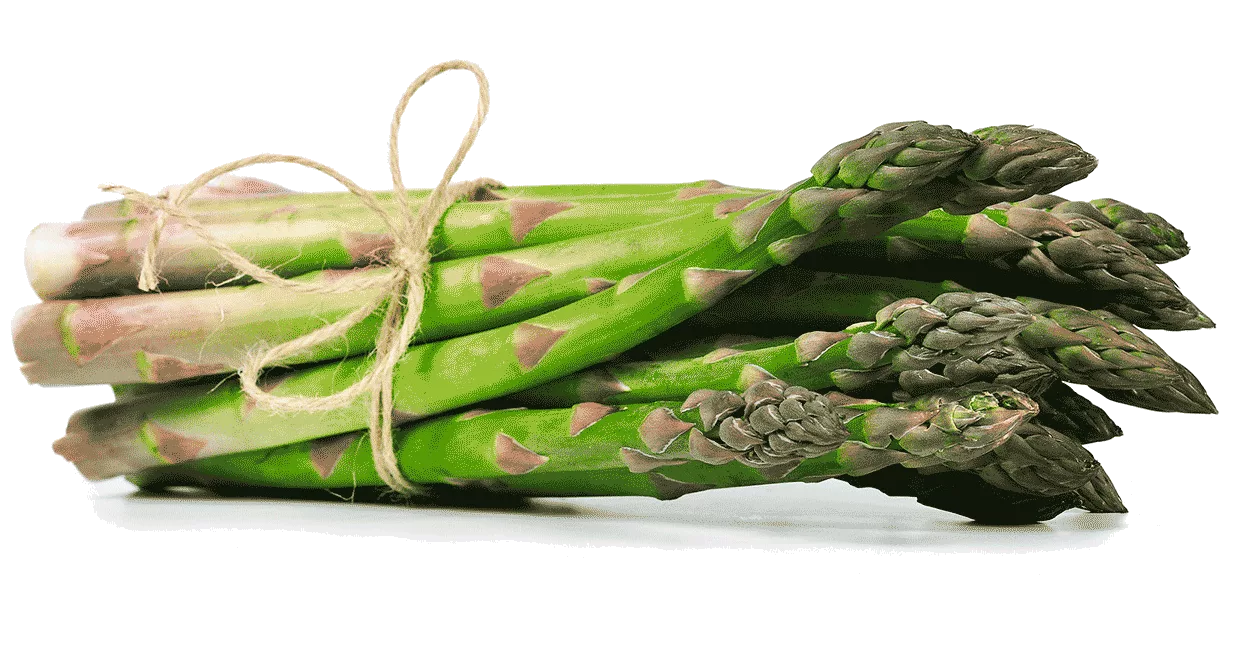
Asparagus is a spring vegetable highly prized in cooking for its delicate flavor and crisp texture. It is also known for its many health benefits. In this presentation, we will explore the origins, nutritional value, seasonality, and culinary uses of asparagus.
Origins
Asparagus is native to the Mediterranean basin and was already consumed by the Romans over 2,000 years ago. It was introduced to Europe in the 15th century and is now cultivated in many regions around the world.
Nutritional Value
Asparagus is a low-calorie vegetable rich in essential nutrients. It is an excellent source of fiber, vitamins A, C, E, and K, as well as minerals such as potassium and iron. Additionally, it contains antioxidant compounds that may help prevent certain diseases.
Season
Asparagus is a spring vegetable, and its season generally runs from April to June, although it is possible to find asparagus year-round thanks to greenhouse cultivation methods. However, fresh, in-season asparagus offers a more intense flavor and a more pleasant texture.
Culinary Uses
Asparagus can be prepared in various ways. It can be blanched and used in salads, omelets, or quiches. It can also be steamed, grilled, or roasted in the oven to achieve a tender texture and a slightly sweet taste. Asparagus tips can be used as a garnish for main dishes or as an ingredient in soups and sauces.
In conclusion, asparagus is a versatile and delicious vegetable that adds a touch of spring to many dishes. With its health benefits and seasonal availability, it is a staple of spring cooking.
Pour aller plus loin, venez découvrir de délicieuses recettes concoctées par les gourmets du site, et qui mettent l'asperge à l’honneur !








Follow us on social media