




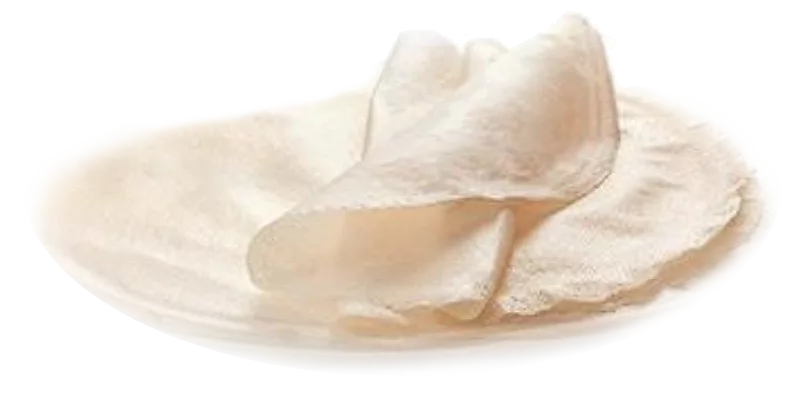
The Origins of Brick Dough
Brick pastry is an iconic traditional ingredient in Maghreb cuisine, particularly in Tunisia. Its origins date back several centuries, when it was used to prepare simple yet flavorful dishes. It is often associated with popular dishes such as egg-filled bricks, sweet almond cigars, and other crispy treats.
Although rooted in Maghreb tradition, brick pastry has spread widely across the globe, thanks to its versatility and unique texture.
Making Brick Dough
Brick pastry is made from a very thin dough, consisting mainly of flour, water, a small amount of oil, and sometimes salt. Traditional production is a meticulous art that requires great dexterity.
- Preparing the Dough: The ingredients are mixed to form a smooth, liquid batter.
- Cooking: The batter is spread in a thin layer onto a hot griddle or a heated copper pan. This allows the sheet to cook quickly while retaining its flexibility.
- Cooling: Once cooked, the sheet is gently removed and left to cool.
Brick pastry is, of course, produced industrially today, but this traditional manufacturing process is still at work.
Culinary Uses
Brick pastry is a highly versatile ingredient, capable of adapting to a wide variety of culinary preparations. Its light and crispy texture makes it an ideal base for creative and flavorful recipes.
Savory Dishes
- Traditional Brick Pastries: Typically filled with potatoes, tuna, and an egg, these pastries are then folded and fried.
- Samosas: Inspired by Indian cuisine, samosas made with brick pastry can be filled with meat, vegetables, or cheese.
- Crispy rolls: Perfect for appetizers or starters, these rolls can be filled with mushrooms, shrimp, or sautéed vegetables.
Desserts
- Almond cigars: These sweet treats, flavored with orange blossom, are often prepared for ceremonies and celebrations.
- Sweet pastilla: A delicious variation made with dried fruit and honey, wrapped in phyllo dough and baked in the oven.
Healthier Alternatives
For a healthier option, brick pastry can be baked in the oven instead of fried. This method preserves its crispiness while reducing fat content.
Usage tips
- Storage: Keep brick pastry sheets well wrapped to prevent them from drying out. If they become brittle, placing a damp cloth over them can restore their flexibility.
- Preparation: Handle them carefully to avoid tearing. Once filled, be sure to seal the edges well with a little water or egg white.
So, convinced?
Brick pastry sheets are a must-have ingredient for cooking enthusiasts, whether they’re beginners or seasoned chefs. Their unique texture and versatility in a wide range of recipes make them an essential tool for exploring new flavors and culinary techniques.
Pour aller plus loin, venez découvrir de délicieuses recettes concoctées par les gourmets du site, et qui utilisent la brick !
Follow us on social media