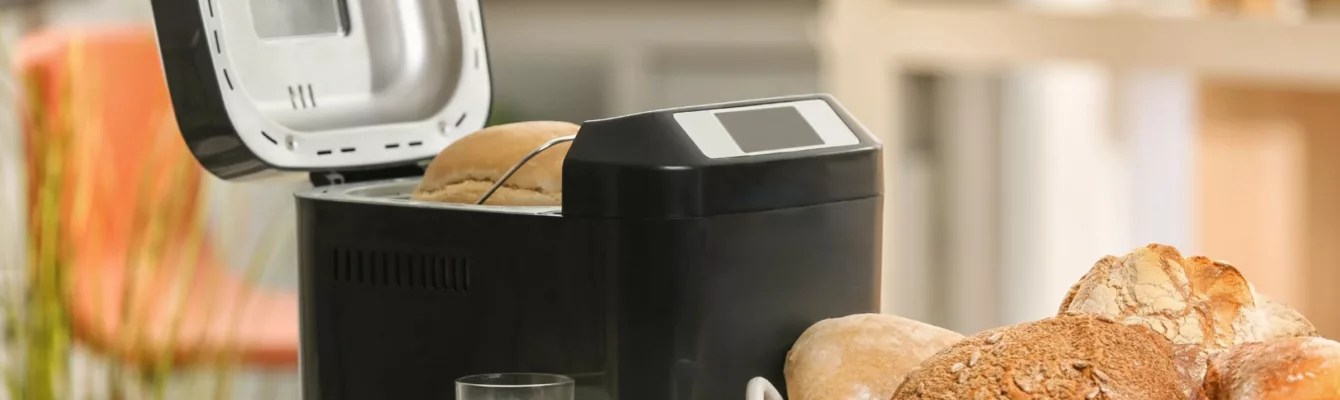





The breadmaker is an increasingly popular appliance in our kitchens, offering a simple and convenient alternative to traditional breadmaking.
Thanks to its multiple functions, it can quickly prepare a wide variety of breads and other bakery products, while guaranteeing optimum quality.
In this article, we’ll explore the different applications of the bread machine in the kitchen, its essential features, and how to choose the model that suits your needs.
Applications en Cuisine: Beyond Bread
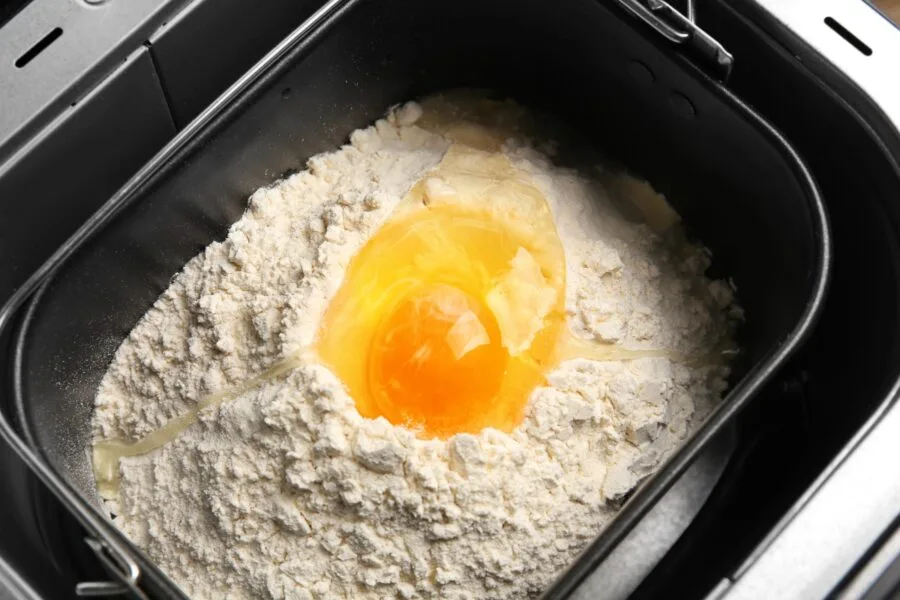
The breadmaker is not limited to classic breadmaking. In fact, it can be used for a wide variety of culinary preparations.
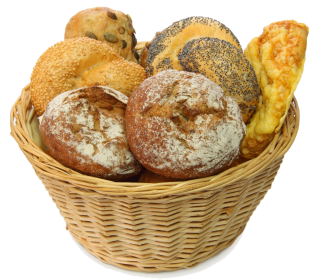
Traditional bread
White, wholemeal, farmhouse or even baguette-style bread can be easily prepared thanks to the bread machine’s preconfigured programs.
Just add the ingredients to the bowl, select the program, and the machine takes care of kneading, rising and baking.
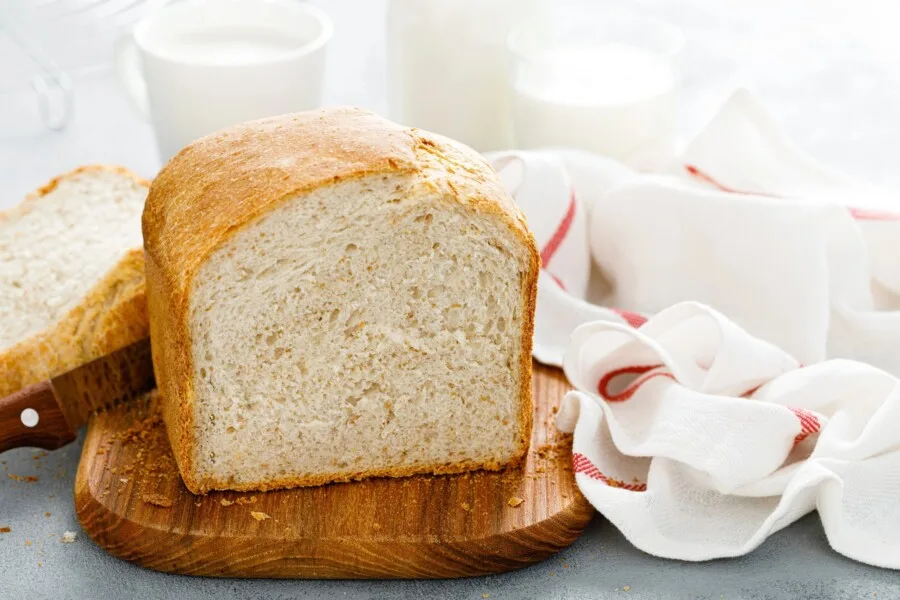
Special-and-gluten-free-buns
Modern bread machines are often equipped with specific programs for gluten-free breads, taking into account the particular needs of flours and doughs.
You can also experiment with breads made with alternative flours such as seigle, corn or even seed flours for .
Brioches et viennoiseries
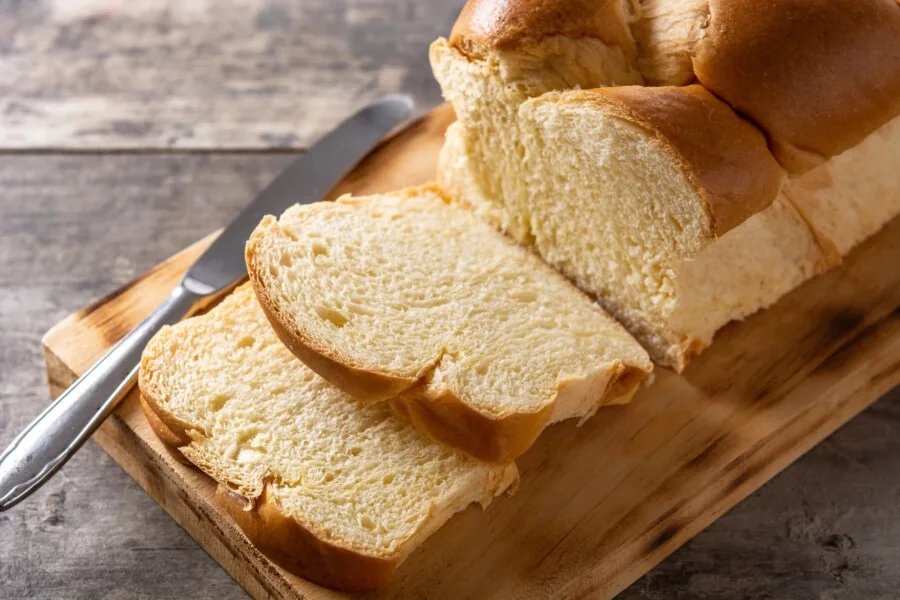
Bread machines are also capable of making brioche dough or viennoiseries.
This is an ideal option for gourmet breakfasts 🥐.
Some machines are even equipped with specific programs for the preparation of pains au chocolat 😋.
Pizza dough and pie dough
If you like to make homemade pizzas, a bread machine can help you quickly prepare the dough.
It enables efficient kneading and ideal dough rising to obtain an airy, fluffy texture.

Confitures-and-compotes
Some breadmakers have a special program for preparing compotes or home-made jams.
You can cook fruit and sugar in it for fresh jams, without the constraints of pan-frying.

Benefits of the bread machine
Buying a bread machine has several notable advantages.
Firstly, it allows you to prepare fresh bread at home with quality ingredients, without conservatives or additives, which is ideal for people wishing to better control their diet.
The machine also simplifies the bread-making process, with automatic programs that manage kneading, rising and baking. This will save you timeand make life easier at home!
Disadvantages of the bread machine
However, the bread machine also has some disadvantages.
Its purchase pricecan represent a significant initial investment, and it often takes up spacein the kitchen, which can be restrictive for those lacking space.
Also, some people may find that homemade bread, while excellent, doesn’t always achieve the texture or the crispiness of a baker’s loaf.
Another fact to consider, most machines will leave a hole under the bread. This corresponds to the kneading paddles that have remained embedded in the bread, and which you’ll need to remove.
Key Characteristics to Consider

When choosing a breadmaker, several criteria must be taken into account to ensure that it meets your needs and expectations.
👨👩👧👦 La capacité
The capacity of the breadmaker generally varies between 500g and 1.5kg of flour, which corresponds to loaves of 750g to 2kg once baked. If you have a large family or consume a lot of bread, opt for a large-capacity model.
💪La puissance
The bread machines available on the market have a power range between 500 and 1 600 W, the latter corresponding to a professional bread machine.
To knead and bake your homemade bread to perfection, the power of your bread machine must be quite high. At the very least, it needs to be powerful at 600 watts. We advise you to opt for a machine between 600 and 1240 watts, which is a good compromise between power and energy consumption. It’s worth noting that some devices feature an economy program.
🥜Separate compartments
If you program your bread machine in the evening for the next morning, the yeast must be separated from the water. Otherwise, it will start to “work” before the machine starts, and the dough may swell enormously. Similarly, the yeast must not come into contact with the sugar or salt.
In the case of a single-compartment machine, you must therefore take care to pour it into the bowl last, above the flour. But some machines offer separate compartments, and in this case you’ll have no risk of exaggerated dough puffing with a delayed start.
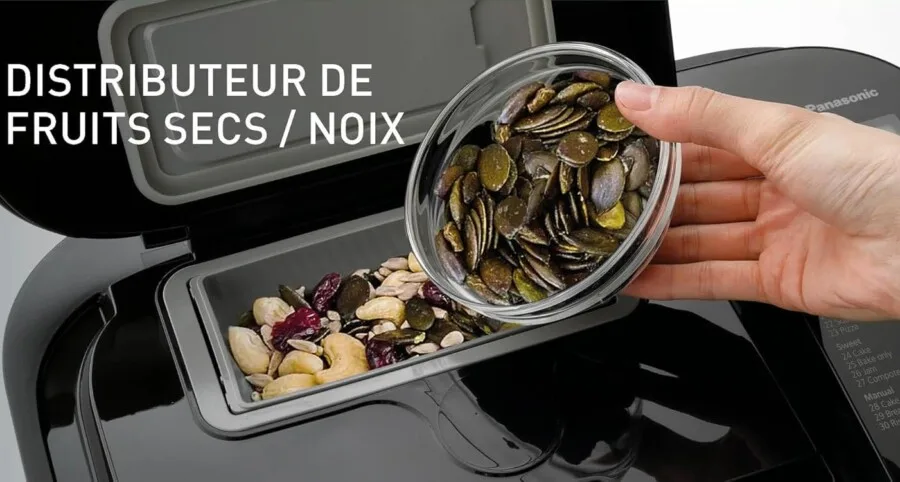
Other special compartments allow additional ingredients to be added and mixed in at the right moment, such as nuts, dried raisins or figs.
This is the case on the Panasonic model, for example.
⌚Deferred start
The delayed start is a very practical function on breadmakers that allows you to program baking several hours in advance – ideal for having warm bread when you wake up or get home from work. Indeed, bread preparation, including kneading, resting and baking, takes at least 3h30. In these conditions, it’s best to plan ahead for your intended meal!
However, not all machines are equal in this respect. Some offer a relatively short time delay (6-8 hours), while the more comprehensive models allow you to program up to 12 or sometimes 15 hours in advance.
Using the delayed start does, however, require a few important precautions. As ingredients remain at room temperature for several hours, you should avoid preparations that are too moist, recipes containing fragile products (fresh milk, eggs, soft butter) or food that may turn.
Instant yeasts (also known as “dry yeasts”) are recommended, as they remain stable as long as water doesn’t activate them. We’ll also take care to place the ingredients in the order recommended by the manufacturer, generally liquids at the bottom, flour on top.
The levure must be placed last, well separated from the salt to avoid premature reaction.
Finally, the bowl must be correctly closed and protected from external moisture.
🔊 Noise level of breadmakers: a criterion not to be overlooked
Noise is one of the points often underestimated when choosing a bread machine, especially if you plan to use the delayed start overnight.
The kneading phases are the loudest, as the motor forces against the resistance of the dough; depending on the appliance, you can oscillate between 50 and over 70 dB, which can become clearly disturbing in an apartment or house where the kitchen is close to the bedrooms.
Not all breadmakers are noisy. Good internal insulation, non-slip rubber feet and a well-maintained bowl will enable the manufacturer to reduce vibration and noise.
For night-time use, we recommend aiming for a machine displaying less than 60 dB when kneading, ideally around 55 dB, which corresponds to a soft conversation and makes the appliance much quieter at rest. Above 65 dB, the risk of waking up the household becomes very real.
To sum up: if you want a warm loaf of bread when you wake up, you might as well choose a machine that will stay quiet while you sleep 😴
📱Preconfigured programs
The majority of bread machines offer a series of automatic programs for different types of bread, buns, and dough.
Some models include programs for baking gluten-free bread, fast bread, or long rise bread. Make sure the appliance has the programs you need.
As far as the quick start is concerned, a good loaf of bread in any case requires strict adherence to resting times and kneading times. So don’t expect extraordinary results with this type of program.
🔥Customization function
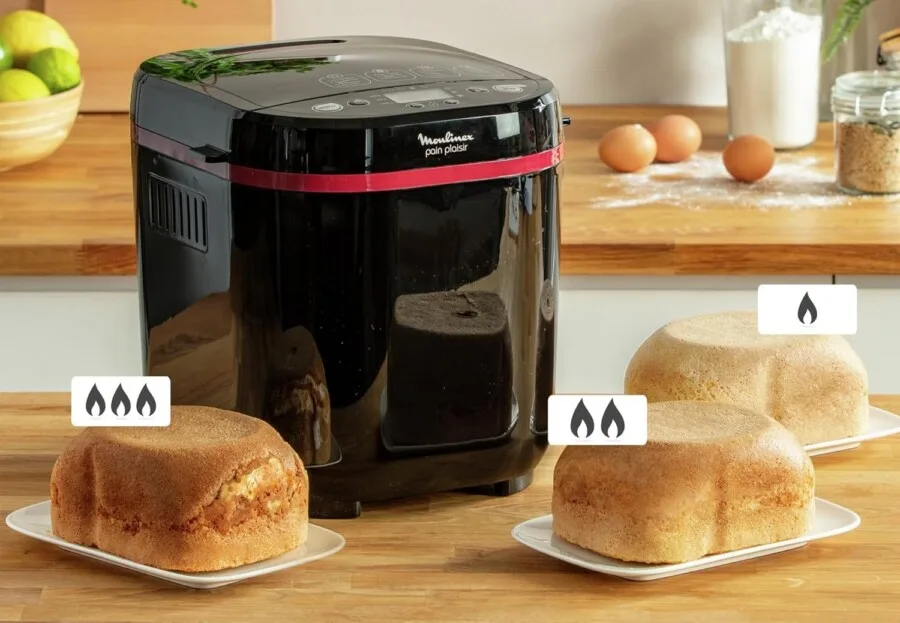
Some models allow you to adjust the level of gilding of the crust (light, medium, dark).
Others also allow you to adapt bread size (small, medium, large), if your needs differ from one batch to the next.
These customization possibilities will allow you to create a bread à la carte, adapted to your current preferences, as well as those of those around you!
📺Control-screen-and-user-interface
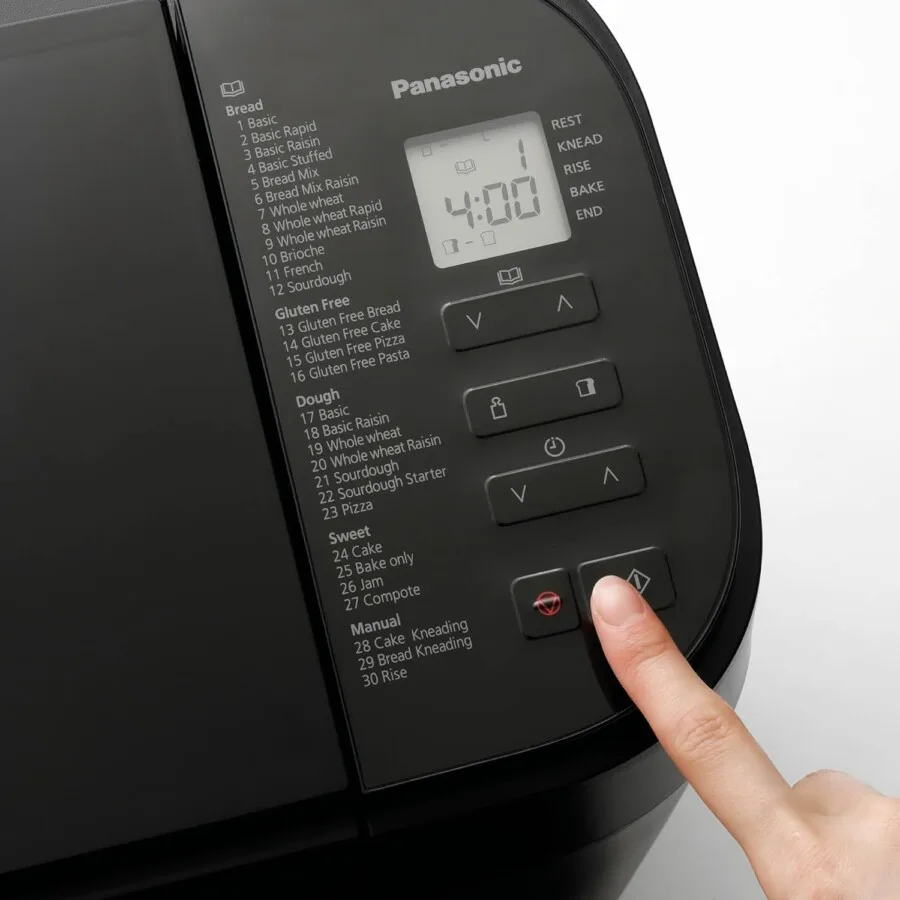
A clear, intuitive LCD screen makes the machine easy to use.
Some models also feature a touchscreen and well-arranged buttons for a pleasant grip.
➕Accessories-and-additional-functions
Check whether the appliance comes with practical accessories such as a measuring spoon, an additional kneading hook, or a recipe book.
Some models are equipped with a power failure detector that resumes cooking in the event of a power failure.
Other models (particularly those by Riviera et Bar) allow the kneading troughs to fold down before baking, which will prevent unwanted holes under your bread.
🫧Cleaning system
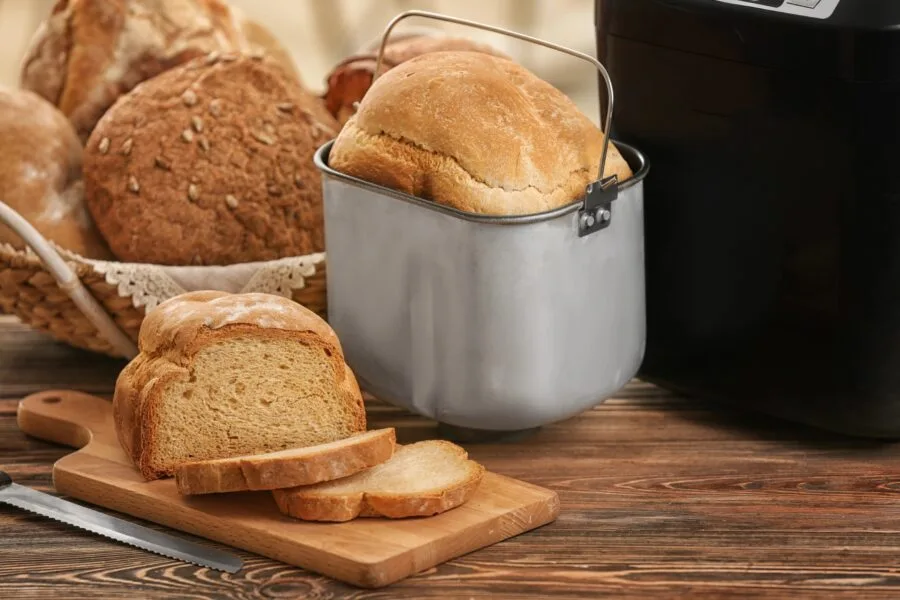
Make sure the bread machine is easy to clean.
The removable sinks and non-stick kneading paddles make maintenance a breeze.
Some models also feature cleaning programs.
Our selection
Here you’ll find a selection of the references we’ve chosen, based on the criteria detailed above.
 chez
chez
✅On aime
Assez puissante (650 W)
3 niveaux de dorage chezchez
 Très bon rapport qualité/prix
✅On aime
Marque Française
Réparabilité 15 ans
Puissante (720W) chez
chez✅On aime
Compartiments levure et fruits secs
30 programmes❌On aime moins
Puissance un peu faible (550W) chezMarque Anglaise réputée
✅On aime
Pétrin rabattable
Puissante (820W)
You decide!
The bread machine is a relevant, multi-purpose utensil for lovers of homemade bread and, more broadly, those who frequently make a variety of doughs. This device will help you save time and succeed in quality preparations.
We hope this article has enlightened you on the criteria to consider when choosing a bread machine, as well as the elements that will enable you to make the best decision regarding this investment.
Pour aller plus loin, venez découvrir de délicieuses recettes concoctées par les gourmets du site, et qui utilisent la machine à pain !







Leave a Reply