




This year, the festival marking the end of Ramadan will take place on Événement inconnu.
This festival, also known as Eid al-Fitr, is a major celebration in the Muslim tradition marking the end of the holy month of fasting. It is not only a time for prayer and rejoicing, but also an opportunity to share delicious meals with family and friends.
The origins of Eid al-Fitr date back to the time of the Prophet Muhammad, who is said to have established this festival to celebrate the end of the Ramadan fast. Since then, it has become a tradition deeply rooted in many Muslim cultures around the world.
Food plays a central role during this time, when a wide variety of ingredients are used to prepare delicious traditional dishes.
Traditional Ingredients
Dried fruits
Dried fruits such as dates, figs, raisins, dried apricots, and prunes are ubiquitous during the festival marking the end of Ramadan. Rich in energy, they are often eaten to break the fast and are offered in abundance during the festivities.
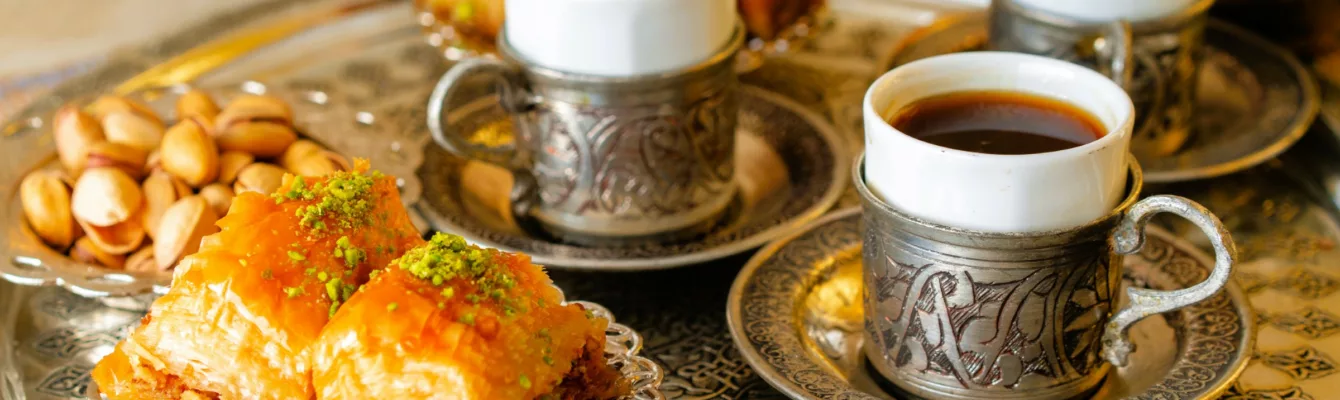
Almonds, walnuts, hazelnuts, and pistachios are also widely used in Eid al-Fitr cuisine. For example, these nuts are incorporated into desserts like Middle Eastern pastries, but they’re also enjoyed as-is as a snack.
Vegetables
Traditional Eid celebration dishes also feature plenty of seasonal vegetables such as carrots, zucchini, potatoes, bell peppers, and onions. They are simmered with meats and spices to create flavorful dishes.
Meats
The meats most commonly used in Eid al-Fitr dishes are lamb, chicken, and beef. They are often simmered with vegetables and spices to create hearty and delicious dishes.
Spices
Spices also play an essential role in Eid al-Fitr cuisine. Spice blends such as ras el hanout, cumin, cinnamon, saffron, and ginger are highlighted to flavor dishes and give them a distinctive taste.
Dairy Products
Milk, yogurt, and cheese are sometimes used in Eid al-Fitr cuisine. In particular, these dairy products are used in the preparation of desserts and sauces.
For a plant-based alternative, almond or coconut milk can also be used.
Pasta and grains
Semolina, rice, pasta, and bread are staples of Eid al-Fitr cuisine. Semolina is often used to make couscous, while rice is served as a side dish with many meals.
Pasta is sometimes used in soups or salads, and bread is served alongside main courses.
Traditional Eid al-Fitr Dishes
Appetizers
Eid al-Fitr appetizers are often light and refreshing to whet the appetite. These include fresh salads topped with seasonal vegetables and sometimes garnished with dried fruit.
Bricks, flaky pastries stuffed with eggs, tuna, or seafood, are also very popular for their crispiness and flavor.
Main Dishes
At the heart of the Eid al-Fitr meal are the main courses, rich in flavors and textures. Couscous, the iconic dish of the Maghreb, is prepared with fine wheat semolina. It is served with a variety of vegetables such as carrots, zucchini, and chickpeas. Couscous can be prepared with different meats such as lamb, chicken, or beef.
Tajine, simmered in a clay pot of the same name, is also very popular. It consists of meat or poultry, accompanied by vegetables and dried fruits. Finally, the dish is seasoned with a carefully balanced blend of spices.
Desserts
Sweet and fragrant, Eid al-Fitr desserts add a touch of sweetness to round out the meal perfectly.
Middle Eastern pastries such as gazelle horns, makrouts, and baklava are a must. They are typically made with dried fruits, honey, marzipan, and spices, offering an explosion of flavors on the palate.
Conclusion
In the kitchen, the festival marking the end of Ramadan is a special time for sharing and togetherness over delicious dishes. It is also a unique opportunity to discover the richness of Muslim cuisine around the world.




Leave a Reply