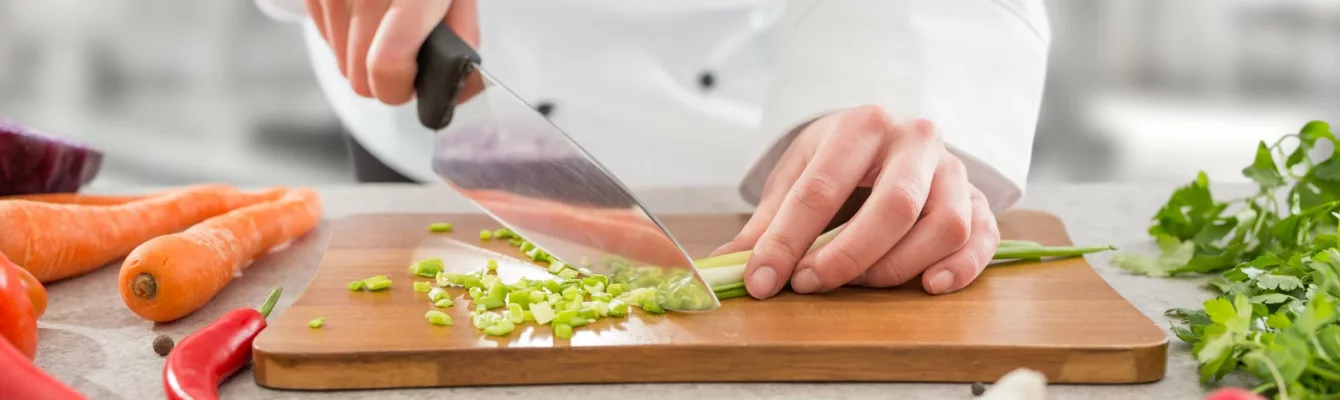





To successfully prepare your recipes, you must first and foremost master certain key techniques. Among the most commonly used kitchen tools that you absolutely must know how to handle are kitchen knives. Handling these kitchen tools remains a challenge for many cooks, both beginners and experienced. Read on for some tips to help you master the use of kitchen knives.
What is a kitchen knife?
Also known as a chef’s knife, the kitchen knife is a multi-purpose cutting tool used in the kitchen. It features a thick blade and measures approximately 36 cm. However, you’ll find kitchen knives measuring 16 cm and 20 cm on the market. These are more practical, easier to use, and allow cooks to cut ingredients of varying sizes.
As for the height of a kitchen knife’s blade, it is approximately 4 to 5 cm. Additionally, note that the kitchen knife is recommended for the safety it offers compared to other types of knives. Thanks to its height and thickness, it is easier to position your fingers when cutting food.
What are the different types of kitchen knives available on the market?
In physical stores specializing in the sale of affordable kitchen utensils, you’ll find several models of kitchen knives. They’re also available on online retail sites. Among the most popular kitchen knives are:
- Sujihiki knives;
- Santoku knives;
- Pankiri knives for slicing bread;
- Nakiri knives for preparing vegetables;
- Kiritsuke knives.
In addition to these models, you can also purchase Gyuto knives, Deba knives for fish, and Bunka knives.
How to choose the perfect kitchen knife?
Whether you’re a beginner in the kitchen or a professional chef, it’s important to choose your kitchen knives carefully. The right choices make cooking easier when preparing seasonal recipes and for all kinds of occasions. They also ensure safety and guarantee an efficient cutting experience. Among the criteria for choosing kitchen knives are:
- The blade’s durability;
- The thickness of the blade;
- The quality of the material.
Additionally, you should choose sharp kitchen knives made of stainless steel for their durability. Finally, don’t hesitate to consider your needs when selecting your kitchen utensils. Whether for chopping, slicing, or mincing, you need a good kitchen knife.
Using a kitchen knife effectively: some best practices
If you want to cook like a chef, you need to equip yourself with the best kitchen utensils. In addition to the equipment, you must master the use of kitchen knives for an optimal cutting experience. There are certain best practices to follow to use your tools effectively.
Adopt the ideal grip
It’s true that there’s no standard way to hold a kitchen knife. However, there are certain things you should avoid when using this kitchen tool. When cutting, be careful not to place your index finger on top of the blade. There isn’t much room for this, and your finger can easily slip under the knife blade.
The ideal grip involves gripping the knife handle with four fingers before placing your thumb against your index finger at the front of the handle—the hammer grip. But there is also another grip variation known as the blade grip.
Make sure not to lose contact
When using a kitchen knife, the tip of the knife should remain in contact with the cutting board. This way, the cook doesn’t need to lift the knife completely. Place your hand on the food to be cut with your middle fingers curved. Your thumb and pinky finger should be placed on the sides to move the food. As for the kitchen knife, place it straight on the cutting board with the tip against the board.
Stay alert
We can’t say it enough: dull kitchen knives are more dangerous than sharp ones. So, as a cook, always work with exceptionally sharp kitchen knives. If you’re just starting out, simply use the knife slowly to get used to it. It’s advisable to stay alert to avoid taking any risks when using kitchen knives. Finally, for experienced chefs looking for a job to relaunch your career, check out the chef job listings and share your experience with those new to the kitchen.












Leave a Reply