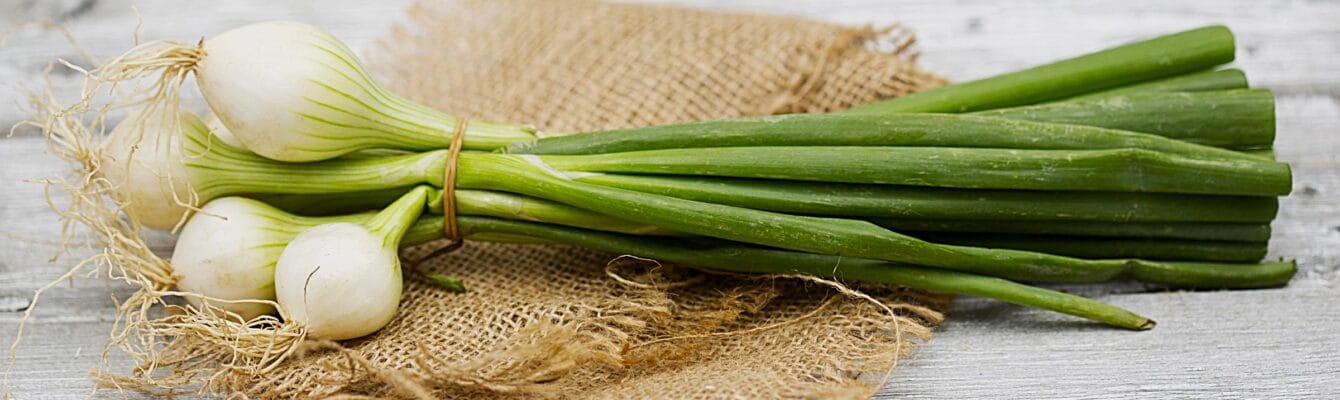





Spring onions, also known as green onions or spring onions, are among the first vegetables to herald the return of warmer weather. Harvested young, before the bulb is fully formed, it offers a mild, crisp, and slightly sweet flavor, very different from that of a dry onion. Its tender green stems, which are also eaten, add an immediate freshness to many dishes. This versatile ingredient is now a staple in the kitchen, appreciated as much for its lightness as for its delicate aroma.
🌱 Season and harvest: when can you find spring onions?
The spring onion season runs mainly from April to July, with peak freshness between April and June. It is at this precise moment that growers harvest the plants before they mature, when the bulb is still tiny and the leaves remain bright green and crisp.
Their freshness is part of their identity, which explains why they only keep for a few days in the refrigerator. In a perforated or slightly damp bag, they retain their crisp texture and delicate aroma longer.
At the market, its availability coincides with that of other early-season vegetables: radishes, baby carrots, peas… All ingredients with which it pairs perfectly in the kitchen.
🥗 Nutritional Benefits of Spring Onions
From a dietary perspective, the spring onion is an undeniable ally of a balanced diet. Very high in water content, low in calories, and naturally easy to digest, it nevertheless provides a wide variety of vitamins, minerals, and antioxidants.
They contain a significant amount of vitamin C, essential for immunity, as well as potassium, calcium, magnesium, and sulfur compounds known for their protective properties. Their soft fibers aid digestion and promote a healthy gut flora.
Thanks to its milder flavor compared to dry onions, it is also more easily tolerated by sensitive stomachs.
🍳 How to use spring onions in cooking?
Spring onions are a particularly versatile ingredient, capable of adding freshness, mildness, or depth depending on how they’re prepared.
Raw, they brighten up mixed salads, tartares, bowls, or dishes made with fresh cheese. They add a light crunch and a very distinctive vegetable aroma.
When cooked, they reveal an almost melt-in-your-mouth tenderness, ideal in vegetable stir-fries, wok dishes, spring soups, or quiches. They subtly flavor white meats, fish, and sauces, and make an excellent accompaniment to light stews. Its finely chopped green stems are a perfect substitute for chives or scallions, adding a touch of freshness at the end of cooking.
Spring onions also play an important role in cuisines around the world 🌍. In this context, they are known as green onions. They work wonders in Japanese ramen, Chinese stir-fries, Mexican tacos, Korean omelets (pajeon), and Mediterranean salads.
Their versatility makes them a perfect match for tangy, sweet, spicy, or umami flavors, which explains their international popularity.
🔍 Spring onion, scallion, or green onion: what are the differences?
Spring onions are often confused with scallions or chives, but they differ in that they form a small bulb, even when still immature.
Spring onions, on the other hand, retain a thin, long stem without actually developing a bulb. Fresh onions, meanwhile, are a more general term referring to onions sold before they have dried out.
These differences influence their uses: spring onions are slightly milder and sweeter, while scallions offer a more pronounced, vegetable-like flavor.
⭐ Give it a try
In short, the spring onion is a versatile, flavorful spring vegetable rich in micronutrients. Its freshness, subtle aroma, and mild digestibility make it an ideal ingredient to enhance everyday recipes.
Whether used raw, sautéed, grilled, or simply chopped as a garnish, it adds a touch of lightness and modernity to every dish.
Pour aller plus loin, venez découvrir de délicieuses recettes concoctées par les gourmets du site, et qui mettent l'oignon nouveau à l’honneur !








Follow us on social media