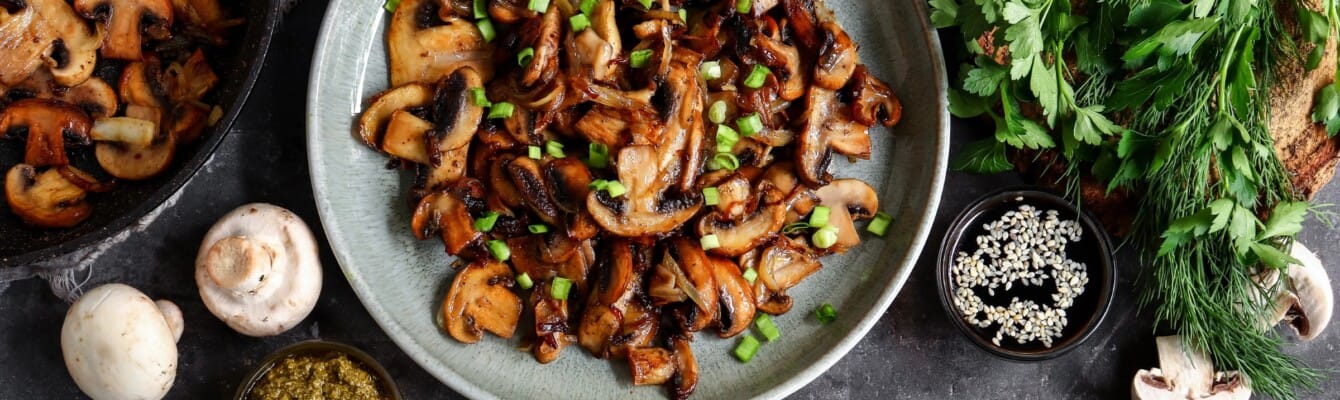





A noble but delicate product to work with
Mushrooms occupy a special place in the kitchen. Neither vegetables, nor starches, nor condiments, they make up a category of their own: a fascinating family of foods, capable of bringing flavor, texture, volume and sometimes even a real festive spirit to a plate. Whether cultivated or wild, European or Asian, tender or fleshy, mushrooms are appreciated not only for their unique taste, but also for their ability to pair equally well with roasted meat, vegetarian risotto, fragrant soup or gourmet stuffing.
However, mushrooms also possess a characteristic that many cooks dread: they are extremely sensitive. Poor cleaning can make them waterlogged and bland, improper storage accelerates rotting, and insufficient cooking can go so far as to cause digestive disorders, or even more serious risks for wild varieties like morel. This comprehensive guide brings together the best professional practices for preserving, cleaning and cooking mushrooms safely, taking into account the particularities of each variety.
🧼 Cleaning mushrooms: the essential rules
Mushroom cleaning is often a source of debate. Some chefs categorically refuse to use water, while others consider it acceptable as long as it’s used intelligently. In reality, good practice depends above all on the type of mushroom, its structure and condition.
The most reliable rule is to prevent mushrooms from waterlogging. This only happens when the surface is porous, the lamellae retain liquid or the mushroom remains in prolonged contact with water. Express rinsing therefore poses no problem, but soaking is to be avoided.
The most suitable gesture is to brush or wipe the mushrooms with:
- a mushroom or vegetable brush,
- a clean tea towel,
- Champignons de Paris : 3 to 5 days
- Pleurotes : 2 to 3 days
- Shiitakés : 5 to 7 days
- Cèpes : 2 to 3 days
- Girolles : about 3 days
- Fresh cod: 1 to 2 days
- Dehydrated black mushrooms: several months
When they’re really encrusted with soil, you can give them a quick run under a trickle of cold water, followed by immediate drying.
The most sensitive mushrooms – girolles, pleurotes, morillas – require respectful cleaning, capable of removing impurities without damaging their lamellae or even breaking them.
❄️ Preserving mushrooms: how to maximize their freshness
Fresh mushrooms are made up of a huge amount of water. This characteristic makes them fragile, as the internal moisture creates a favorable environment for mold and softening. The best way to preserve them is to provide an environment that limits stagnant humidity.
The most effective trick is to store them in a kraft bag, tea towel or slightly open box. This type of container allows the fungus to breathe, unlike plastic bags, which trap moisture.
A refrigerator maintained around 3 to 4°C offers the best conditions.
Here are the average storage times by variety:
It is important to never wash mushrooms before refrigerating, as moisture significantly accelerates their degradation.
You can freeze your mushrooms, but you’ll get better results if you cook them before freezing. A quick pan-fry (not to brown them, but just to remove some of the water) is all you need. Once cooled, they can be frozen in portions, which limits the loss of texture.
🔥 Cooking mushrooms: avoiding mistakes and enjoying the flavors
Cooking is a key moment, as much for safety as for taste quality. Three issues often come up: water released by the mushrooms, lack of coloring and undercooked mushrooms.
To achieve a perfect pan, the fire must be vive, the pan well heated and the quantity of mushrooms reasonable to prevent them boiling in their own water. Salt should be added at the end of cooking, as it helps extract moisture.
Some varieties require specific cooking. The morilla and shiitake, for example, contain irritating or toxic substances if eaten raw. It is therefore essential to cook them for at least 15 minutes.
Mushrooms or oyster mushrooms, on the other hand, can be eaten slightly crunchy or even raw (for the former).
Rapid stir-frying, wok-cooking, oven-roasting, mijote, soup and sauce are all methods suited to the different textures of mushrooms. Their fragrance blends particularly well with butter, garlic, persil, fresh cream, white wine, bouillonor soja depending on culinary traditions.



Follow us on social media