




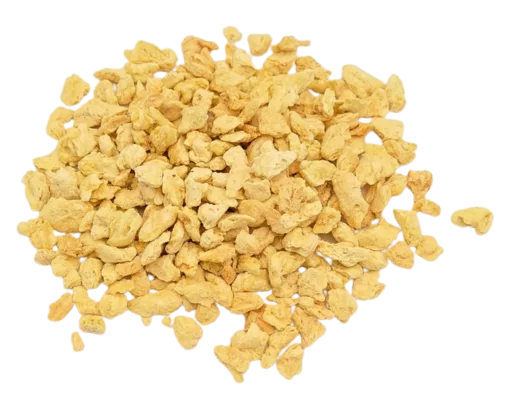
Soy protein, also known as soy protein isolate, is a versatile and nutritious ingredient used in many recipes. In addition to being an excellent plant-based alternative to animal protein, it offers a variety of nutritional and culinary benefits.
Origins of Soy Protein
Soy protein is extracted from soybeans after the oil has been removed. These beans originated in East Asia and have been consumed for thousands of years. Today, soybeans are grown in many regions of the world due to their growing popularity as an alternative source of protein.
Nutritional Value
Soy protein is an excellent source of plant-based protein. It contains all the essential amino acids necessary for a balanced diet. Additionally, it is naturally cholesterol-free and low in saturated fat. Soy protein also contains fiber, vitamins (such as vitamin E), and minerals (such as calcium and iron).
Seasonality
Since soy protein is primarily produced from dried soybeans, it can be used year-round, regardless of the season.
Culinary Uses
Thanks to their neutral taste and malleable texture, soy protein can be used in a variety of recipes. It can be mixed into soups, sauces, stir-fries, or stews to add texture and protein. Textured soy protein, which resembles small pieces of meat, can be used as a meat substitute in vegetarian burgers, tacos, pasta, or even pizza. It adds texture and nutrition to dishes without using animal products.
In conclusion, soy protein is an excellent plant-based alternative to animal protein in cooking. Its Asian origins, its nutritional benefits, the fact that it can be used year-round, and its versatility in the kitchen make it a top choice for those looking to diversify their diet or adopt a more plant-based approach.
Pour aller plus loin, venez découvrir de délicieuses recettes concoctées par les gourmets du site, et qui utilisent les protéines de soja !








Follow us on social media