





The potato masher is one of those kitchen tools that may seem simple at first glance but is essential for successfully preparing many homemade dishes. Long confined to making mashed potatoes, it has now established itself as a versatile tool for processing vegetables, fruits, and even certain legumes.
When chosen and used correctly, it allows you to achieve precise textures without altering the taste or structure of the food. This article explains how to use a potato masher effectively, how to choose one, and, most importantly, how to adapt it to the desired result, whether you’re aiming for a smooth, fine purée or a rustic mash.
🥔What is a potato masher and what is it used for?
A potato masher is a manual utensil designed to mash cooked foods by forcing them through a perforated grid.
Unlike electric appliances, it works by mechanical pressure, which limits the incorporation of air and prevents the emulsification of starches. This feature explains why it remains the go-to tool for traditional purées, particularly those made from potatoes.
In the kitchen, the potato masher helps achieve a smooth texture while preserving the integrity of the ingredients.
It is ideal for root vegetables, squash, carrots, as well as cooked fruits used in compotes or sweet purees.
Using it promotes a more authentic style of cooking, focused on the natural taste and texture of foods.
🍽️ Why choose a potato masher for home cooking?
Using a potato masher offers several notable advantages. It allows you to achieve a controlled texture—neither too smooth nor too sticky—which is difficult to master with a blender. It preserves the vegetable fibers and avoids the rubbery texture often found in blended potatoes.
Furthermore, the potato masher does not heat the food or alter its flavor.
The potato masher is also part of a simple and sustainable approach to cooking. It doesn’t use electricity, is easy to clean, and has excellent durability when made from sturdy materials. For lovers of home cooking and traditional recipes, it remains an indispensable tool.
🛒 How to choose a good potato masher?
The choice of a potato masher directly affects the final result.
A stainless steel model guarantees durability, hygiene, and corrosion resistance, making it the best option for regular use. Plastic models may be suitable for occasional use, but they warp more easily and do not withstand high pressure well.
The size and shape of the grid also play a key role. A fine grid produces a smoother purée, while a wider grid results in a coarser texture. Some potato mashers offer interchangeable grids, providing true versatility.
Finally, the ergonomics of the handle and the stability of the tool determine how comfortable it is to use, especially when working with large quantities.
Our Selection
Below you’ll find a selection of potato mashers we’ve chosen based on their origin and quality.
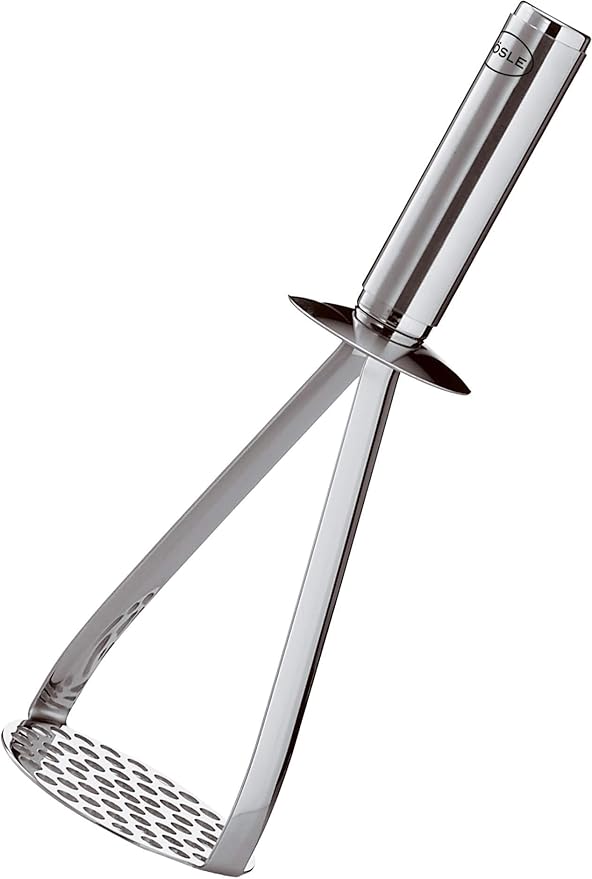 chez
chez chez
chez Presse-purée en inox 18/10
Longueur 27cm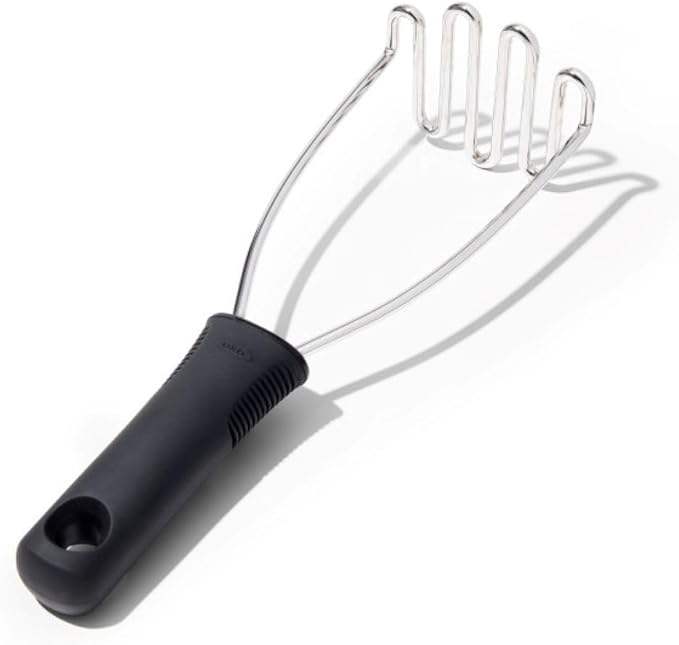 chezLongueur 27cm
Acier inoxydable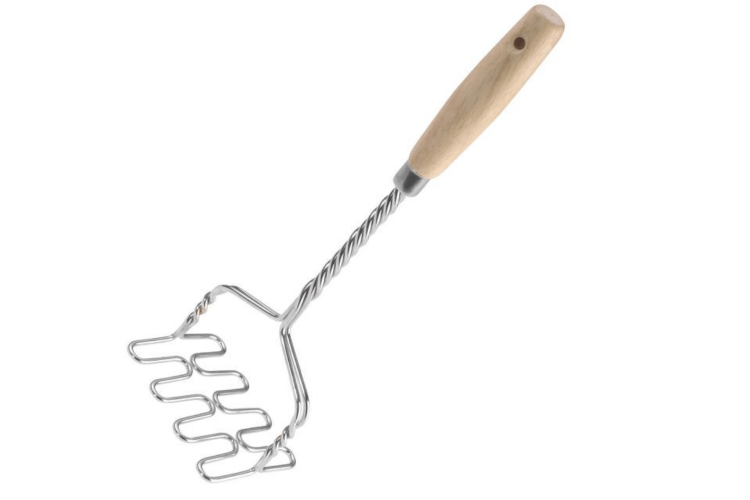 chezLongueur 34cm
Acier inoxydable
Manche bois✅On aime
Garantie 5 ans
🖐️ How to Use a Potato Masher for Best Results
To make perfect mashed potatoes with a potato masher, cooking the vegetables is a key step. The vegetables must be cooked until very tender, without becoming waterlogged. Steaming is ideal. If boiling, the vegetables must be thoroughly drained to avoid a mash that is too runny.
The vegetables should be mashed while they are still hot. Apply even pressure without sudden movements to achieve a smooth texture. It is recommended to work in several passes rather than applying excessive pressure all at once. This method yields a finer result and minimizes leftover chunks.
We will now detail two typical cases: the preparation of a vegetable purée and that of a vegetable mash.
Smooth and fine purée: method and appropriate utensils
A smooth and fine purée is characterized by a uniform texture, with no noticeable grains or chunks. To achieve this result with a potato masher, it is essential to use a fine grid and pass the vegetables through once or twice if necessary. Adding butter and a hot liquid, such as milk or cream, facilitates incorporation and improves creaminess.
In some cases, a food mill with a fine screen can produce an even smoother result. A hand blender can also achieve a very smooth texture, but it must be used with caution, especially with potatoes, as it can make the purée sticky. For a gourmet purée, the potato ricer remains the best balance between smoothness and preserving the integrity of the ingredients.
Rustic mashed potatoes: a deliberately textured finish
Mashed potatoes are distinguished by a coarser texture, with visible chunks and a more rustic mouthfeel. The potato ricer is perfectly suited for this type of preparation when used with a medium-sized grid and moderate pressure. This method preserves the vegetable’s character and yields a more expressive result.
Mashed potatoes work particularly well with potatoes, root vegetables, or vegetable medleys. They pair well with home-style, authentic cooking, where texture plays just as important a role as flavor. A simple fork may sometimes suffice, but the potato masher ensures a more even distribution of chunks.
❔Potato masher, hand blender, or food processor: which one should you choose?
The choice of utensil depends above all on the desired result. The potato masher excels at creating natural, balanced textures. The immersion blender is very fast, but it alters the structure of the food and can affect the consistency of certain purées. Food processors and blenders, on the other hand, produce very smooth textures—sometimes too uniform—and incorporate air.
For traditional mashed potatoes, a potato masher or food mill remains the best choice. For purées made from waterier vegetables, such as zucchini or pumpkin, a blender can finish the job, provided you control the blending time.
🧽 Care and Durability of the Potato Masher
A well-maintained potato masher retains its performance over the long term. It should be rinsed immediately after use to prevent residue from drying in the perforations. Hand washing extends the life of the grids, even though some models are dishwasher-safe.
Storing it away from moisture and impacts preserves the tool’s structure.
Thanks to its simple design, the potato masher remains one of the most durable kitchen tools.
✅ Give it a try!
The potato ricer remains an essential tool for anyone who wants to master textures and flavors in the kitchen. Versatile, economical, and reliable, it can produce everything from a smooth, fine purée to a rustic mash full of character.
When chosen wisely and used correctly, it often outperforms electric appliances for vegetable-based preparations.
When used with the right technique and paired with the appropriate utensils, it guarantees consistent results and a more authentic cooking experience.
Pour aller plus loin, venez découvrir toutes les recettes qui utilisent le presse-purée !





Follow us on social media