




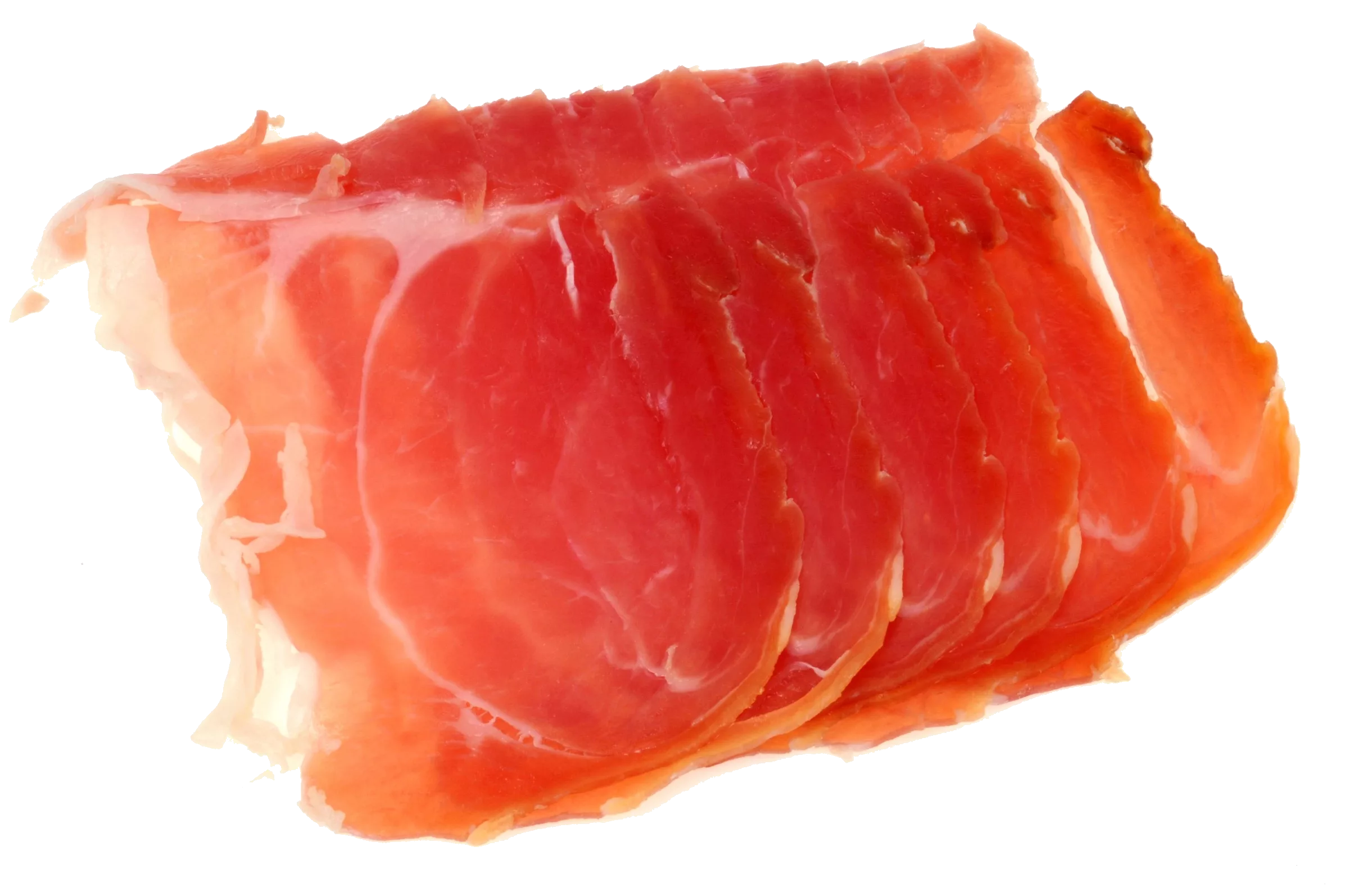
Bayonne ham is a delicious traditional product of French cuisine. This specialty is prized not only for its unique flavor and melt-in-your-mouth texture, but also for its historical origins. In this presentation, we will delve into the world of Bayonne ham and explore its origins, its role in a balanced diet, its seasonal availability, and its many culinary uses.
Origins of Bayonne ham
Bayonne ham takes its name from the region in southwestern France, where it has been produced for centuries. The earliest records of this delicious ham date back to the 9th century, attesting to its long history and traditional craftsmanship. Artisans have passed down the secrets of curing and aging this ham from generation to generation.
Nutritional Value and Health Benefits
Bayonne ham is rich in protein, B vitamins, and essential minerals such as zinc and iron. It is also low in calories, making it an ideal choice for health- and figure-conscious individuals. However, like any salty food, it is important to consume it in moderation and balance your salt intake in your diet.
Season and Availability
Bayonne ham is available year-round, making it a versatile choice for everyday cooking. However, it’s worth noting that certain times of the year, such as summer, are ideal for enjoying fresh Bayonne ham in its most traditional form. During this season, the ham reaches its peak flavor, and its melt-in-your-mouth fat is a true invitation to a culinary journey.
Culinary Uses
Bayonne ham is a versatile ingredient that can be used in a wide variety of recipes. Whether in salads, quiches, omelets, sandwiches, or even in hot dishes such as gratins or risottos, Bayonne ham adds a touch of rich, savory flavor that awakens the taste buds. Its tender texture also makes it an excellent accompaniment to cheese and charcuterie platters.
Pour aller plus loin, venez découvrir de délicieuses recettes concoctées par les gourmets du site, et qui mettent le jambon de bayonne à l’honneur !










Follow us on social media