




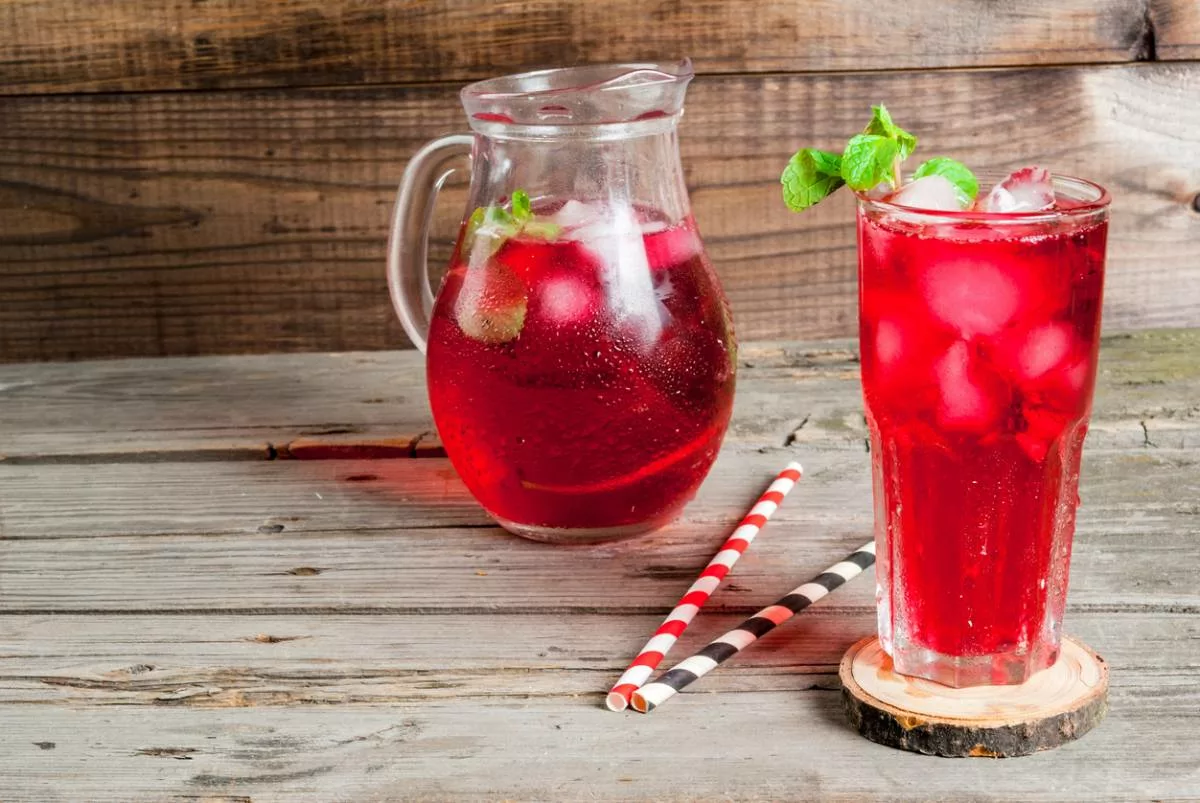
Grenadine, with its vibrant red color and sweet taste, holds a special place in the hearts of many French people. Behind its fruity flavors lies a rich history and a fascinating origin. Discover its roots, its impact on popular culture, and the production methods that set it apart from its industrial counterparts.
The Historical Evolution of Grenadine Syrup
Grenadine syrup takes its name from the pomegranate, a fruit that has fascinated and nourished humanity since ancient times. Native to Iran and India, it traveled across the Middle East and the Mediterranean, carrying with it connotations of prosperity and fertility. It wasn’t until the 19th century that grenadine, as we know it today, began to take shape in Europe and America.
Originally, this juice was made from pure pomegranate with sugar. This artisanal process preserved the fruit’s rich flavors and deep natural hues. By the turn of the 20th century, this beverage had gained popularity, partly due to the rise of cocktails. Drinks like the Tequila Sunrise and the Shirley Temple incorporated it into their recipes because of its taste and red color.

Grenadine in Popular Culture: From Lemonade to Cocktails
Grenadine has carved out a special place for itself in the world of food service, becoming a symbol of conviviality and creativity. Its ability to transform a simple lemonade into a sparkling, colorful drink has captivated many generations. It is especially in the world of cocktails that it has truly made its mark.
The use of grenadine in “Sex on the Beach” and “Planter’s Punch” demonstrates how it can add a touch of sweetness and create striking visual effects. The layered appearance of certain cocktails, where it settles at the bottom of the glass in a gradient of hues, makes it an excellent ingredient for bartenders looking to impress. Grenadine has also become part of popular culture through film and television, where it is used to simulate alcoholic beverages in scenes where actors must remain sober.
Traditional vs. Industrial Production: How Is This Syrup Made?
Over the years, the recipe has undergone significant changes. To reduce costs and simplify the process, many producers began using food coloring to mimic the characteristic red hue of pomegranates. These adaptations made this elixir accessible to a wider audience but diluted its original flavor profile.
Among consumers, there is a resurgence of interest in traditional production methods. Products, often labeled as “premium” or “artisan,” are particularly popular in high-end cocktail bars and among those seeking authenticity and natural flavors.
This trend reflects changes in production methods and also highlights a growing awareness of ingredient purity and respect for culinary traditions.










Leave a Reply