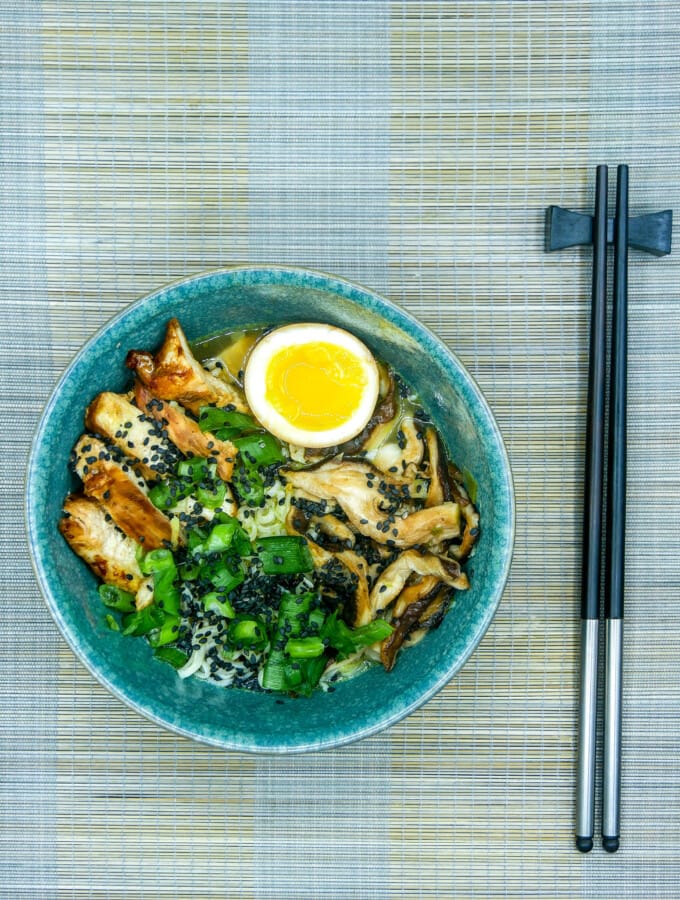
Here’s my delicious recipe for homemade Japanese ramen. With this recipe, you’ll see that it’s not that hard to make this ramen noodle soup on your own. By making your own ramen, you can choose ...
End of content
End of content

For 100g of ramen noodles:
Here you’ll find all the recipes that include ramen noodles as an ingredient, lovingly created for you by the site’s foodies!
Ramen noodles occupy a central place in contemporary Japanese cuisine, even though their origins lie on the mainland. They are derived from Chinese wheat noodles introduced to Japan in the late 19th century, with the rise of trade and the establishment of Chinese communities in ports such as Yokohama. Gradually adapted to local tastes, they became one of the pillars of Japanese culinary culture in the 20th century, and today represent a true gastronomic heritage.
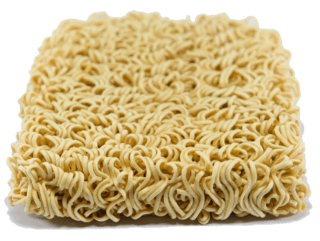
Made from wheat flour, water, salt, and kansui (alkaline water), ramen noodles are distinguished by their elastic texture and slightly yellow color. They are available fresh, with a soft texture and pronounced chewiness, highly prized in ramen shops, or dried, more common in stores, offering excellent shelf life and consistent quality. There are also pre-cooked or instant versions, dehydrated or fried, designed for quick preparation.
In terms of packaging, ramen noodles are available in individual portions, compressed nests, family-size packs, or vacuum-sealed for fresh versions. Each format serves a specific purpose: professional catering, home cooking, or on-the-go consumption. This wide range of shapes and presentations reflects the extraordinary popularity of ramen, which can adapt equally well to artisanal standards and the demands of the food industry.
Here’s my delicious recipe for homemade Japanese ramen. With this recipe, you’ll see that it’s not that hard to make this ramen noodle soup on your own. By making your own ramen, you can choose ...
End of content
End of content

Follow us on social media