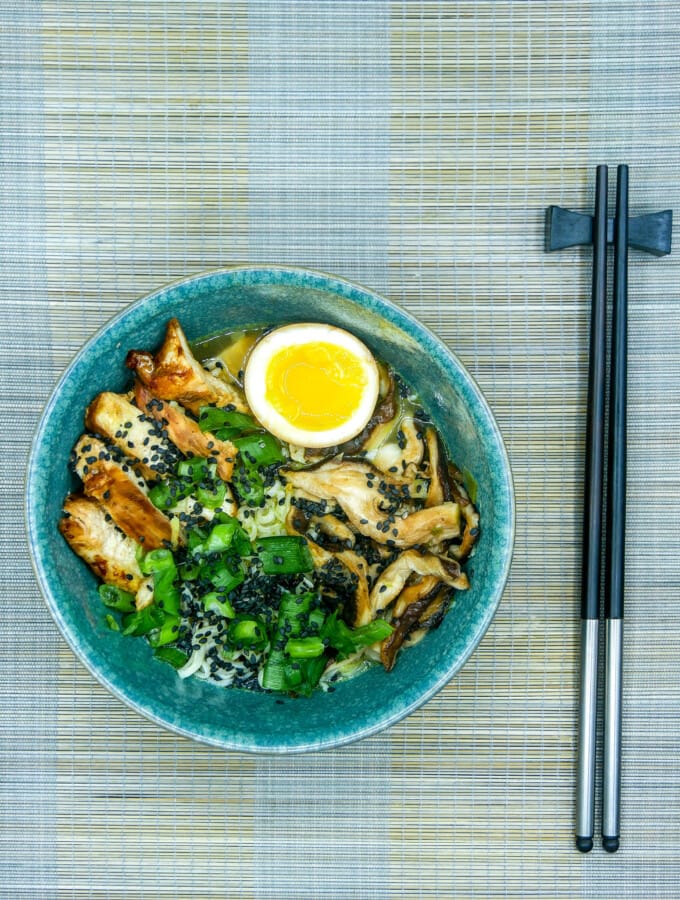
Here’s my delicious recipe for homemade Japanese ramen. With this recipe, you’ll see that it’s not that hard to make this ramen noodle soup on your own. By making your own ramen, you can choose ...
End of content
End of content

Here you’ll find all the recipes for small dishes meant to be enjoyed with chopsticks, lovingly created for you by the site’s foodies!
Chopsticks are essential utensils in East Asian cuisine. They have been used for thousands of years in nearly all Asian countries.
Table des matières
Our French term "Chinese" chopsticks is actually reductive and misleading. They are used in many countries, not just China: Japan, but also Korea, Vietnam, and neighboring regions...
Chopsticks come in many variations, directly linked to the culinary habits of each country.
Long, straight, and with blunt ends, they are designed for sharing dishes in the center of the table and for picking up food in dishes with plenty of sauce.
Shorter and pointed, they offer great precision, suited to a cuisine where food is served in individual portions and where fish is a common ingredient.
Flat and usually made of metal, they are distinguished by their thinness and rigidity.
Often of medium length, sometimes wider to accommodate family-style dining and dishes meant to be shared.
Materials also vary: wood, bamboo, lacquer, metal, or porcelain. The choice of material affects the weight, grip, and feel in the hand.
Hold one chopstick steady, wedged between the base of your thumb and your ring finger.
The second chopstick is movable and is controlled with the thumb, index finger, and middle finger.
The principle is to move only the top chopstick, which acts like a pair of tweezers.
Your grip should remain supple and relaxed, without tension, so you can pick up food precisely without crushing it.
The way rice is eaten varies greatly by culture. With Chinese chopsticks, rice is eaten with the bowl in hand, held close to the mouth.
Since the rice is not very sticky, you do not pick up each grain individually: instead, you gather the rice against the edge of the bowl using the chopsticks and eat it in small bites.
With Japanese chopsticks, the motion is similar, but made easier by stickier rice, which can be gently pinched.
In any case, you need to find the right coordination between tilting the bowl and the controlled movement of the chopsticks. It’s a matter of practice, and there’s no need for strength or extreme precision here!
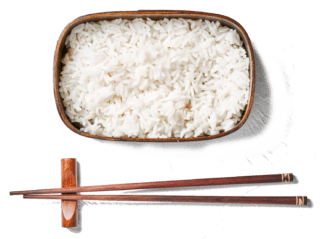
The chopstick rest, called hashioki in Japan, is a small accessory used to hold the chopsticks between bites.
It prevents them from touching the table, ensuring cleanliness, hygiene, and visual order. It is placed in front of the diner, either perpendicular or slightly angled. It holds the chopsticks parallel to each other, keeping the used ends suspended and clean.
Beyond its practical aspect, the chopstick rest also plays an aesthetic and cultural role. This accessory often reflects a particular attention to detail, especially in Japanese cuisine.
When no chopstick rest is available, it is best to place the chopsticks side by side on the edge of the bowl or plate.
Thus, despite their differences in shape and usage, Asian chopsticks all follow the same logic: food prepared in advance, measured movements, and a direct connection between the utensil, the food, and the diner.
Here’s my delicious recipe for homemade Japanese ramen. With this recipe, you’ll see that it’s not that hard to make this ramen noodle soup on your own. By making your own ramen, you can choose ...
End of content
End of content

Follow us on social media