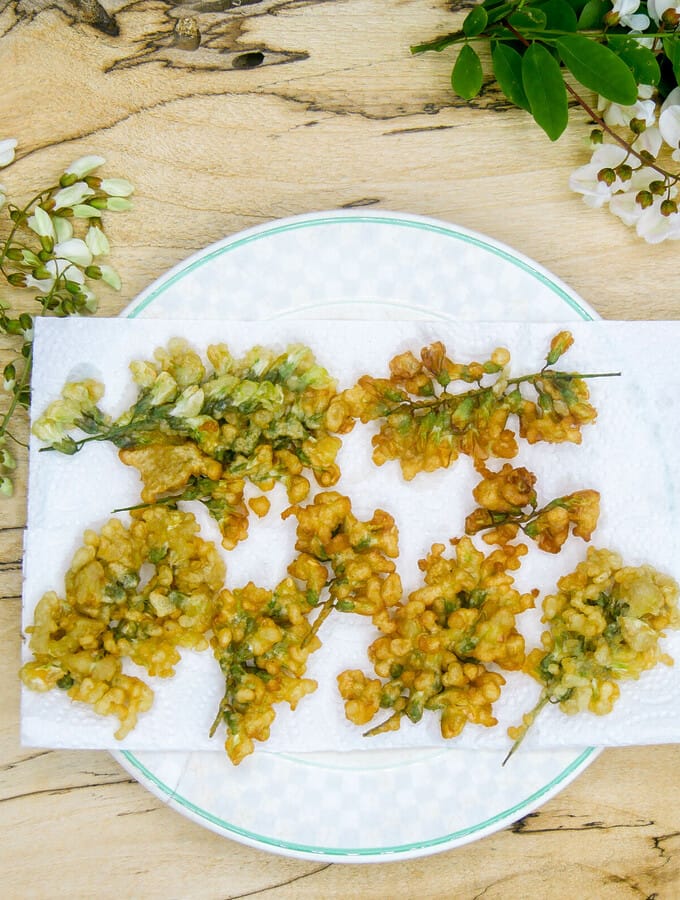
Here’s my step-by-step guide to making acacia flower fritters—a fleeting culinary delight that can only be made for two or three weeks a year! The batter will puff up around each flower, creating ...
End of content
End of content

For 100g of acacia flowers:
Here you’ll find all the recipes that showcase acacia flowers, lovingly crafted for you by the site’s food enthusiasts!
Delicate, fragrant, and surprisingly flavorful, acacia flowers—specifically those of the black locust tree—are a staple in the traditional cuisine of many regions. Picked in the spring, these white clusters with a sweet honey scent aren’t just beautiful to look at: they’re also edible and add a unique floral touch to recipes.
Whether in fritters, as an infusion, or incorporated into light desserts, acacia flowers charm with their subtle flavor and melt-in-your-mouth texture.
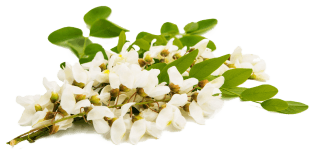
Toward the end of April, black locust trees, also known as “false acacia,” produce numerous clusters of white flowers with a pleasant scent. These flowers are edible and even have soothing properties when prepared as an infusion. You’re probably wondering what “real” acacia is in this case? Well, it’s a type of tropical wood found in Africa, Australia, and South America.
When picking them, be careful not to confuse acacia flowers with those of another tree, the laburnum. The key difference is the color: the flowers must be white, not yellow.
Here’s my step-by-step guide to making acacia flower fritters—a fleeting culinary delight that can only be made for two or three weeks a year! The batter will puff up around each flower, creating ...
End of content
End of content

Follow us on social media