




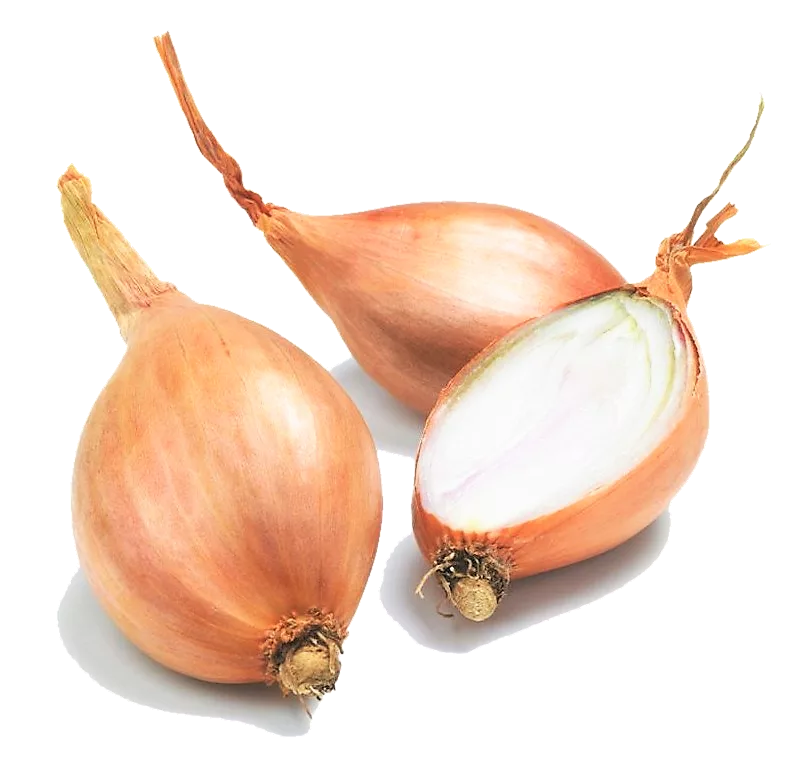
The shallot is an essential ingredient in cooking, prized for its delicate flavor and tender texture. Small and elongated in shape, it belongs to the onion family and is often used to enhance the flavor of many dishes.
Origins of the shallot
The shallot is native to Central Asia, but it is now grown in many regions around the world. Its cultivation dates back several thousand years, and it was already present in ancient Egyptian and Roman cuisines.
Nutritional Value and Benefits of the Shallot
The shallot is a low-calorie vegetable, rich in vitamins (particularly vitamin C) and minerals such as potassium and phosphorus. It is also known for its antioxidant, antibacterial, and anti-inflammatory properties. Additionally, its fiber content promotes healthy digestion.
Shallot Season
Shallots are a summer vegetable typically harvested between May and August. They can be stored for several months in a cool, dry place, allowing them to be used in cooking year-round.
Culinary Uses
Shallots are very versatile in the kitchen and can be used both raw and cooked. They are often used as a flavor base in many recipes, including sauces, vinaigrettes, marinades, and stock. Their slightly sweet and slightly spicy taste adds a subtle flavor to dishes. Shallots are also ideal for flavoring meats, fish, vegetables, and soups.
In conclusion, shallots are an essential ingredient in the kitchen, prized for their delicate flavor and ability to enhance the taste of dishes. Native to Central Asia, they are grown in many countries and stand out for their nutritional benefits. In season during the summer, they can be enjoyed year-round thanks to their long shelf life. Whether used to flavor a sauce or add a touch of elegance to a dish, shallots lend themselves to a wide range of culinary applications.
Pour aller plus loin, venez découvrir de délicieuses recettes concoctées par les gourmets du site, et qui mettent l'échalote à l’honneur !







Follow us on social media