




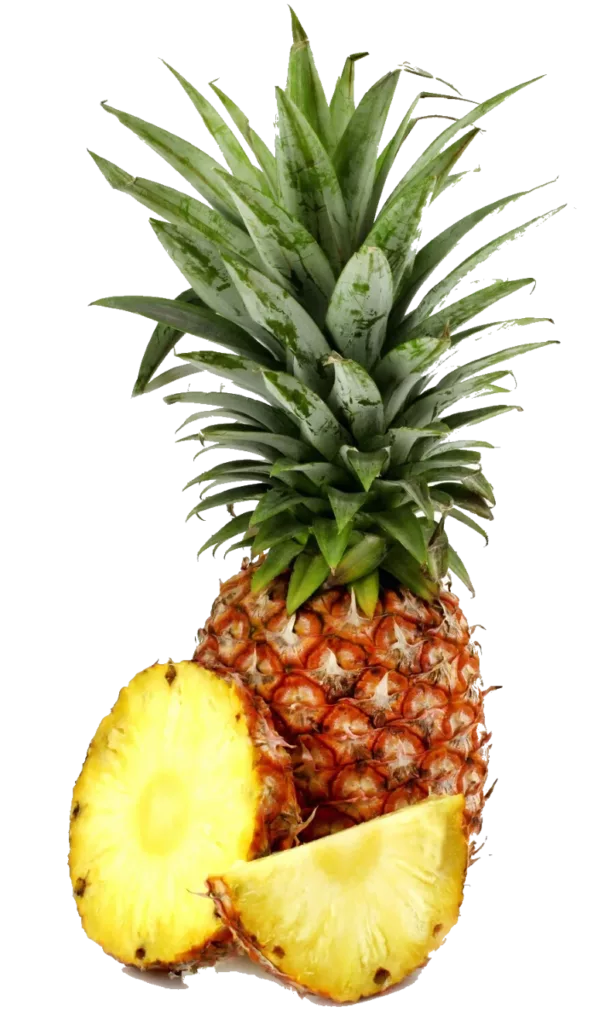
Pineapple is an exotic fruit prized for its sweet and refreshing flavor, which adds a tropical touch to many dishes. Whether in salads, desserts, or savory dishes, pineapple is a versatile ingredient that pairs well with a variety of other flavors. In this presentation, discover the origins of the pineapple, its nutritional value, the best time of year to enjoy it, and its uses in the kitchen.
Origins
The pineapple is native to South America, specifically Paraguay and southern Brazil. It was discovered by Europeans in the 15th century upon their arrival in the New World. Its name "ananas" is a corruption of the Guarani word "naná," which means "scent of scents." European sailors introduced the pineapple to various parts of the world, notably Africa and Asia, where it is now widely cultivated.
Nutritional Value
The pineapple is a fruit rich in vitamins C and B, manganese, and fiber. It also contains an enzyme called bromelain, known for its anti-inflammatory and digestive properties. The pineapple is a low-calorie fruit, making it an ideal choice for those following a balanced diet. Its fiber content promotes bowel movement and aids in the digestion of food.
Season
Pineapples are available year-round in many grocery stores and supermarkets. However, their peak harvest season is generally between March and June. During this period, pineapples have a sweeter taste and are juicier. It is therefore best to choose in-season pineapples to enjoy their full flavor.
Culinary Uses
Pineapple offers many possibilities in the kitchen. It can be used fresh, sliced or diced, in fruit salads or smoothies to add a touch of tartness and freshness. Its sweet taste also pairs very well with savory dishes such as curries, meat marinades, or sauces to accompany seafood. Pineapple can also be caramelized or used in dessert recipes such as pies, cakes, or sorbets.
Pour aller plus loin, venez découvrir de délicieuses recettes concoctées par les gourmets du site, et qui mettent l'ananas à l’honneur !






Follow us on social media