




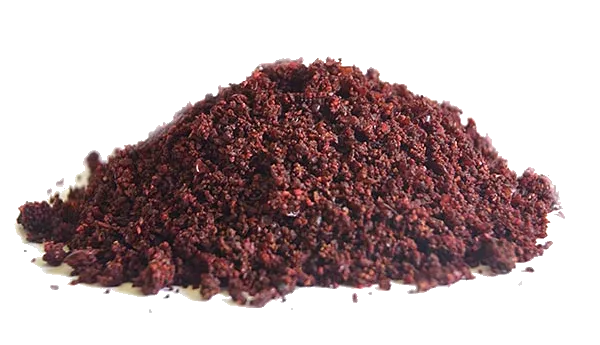
Sumac is a spice that adds a touch of tartness and freshness to dishes. Used for centuries, it originates from the Middle East and the Mediterranean. Sumac is made from the red berries of the sumac vine, a wild shrub that grows in hot, arid regions.
Origins
Sumac is widely used in Middle Eastern cuisine, from Turkey to Iran, including Syria and Lebanon. It is also found in Mediterranean cuisine, particularly in Greece and Italy. Sumac berries are harvested in the fall, then dried and ground into an orange-colored powder.
Nutritional Value
Sumac is an excellent source of vitamin C, fiber, and antioxidants. It also has anti-inflammatory and antibacterial properties. This spice is particularly recommended for stimulating digestion and strengthening the immune system. Additionally, sumac is naturally salt-free, making it a healthy alternative for seasoning dishes.
Season and Storage
Sumac can be used year-round, as it is available in powder form. However, fresh berries are harvested in the fall. To store sumac powder, it is best to keep it in an airtight container, away from moisture and light. Stored this way, it can last up to a year.
Culinary Uses
Sumac is very versatile in the kitchen. It is often used as a condiment to sprinkle over dishes before serving. Its tangy flavor is reminiscent of lemon, but with a milder, less acidic note. Sumac pairs perfectly with grilled meats, fish, roasted vegetables, salads, or dips. It adds a touch of tartness and freshness to dishes, as well as a beautiful orange hue. It is also widely used in the preparation of marinades, vinaigrettes, sauces, and spice blends.
Pour aller plus loin, venez découvrir de délicieuses recettes concoctées par les gourmets du site, et qui utilisent le sumac !








Follow us on social media