




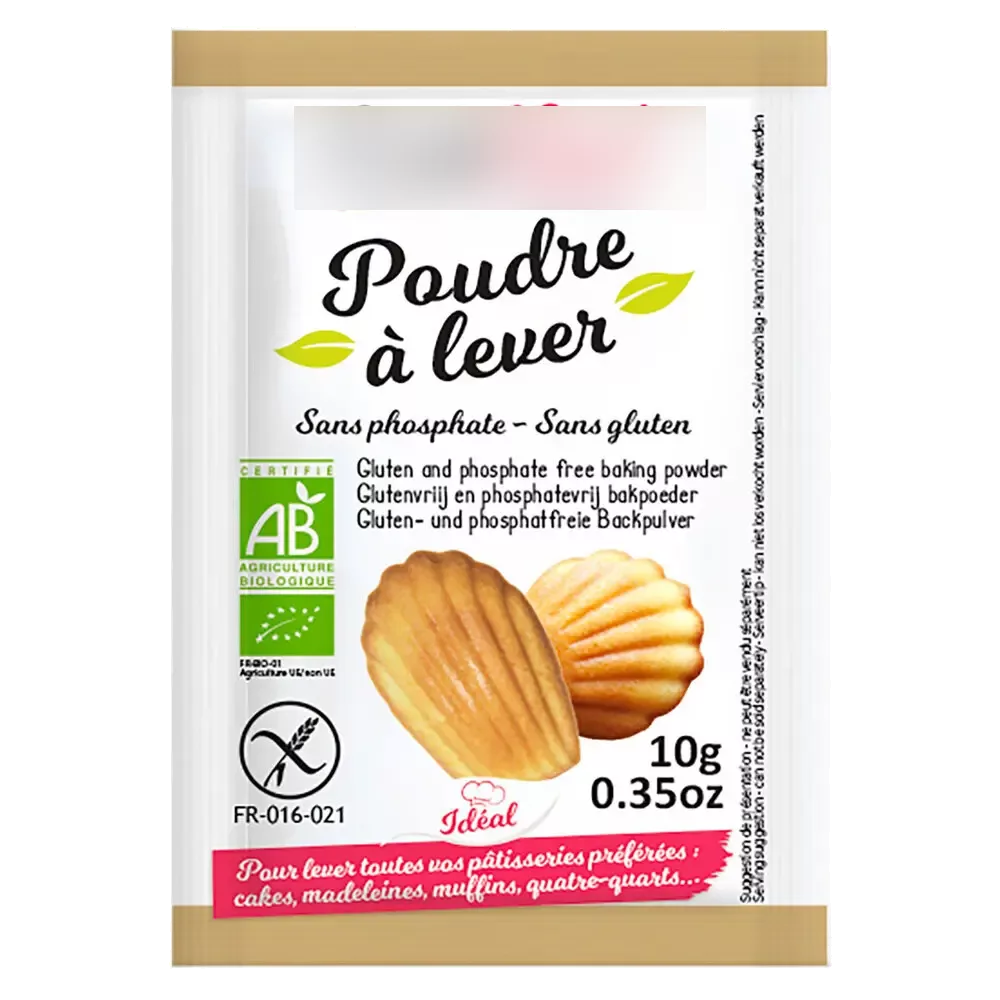
Baking powder is an essential ingredient in cooking, used to help dough and dessert mixtures rise. It is often used in the preparation of cakes, muffins, cookies, and bread. Learn more about the origins of baking powder, its nutritional value, its uses in cooking, and its seasonality.
Origins of baking powder
Baking powder first appeared in the 19th century, with the rise of pastry-making and the growing demand for light, airy baked goods. It is generally composed of a chemical leavening agent, such as sodium bicarbonate, combined with an acid, such as cream of tartar. This mixture reacts with moisture and heat, causing the release of carbon dioxide, which allows the dough to rise.
Nutritional Value of Baking Powder
Baking powder is primarily used for its leavening properties and has no significant nutritional value in itself. However, it is often used as a substitute for natural leaven, thereby avoiding the use of large amounts of yeast or baking soda. This can be beneficial for people with gluten sensitivity or digestive issues.
Seasonality of baking powder
Baking powder is a commonly used cooking ingredient throughout the year, with no specific seasonality. It can be found in most grocery stores and supermarkets, both online and in physical stores, in individual packets or boxes. Be sure to check the expiration date before use to ensure its effectiveness.
Cooking Applications
Baking powder is essential for making many desserts and baked goods. It is often used in recipes for cakes, muffins, cookies, pancakes, and bread. It helps create light and fluffy textures, ensuring even and controlled rising. Be sure to follow the quantities listed in recipes to avoid a strong baking powder taste.
Pour aller plus loin, venez découvrir de délicieuses recettes concoctées par les gourmets du site, et qui utilisent la poudre à lever !



Follow us on social media