




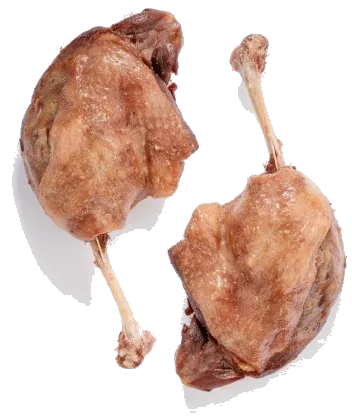
Duck confit is a delicious and flavorful dish that is a staple of traditional French cuisine. It is a dish appreciated by many food lovers around the world for its melt-in-your-mouth texture and rich, savory flavor. In this presentation, we will explore the origins of duck confit, its nutritional value, its seasonal availability, and its various culinary uses.
Origins of duck confit
Duck confit originates from southwestern France, specifically the Gascony region. This method of preserving meat has existed for several centuries. In the past, confit was prepared to preserve duck meat during the region’s long winters by slowly cooking it in its own fat.
Nutritional Value
Duck confit is a dish rich in flavor, but it is also high in calories due to the fat used in its preparation. Consumption of this dish should therefore be moderate to avoid excess calories. However, it offers significant nutritional benefits, particularly due to its content of monounsaturated fatty acids, protein, and vitamins.
Season and Storage
Duck confit is a dish that can be enjoyed year-round, as it is generally available in cans. However, the ideal time to enjoy fresh duck confit is in the winter, when ducks are at their fattest. It keeps perfectly well in the refrigerator thanks to its cooking fat, which acts as a natural preservative.
Culinary Uses
Duck confit can be used in many ways in the kitchen. It is often served simply with sautéed potatoes and a green salad for a traditional meal. It can also be used as an ingredient in more elaborate recipes, such as tarts, pies, risottos, or pasta dishes. Its rich flavor and melt-in-your-mouth texture add a gourmet touch to many dishes.
In conclusion, duck confit is an authentic and delicious dish of French cuisine. It has traditional origins, significant nutritional value, can be enjoyed year-round, and lends itself to a wide variety of culinary preparations. It is therefore a favorite choice for connoisseurs of fine dining and lovers of French culinary traditions.








Follow us on social media