

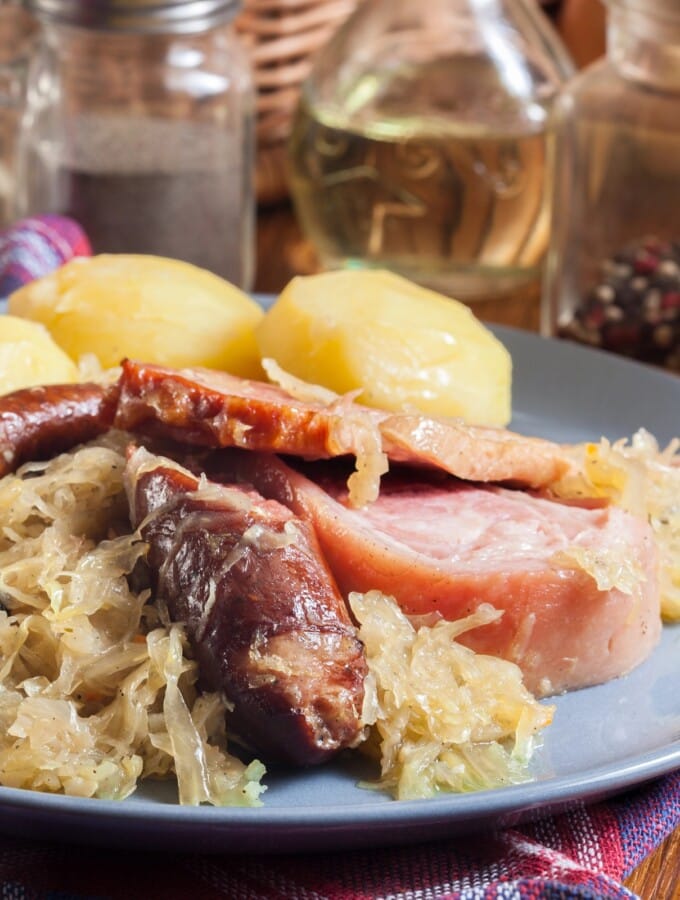
I love sauerkraut, but since I’m not from Alsace at all, I never learned how to make it. It seemed really complicated to me, and I’d never tried it before… But now I have, thanks to this quick and ...
End of content
End of content

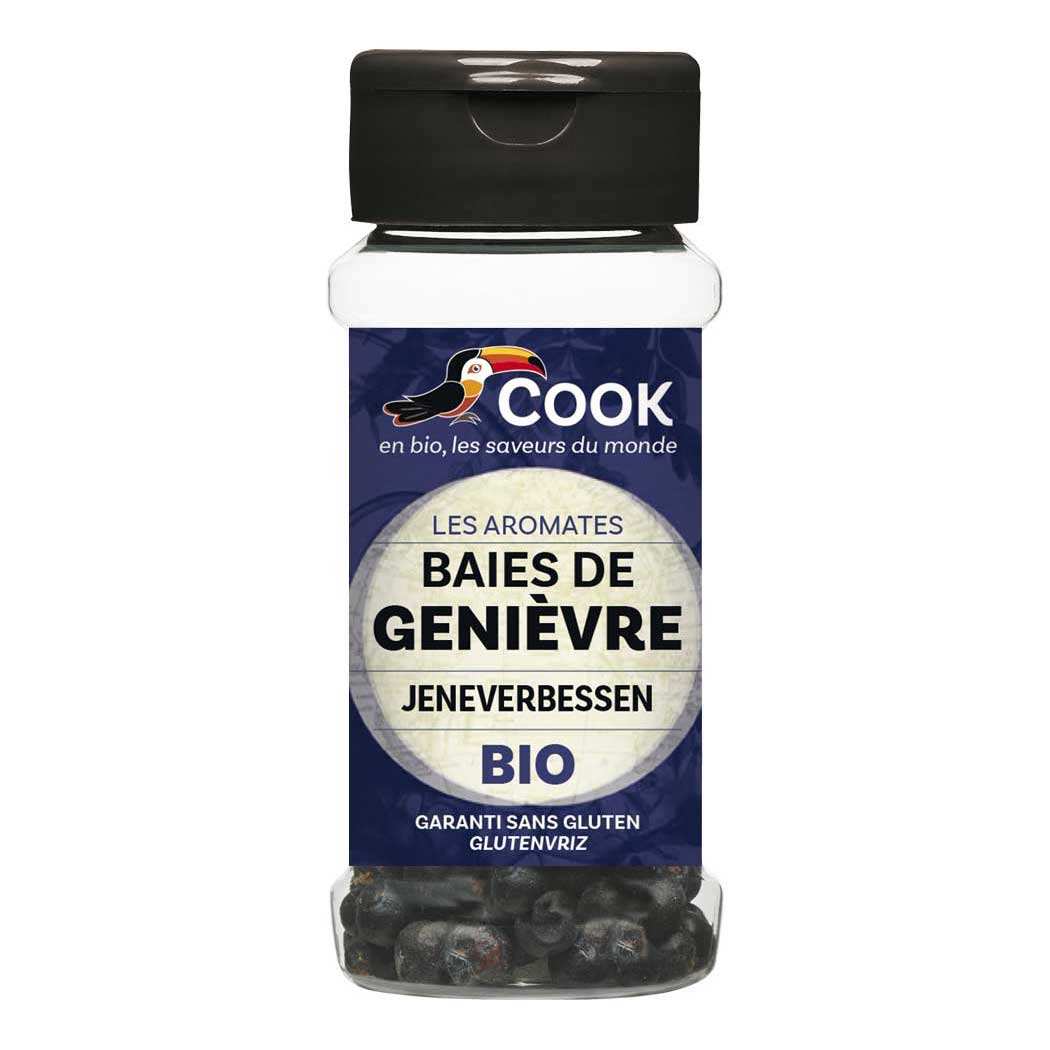
For 100g of juniper berries:
Here you’ll find all the recipes that feature juniper berries, lovingly crafted by the site’s foodies!
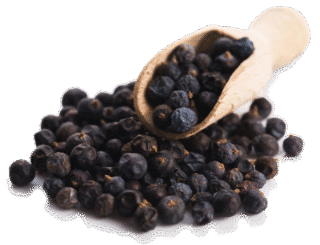
Juniper berries play a central role in traditional cuisine, particularly in rich, slow-cooked dishes. Their woody, slightly resinous, and peppery aroma adds depth to dishes while balancing out rich or salty flavors. They have long been used not only for their taste but also for their digestive properties, which are highly valued in hearty recipes.
In sauerkraut, juniper berries are almost indispensable. They flavor the lacto-fermented cabbage, soften its natural acidity, and pair perfectly with smoked meats and sausages.
Just a few berries are enough—usually added whole or lightly crushed at the start of cooking—to give Alsatian sauerkraut its typical, authentic flavor. They also help make the dish easier to digest, which explains their traditional inclusion in this iconic recipe.
Juniper berries are also used in many other dishes. They are very common in meat marinades, particularly for game such as wild boar, venison, or rabbit, where they mellow the strong flavors.
They are found in stews, slow-cooked dishes, terrines, and cured meats, as well as in certain marinated or smoked fish. They are also used in beverages and spirits, such as gin, a testament to their rich aroma.
Used in moderation, juniper berries add a rustic yet elegant touch to many traditional recipes.
I love sauerkraut, but since I’m not from Alsace at all, I never learned how to make it. It seemed really complicated to me, and I’d never tried it before… But now I have, thanks to this quick and ...
End of content
End of content

Follow us on social media