
Here’s my recipe for oven-baked croque-monsieurs with béchamel sauce—they’re easy to make. It’s a classic family favorite that’s sure to be a hit with kids and adults alike! As you’ll see, making ...
End of content
End of content

For 100g of Emmental:
Here you’ll find all the recipes that include Emmental among their ingredients—carefully crafted with love by the site’s food enthusiasts!
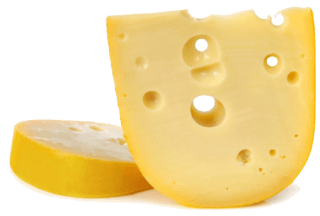
Emmental is a hard, cooked cheese, recognizable by its famous holes known as “eyes.” Originally from Switzerland, it is now widely produced in France and throughout Europe. Its soft texture and mild, slightly fruity flavor make it a highly popular cheese in cooking, whether served raw or melted.
Emmental and Gruyère are often confused, but they have notable differences. Emmental is distinguished by its characteristic holes and a milder, slightly sweet flavor. Gruyère, on the other hand, generally has no holes and offers a more pronounced taste, sometimes slightly salty and more complex.
In the kitchen, Emmental is ideal for adding creaminess and mildness, while Gruyère is preferred for more distinctive recipes, such as certain fondues or gratins with a stronger flavor.
Thanks to its excellent melting properties, Emmental provides a creamy texture without excess fat on the surface.
It blends easily into many everyday recipes and appeals to a wide audience thanks to its mild flavor.
Emmental is a key ingredient in many dishes: vegetable gratins, quiches, croque-monsieurs, pasta gratins, and even pizzas.
Whether grated or sliced, it melts evenly and enhances both simple dishes and more elaborate recipes.
From a nutritional standpoint, Emmental offers several benefits.
It is rich in high-quality protein, essential for maintaining muscle mass, and is an excellent source of calcium, vital for bone health. It also contains B vitamins, particularly B12.
However, like all hard cheeses, it remains relatively high in calories and fat.
Moderate consumption is therefore recommended as part of a balanced diet.
Industrial grated Emmental, while convenient, has several drawbacks. It often contains anti-caking agents (such as starch) to prevent the strands from sticking together, which can slightly alter the taste and quality of the cheese.
Additionally, it is generally made from blends of cheeses of varying quality, with a less rich flavor than freshly grated Emmental.
Nutritionally, these products can also be slightly drier and sometimes saltier.
Finally, grated cheese loses its flavor more quickly when exposed to air, making it generally less desirable for cooking. For the best taste and optimal texture, it is therefore recommended to grate your own Emmental at the last minute.
Opt for Emmental sold by the slice, with a natural rind and a pleasant aroma. Store it in the refrigerator, ideally in breathable packaging, to preserve its flavors and prevent it from drying out.
Here’s my recipe for oven-baked croque-monsieurs with béchamel sauce—they’re easy to make. It’s a classic family favorite that’s sure to be a hit with kids and adults alike! As you’ll see, making ...
End of content
End of content

Follow us on social media